
The world is in a dangerous place now. A large share of oil sellers need the revenue from oil sales. They have to continue producing, regardless of how low oil prices go unless they are stopped by bankruptcy, revolution, or something else that gives them a very clear signal to stop. Producers of oil from US shale are in this category, as are most oil exporters, including many of the OPEC countries and Russia.
Some large oil companies, such as Shell and ExxonMobil, decided even before the recent drop in prices that they couldn’t make money by developing available producible resources at then-available prices, likely around $100 barrel. See my post, Beginning of the End? Oil Companies Cut Back on Spending. These large companies are in the process of trying to sell off acreage, if they can find someone to buy it. Their actions will eventually lead to a drop in oil production, but not very quickly–maybe in a couple of years.
So there is a definite time lag in slowing production–even with very low prices. In fact, if US shale production keeps rising, and Libya and Iraq keep work at getting oil production on line, we may even see an increase in world oil production, at a time when world oil production needs to decline.
A Decrease in Oil Prices May Not Fix Oil Demand
At the same time, demand doesn’t pick up quickly as prices drop. We are dealing with a world that has a huge amount of debt. China in particular has been on a debt binge that cannot continue at the same pace. A reduction in China’s debt, or even slower growth in its debt, reduces growth in the demand for oil, and thus its price. The same situation holds for other countries that are now saturated with debt, and trying to come closer to balancing their budgets.
Furthermore, the Federal Reserve’s discontinuation of quantitative easing has cut off a major flow of funds to emerging markets. Because of this change, emerging market demand for oil has dropped. This has happened partly because of the lower investment funds available, and partly because the value of emerging market currencies relative to the dollar has fallen. Again, a decrease in oil price is not likely to fix this problem to a significant extent.
Europe and Japan are having difficulty being competitive in today’s world. A drop in oil prices will help a bit, but their problems will mostly remain because to a significant extent they relate to high wages, taxes, and electricity prices compared to other producers. The reduction in oil prices will not fix these issues, unless it leads to lower wages (ouch). The reduction in oil prices is instead likely to lead to a different problem–deflation–that is hard to deal with. Deflation may indirectly lead to debt defaults and a further drop in oil demand and oil prices.
Thus, oil prices are likely to continue their slide for some time, until real damage is done, perhaps to several economies simultaneously.
The United States’ Role in the Oil Over-Production / Under-Demand Clash
The United States is the country with the single largest increase in oil production in the past year. This growth in oil production seems not to have stopped, in recent weeks.

Figure 1. US Weekly Crude Oil Production through Oct 24. Chart by EIA.
At the same time, the US’ own consumption of oil has not increased (Figure 2).

Figure 2. US oil consumption (called “Product Supplied”). Chart by EIA.
The result is a drop in needed imports. A number of oil exporters have been hit by the US drop in imports. Nigeria extracts a very light oil that competes for refinery space with oil from shale formations. Our imports of Nigerian oil have been reduced to zero (Figure 3). (The amounts I am showing on this and several other charts are “net imports.” These reflect transactions in both directions. Often the US imports crude oil and exports oil products, sometimes to the same country. In such a case, we are selling refinery services.)

Figure 3. US Net Petroleum Imports from Nigeria. Chart by EIA.
Our imports of oil from Mexico are way down as well (Figure 4), in part because their oil production has been falling.

Figure 4. US Net Imports of Petroleum from Mexico. Chart by EIA.
It is only in the past few months that US imports from Saudi Arabia have started to be significantly affected (Figure 5).

Figure 5. US net oil imports from Saudi Arabia. Chart by EIA.
Saudi Arabia, like other oil exporters, depends on the sale of oil revenue to provide tax revenue for its budget. While it has a reserve fund for rainy days, over the long term it, too, depends on revenue from oil exports. If Saudi Arabia’s exports to the United States decrease, Saudi Arabia needs to find someone else to sell these would-be exports to, or revenues to fund its budget will drop.
Alternatively, it can reduce the price it charges to US refineries, to influence purchasing decisions–something it has just done. Lowering its price to US refineries tends to push the world price for oil down.
Of course, the US also talks about allowing an increasing amount of crude oil exports, as its oil from shale formations rises. This increase would make the surplus of oil on the market worse, and world prices lower, if oil demand does not pick up.
Depending on Saudi Arabia and OPEC
In the West, we have been led to believe that OPEC in general and Saudi Arabia in particular exert great control over oil prices. We have been told that several OPEC countries have spare capacity. Several of the Middle Eastern countries claim that they have very high reserves, and we have been led to believe that they can ramp up their production if they invest more money to do so. We have also been told that these countries will reduce oil production, if needed, to hold up oil prices.
A very significant part of what we have been led to believe is exaggerated. Saudi Arabia’s oil exports were much higher back in the late 1970s than they are now (Figure 6). When they cut oil production and exports in the 1980s, they likely did have spare capacity.

Figure 6. Saudi oil production, consumption and exports based on EIA data.
But where we are now, the situation has changed greatly. The population of the Middle Eastern oil producers has risen. So has their own use of the oil they extract. Their budgets have risen, and the countries need increasing revenue from oil taxes to meet their budgets. Some countries, including Venezuela, Nigeria, and Iran, require oil prices well over $100 per barrel to support their budgets (Figure 7).

Figure 7. Estimate of OPEC break-even oil prices, including tax requirements by parent countries, from APICORP.
If oil prices are too low, subsidies for food and oil will need to be cut, as will spending on programs to provide jobs and new infrastructure such as desalination plants. If the cuts are too great, there is the possibility of revolution and rapid decline of oil production. Virtually none of the OPEC countries can get along with oil prices in the $80 per barrel range (Figure 7).
Most of OPEC’s actions in recent years have looked like actions a person would expect if OPEC countries were not all that different from other oil producers–their oil supplies were subject to limits and they tended to act in their own self interest. When oil prices were rising rapidly in the 2007-2008 period, they ramped up production, but not by very much and not very quickly (Figure 8). When oil prices dropped, they dropped their production back to where it had been, before the big ramp up in prices.

Figure 8. OPEC and Non-OPEC Oil Production, Compared to Oil Price. (Production is Crude and Condensate from EIA.)
Another situation occurred when Libya’s production declined in 2011. Saudi Arabia said it would increase its own supply to offset, but it could only produce extra very heavy crude when light oil was what was needed. In fact, even the increase in heavy oil is somewhat in doubt.
Furthermore, the dynamics of OPEC have been changed considerably in the last few years. Part of the problem relates to fact that both oil prices and the quantity of oil exports have been approximately flat in the period between 2011 and mid-2014. In such a situation, revenue from oil exports tends to be flat. OPEC members have found this to be a problem because their populations continued to grow and their need for water and imported food has continued to rise. These countries need ever-more tax revenue, but oil revenue is not providing it. At a minimum, OPEC countries have a strong “need” to maintain their current level of oil exports.
The other part of changing OPEC dynamics relates to increased oil production volatility. The bombing of Libya and sanctions against Iran have both produced unstable situations. Oil exports from both of these countries are lower than in the past, but can suddenly rise as their problems are “fixed,” adding to downward price pressures.
Another issue is the significant attempt to raise Iraq’s oil production in recent years. If Iraq’s oil production (plus US shale production) is too much to satisfy world demand for oil, should the rest of OPEC be the ones to try to “fix” the problem?

Figure 9. US net imports from Iraq. Exhibit by EIA.
Figure 9 seems to indicate that US imports from Iraq have increased in recent months. Of course, if we import more from Iraq, we will likely need to cut back on imports elsewhere. This doesn’t create good feelings among OPEC exporters.
Shouldn’t the United States Take Some Responsibility for Fixing the Problem?
One might ask whether the United States should be cutting back in its oil production, in response to low prices. Of course, as indicated above, US oil majors (like Shell, Chevron, and Exxon) are cutting back on investment in new fields, and this is eventually likely to lead to lower production. The question is whether this will be a sufficient change, quickly enough.
It is less likely that shale drillers will intentionally cut back quickly. The shale drillers have taken on leases on huge acreage and are reluctant to step back now. For one thing, part of their costs has already been paid, reducing their costs going forward on acreage already under development. They also have debt that needs to be repaid and many contractual arrangements with respect to drilling rigs, pipelines, and other services. Some may have futures contracts in place that will soften the impact of the oil price drop, at least for a while. Because of all of these factors, there is a tendency to continue business as usual, for as long as possible.
Whether or not shale drillers intentionally plan to cut back on oil production, some of them may be forced to, whether or not they believe that the production is likely to be profitable over the long run. The problem is likely to be falling cash flow because of lower oil prices, if the price drop is not mitigated by futures contracts. Because of this, some companies may be forced to cut back on drilling quite soon. Another alternative might be to ramp up borrowing, but lenders may not be very happy with such an arrangement.
We notice that some companies are already in very cash flow negative situations–in other words, in situations where they need to keep adding more debt. For example, Capital Resources, the largest operator in the Bakken, shows rapidly growing outstanding debt through 6/30/2014, without seeming to take on significant new acreage (Figure 10).

Figure 10. Selected figures from SEC filings by Continental Resources.
When companies are already in such cash flow negative situation, there may be more problems than otherwise.
If Lower Oil Prices “Hang Around” for Months to Years, What Could this Mean?
We are in uncharted territory, in such a situation.
One of the big issues is potential deflation. The issue seems to be not only lower oil prices, but lower prices for many other commodities, as well. The concern is that wages will drop, as will government receipts. Lower wages already seem to be happening in Spain. Unless governments figure out a way to “fix” the situation, this situation will make debt repayment very difficult. Lower debt will tend to reinforce the low prices of oil and other commodities.
If low prices become the norm for many kinds of commodities, we can expect major cutbacks in production of these commodities. This would be the situation of the 1930s all over again. Ben Bernanke has said he would send helicopters of money to prevent such a situation. The question is whether this can really be arranged, given that the United States (and several other countries) have already been “printing money” since 2008. At some point, it would seem like the arsenals of central banks will get used up.
If there is a cut back in debt and cutback in production of commodities, many goods we have come to expect in the market place will disappear, as will many jobs. There are likely to be breaks in supply chains, leading to more cutbacks in production.
With all of the debt problems, there is a question of how well international trade will hold up. Will would-be explorers trust buyers who have recently defaulted on their debt, and don’t look likely to be able to earn enough to pay for the goods that they currently are ordering?
The discussion has been mostly with respect to oil, but liquefied natural gas (LNG) is likely to be affected by low prices as well. Reuters is reporting that likelihood of US exports of LNG to Asia is down, for a number of reasons, including the discovery that costs would be higher than originally expected and the regulatory process less smooth. Another reason LNG exports are likely to be low is the fact that Asian prices dropped from a high of $20.50/mmBtu in February to a low of $10.60/mmBtu in August. Without sustained high LNG prices, it is hard to support the huge infrastructure investment needed for LNG exports.
Can Oil Prices Bounce Back?
If we could somehow fix the world’s debt problems, a rise in the price of oil would seem to be much more likely than it looks right now. As long as the drop in demand is related to declining debt, and the potential feedbacks seem to be in the direction of deflation and the possibility of making defaults ever more likely, we have a problem. The only direction for oil prices to go would seem to be downward.
I know that we have very creative central banks. But the issue at hand is really diminishing returns. Prior to diminishing returns becoming a problem, it was possible to extract and refine oil cheaply. With cheap oil, it was possible to create an economy with low-priced oil, inexpensive infrastructure built with that low-priced oil, and factories built with low-priced oil. Workers seemed to be very productive in such a setting, in part because low-priced oil allowed increased mechanization of production and allowed cheap transport of goods.
Once diminishing returns set in, oil became increasingly expensive to extract, because we needed to use more resources to obtain oil that was very deep, or in shale formations, or that required desalination plants to support the population. Once we needed to allocate resources for these endeavors, fewer resources were available for more general uses. With fewer resources for general activities, economic growth has become inhibited. This has tended to lead to fewer jobs, especially good-paying jobs. It also makes debt harder to repay. History shows that many economies have collapsed because of diminishing returns.
Most people assume that of course, oil prices will rise. That is what they learned from supply and demand discussions in Economics 101. I think that what we learned in Econ 101 is wrong because the supply and demand model most economists use ignores important feedback loops. (See my post Why Standard Economic Models Don’t Work–Our Economy is a Network.)
We often hear that if there is not enough oil at a given price, the situation will lead to substitution or to demand destruction. Because of the networked nature of the economy, this demand destruction comes about in a different way than most economists expect–it comes from fewer people having jobs with good wages. With lower wages, it also comes from less debt being available. We end up with a disparity between what consumers can afford to pay for oil, and the amount that it costs to extract the oil. This is the problem we are facing today, and it is a very difficult issue.
We have been hearing for so long that the problem of “peak oil” will be inadequate supply and high prices that we cannot adjust our thinking to the real situation. In fact, the two major problems of oil limits are likely to be shrinking debt and shrinking wages. The reason that oil supply will drop is likely to be because customers cannot afford to pay for it; they don’t have jobs that pay well and they can’t get loans.
In some ways, the oil prices situation reminds me of driving down a road where we have been warned to look carefully toward the left for potential problems. In fact, the potential problem is in precisely in the opposite direction–to the right. The problem gets overlooked for a very long time, because most of us have been looking out the wrong window.
For more on this subject, read my last two posts:
WSJ Gets it Wrong on “Why Peak Oil Predictions Haven’t Come True”


Hi guys,
I have not visited this blog for some time due to personal issues. However, I come across one email, which has a link http://d21uq3hx4esec9.cloudfront.net/uploads/pdf/141104_TFTF.pdf I am not sure if anyone has posted it here before.
Do read the link. It is very interesting and there is a book (The First Tycoon) which is a good read on Cornelius Vanderbilt. It looks like the panic of 1870s is very very similar to what we are facing today.
Paul – TPTB, in the 1870s are clueless and make up the rules as they go along. Mistakes were made and lives were made miserable. People at that time thought it is “this time is different” and they can avert a panic. Unfortunately, they were wrong then and I am definately they will be wrong now. The only “this time is different” is that we are now globally linked and we are employing extreme “just in time” inventory management system. Traditional survival skills like organic and sustainable farming, natural healing, herb/plant identification are lost (for 99% of the population). so, it will really be “this time is different”.
CTG – I don’t think the lack of knowledge of organic farming is the biggest issue here — all it would take would be one experienced person to direct a large organic farming operation where all the unemployed people could work to produce food post SHTF…
The problem is that there is not much land available to grow on — because we have poisoned the soil with chemical inputs via the green revolution … and it takes roughly 3 years to repair and grow a crop in these soils…
Many other problems of course but at the end of the day it comes down to food … and producing food for even a fraction of 7.2B will be impossible….
The soil could be rebuilt rather quickly if we were of a mind to do so. The problem being that the world is not yet awake and really does not want to be awake. Part of the answer to this is a spiritual answer. In biblical terms, there needs to be a change of heart, repentance. The bible is full of stories of human societies losing their way and collapsing. It is what we do.
Industrially farmed soil cannot be rebuilt quickly.
I have discussed this with two experienced commercial organic farmers who stated it would take 3 years minimum to rejuvenate soil that has been farmed using chemical inputs.
I believe Christian posted a link to research that confirmed exactly this — 3 years of intensive organic inputs to be able to start growing anything in soil that has been farmed with petrochemical fertilizers and pesticides.
Of course if you pray hard enough for the soil to recover overnight that is always an option.
But if you plan to do that, why not THINK BIG —- pray that kindly space beings will beam us all up to a new Earth 10000x the size of the current earth with oceans of clean burning oil that are replenished by petroleum springs.
I would say that three years is actually quite quick compared to how much time it takes for soil to accumulate and enrichen itself naturally. I guess it depends upon your time scale.
I wonder what the three years really relates to. Is this just a partial restoration of soils? For example, there are a lot of trace minerals that have been removed that can never be put back–at least without transporting them from afar, or waiting for the underlying rocks to erode over hundreds and thousands of years.
The huge amount of carbon that has been removed would seem to be a problem as well. Don has given ideas that in theory would work, it someone is willing to find carbon elsewhere, bring it to the site, and dig two or three feet down to add it. To be practical in quantity, these steps would require fossil fuels. Even making the shovels for digging two or three feet down required fossil fuels at one point.
Gail
I am afraid you are misrepresenting what I am saying. For a farm, Christine Jones (and others) shows us how to get carbon down deep with cover crops, all the nitrogen we usually need, and how to liberate the micronutrients. I’ve gone over all that before…no use regurgitating it.
For a garden, we can build raised beds using the abundant carbon and nitrogen from urban and suburban waste streams. Combined with cover crops which bring micronutrients up from the subsoil plus fostering a healthy soil food web to liberate mircronutrients, we can grow an awful lot of fruits and veggies, as well as a reasonable amount of root crops. Again, I have covered all that.
The easiest path is building a garden out of abused subsoil. On your rock, it would be necessary to build something like a raised bed keyhole garden. I covered that option, also.
If you have specific question, please let me have them and I will try to respond.
Don Stewart
A few random thoughts:
The three-year timeline for building soil comes from the USDA organic certification protocols. It is a minimum. I go through the whole “certified” organic scam in my first book, so I won’t bother here. Suffice it to say that any effort you do to transition your soil is beneficial. Start today – don’t delay.
Sequestering soil carbon is a red herring. Burying it is fossil-fuel intensive unless you have legions of prison inmates digging holes in the ground. Likewise for growing crops and leaving them. The least fossil fuel intensive method is to just leave things be. Let your excess land sit idle. The weeds will do more at a cheaper energy cost than your meddling.
If you use the “churn” to build soil, you will be releasing some methane and carbon into the air as you build up the level of humic acids, but this is insignificant compared to cow flatulence, methane bubbling up from sea floors and landfill emissions.
Capital. All this talk about capital is BS. Capital is created by extractive industries. Some examples are mining, oil drilling, timber, and industrial ag. What sustainable ag does – like my model – is create new capital that can go on more or less indefinitely. When you have this new capital, this new wealth, you can use it for whatever purposes you want. You can give it away, you can barter it, you can sell it, you can bring in a web of like-minded comrades. You are in control. What is extremely funny is to see so many of you arguing over BS when you could be forming a web that will survive collapse with a higher degree of comfort. The first thing you need to do is draw in small-scale farmers. It is as easy as buying food from them directly. Duh!
The EROI of you the office worker/white collar worker as compared to the farmer who grows your food is 4:1. (You spend 3 minutes at work and get food the farmer has spent 12 minutes growing.) This is quite a beneficial exchange. In fact, if you are NOT buying directly from your nearest farmer, you are missing a golden opportunity to save money and leverage your innate advantages as a middle class office worker. When you factor in the relationships you will have in place when collapse accelerates, your inability to see opportunities in front of you will decrease your survival.
Thanks for your ideas on the subject.
I expect that some of the difference between your views and Don’s is that you are starting with land that basically would make good farm land to begin with. Some of the sources Don is looking at are trying to make what would be close to non-arable land arable, or at least trying to greatly improve water supply, water retention, or some other characteristics of the soil.
When I was in grad school I was taught that having good soil was all about improving or maintaining cat-ion exchange capacity.
Dear InAlaska
Some ‘soil people’ advocate that the single best measure of good agricultural practices is the glomalin content of the soil. Glomalin was not discovered until 1996, so probably after you left school.
To maximize glomalin, one must severely restrict some common practices, such as tillage and synthetic nitrogen and high test phosphates.
If the soil is severely degraded, then one must not only restrict harmful practices, but also adopt certain positive practices such as ‘cocktail mix’ cover crops and pulsed grazing of animals and perhaps water management.
Don Stewart
PS Lots of soil around the world is classified as ‘highly degraded, or severely degraded’.
Problems with non-arable land.
1) Start small with raised beds. A 4’x10′ raised bed will cost you about $25 for the materials and $25 for enough dirt to fill it. This will grow you enough greens or root crops to cover the materials cost in the first year AND you will still have the soil. You can cut your fill in half by using hugelkultur (a German word). Fill the raised bed halfway with brush, weeds, plant stalks, branches, etc. Pour the dirt right on top. Best to do this in the fall so the fill has time to settle.
2) Hay bale culture. First started in Holland to restore depleted soils. Get some hay or straw bales and lay then in a row. Let them soak and heat up for two weeks or so. When they cool down, pour 6 inches of soil on top and plant. I just let them sit all winter. Greens and salad mix are good because they have shallow roots (no corn or tomatoes). After three years, when the bales are broken down, your soil is restored.
3) Lay down a mat of hay bales. If they have sisal strings you don’t even have to pull the strings. Let them sit for 3 years and you will have a foot of new soil. By the way, do NOT disdain old hay because of the weed seeds. This is a particularly bad piece of advice I still see all over the Web. The birds and the wind will bring weed seeds in anyway. Disdaining hay bales is like cutting off your nose to spite your face.
4) Feed your weeds. This sounds ridiculous, but if you know your indicator weeds, you can track how your soil is becoming more fertile. On my place thistles indicate poor soil, nightshade indicates a mid-range in fertility, and purple deadnettle indicates fertile soil. In the spring, I have extensive mats of purple deadnettle now. Fertilizer can be as simple as collecting organic matter.
5) Use alternative soil amendments. My fertilizer costs 50 cents a pound to make and commercial organic fertilizer is 75 cents a pound. Very often you can buy pumpkins at 29 cents a pound OR even get them free. Each pumpkin sits high on the nutrient chain and is like a little bag of fertilizer. I grow lots of pumpkins every year and throw them out on areas that need them. I give them a few whacks with a machete and they break down over winter. If the rodents eat them, so much the better as they paw around and poop right there. As a byproduct, I also have volunteer pumpkins every year. Last year I had 785 pounds of pumpkins I didn’t even plant. That’s equivalent to at least $300 of fertilizer. Since my average fertilizer bill is around $400 in a year, that is a low-cost way to recycle nutrients in situ.
6) Plant buckwheat. It grows quick, has a wide range of soils, and turns insoluble phosphorus into soluble phosphorous. Nearly everywhere has enough phosphorus, it is just in the insoluble form.
Water: Water is cheap in the US. The farmers who complain are just whiners. The key is to use it wisely. I use the equivalent of 200 gallons/day per person I feed while the national average is 1600 gallons/day. If industrial ag used water wisely – even cutting their usage by 20% – there would be no water crisis. In your home, you can get a lot done by using greywater, rainwater, and planting crops on a wider spacing. Drip irrigation is usually touted as a solution, but it is fossil fuel intensive. Wise use is better. Rainwater is also better because of the lower mineral levels than well water. You have to tailor your water needs to your situation, but there is no need to go off half-cocked like so many people do.
There are lots of good ideas out there. You just have to get off your duff and try them.
Walter
Just a couple of additions for the aspiring Suburban Freeloader.
First, at this time of year the worker bees in my neighborhood are busy blowing their leaves into neat piles which will eventually be picked up by a truck. I scavenge the leaves in a plastic barrel and throw them in a fenced area. Over the winter they settle down and partially decompose. Come spring, I can either work some of the decomposed ones into beds or use them for mulch or whatever. The leaves are full of carbon and micronutrients brought up from deep in the earth by the roots of the trees.
Second, collect cardboard. Full of carbon, and a million uses. Carbon is an essential ingredient for any raised bed. I rip off the packing tape, but some people do not. Also good for killing perennial weeds. It is incredible how much cardboard people throw away.
Nitrogen is harder for me to collect. I have, of course, my own kitchen scraps. But it seems awkward to ask the neighbors to give me what they won’t eat. My food co-op bags up damaged produce and puts it in the freezer. Free to the first one to claim it.
Don Stewart
Here’s a news story from Seattle that you could print out and hand to your neighbors. Starting in 2015, “Council Bill 118195 prohibits food waste and compostable paper from disposal as garbage. The requirements for single family homes, apartments, and businesses will go into effect with the new year with new “collection fees” levied starting in July. Single family homes with recyclable material in their garbage will be dinged $1 per container. Business owners and apartment building managers will find their disposal containers tagged and will be assessed with a $50 collection fee.”
Even though this is from the “left coast” it is the wave of the future in urban areas.
http://www.capitolhillseattle.com/2014/09/city-council-approves-plan-to-require-food-waste-recycling-starting-in-2015/
BTW, I mailed your book on Wednesday.
Thanks for the excellent ideas Walter – I will likely put some of these to use in the near future
I agree with you, Gail, that getting carbon back into the soil is paramount, next to encouraging the growth of microbial growth and mycchorizal activity. I am sure that Don knows several ways this can be accomplished. The question is, if we have to wait a minimum of three years to revive soil, how many people starve?
Dear InAlaska
I responded to this same claim some time ago. The simple answer is that it is complicated.
If oil simply ceases to be available some Black Friday, then not much can be done. Lots of people will starve.
If things continue about like they are now, then a great deal can be done. Christine Jones, talking about large farms, suggests cutting nitrogen by 20 percent the first year, then another 30 percent, then a final 30 percent. She suggests keeping a very small annual fertilization with synthetic nitrogen…to jump start the process before the soil is warm enough to support a vigorously active soil food web, I think. Production should be roughly stable over that period of time. But the farmer’s costs go down as less inputs are purchased.
If someone is striving for ‘organic certification’, then it takes three years with no pesticides for certification. But crops will certainly be produced and can be sold without the ‘organic’ label.
In my previous response, I noted that Christine wrote her original recommendation in 2006…8 years ago. If someone had paid attention then, or even in 2008 with the financial crisis, they would have transitioned to a very low usage of synthetic nitrogen by now. If people continue to ignore the Prophets, then I suppose eventually Fire and Brimstone will get them.
Don Stewart
A bunch, unless something else intervenes–lack of water, epidemics, or something totally external to the system.
The story reminds a person of all of the empty housing developments in China, and all of the people in the US who have taken out educational loans, but will never get a job that will pay enough to pay it back again. There are many kinds of bubbles that grow and collapse. A drop in prices and major depressions have followed.
I wonder if these rigs cuts just fit EIA’s forcasts for shale, which is supposed to loose growth this year if I recall correctly.
And I’ve just found YPF lauched three years ago (when Repsol was thrown out) a program for Sustainable Development of Suppliers, mainly intended to boost domestic supplying in the HC sector and reduce imports. Depending on the criterion used it could fairly be a resilience program. I’ll try to find out what they are precisely doing; I’d be happy if I can ever talk to the man in charge (not impossible, not easy neither). Perhaps our government is not so stupid…
Xabier, estás ahí? How do you translate Gail’s “running a tab”?
“Running a tab” is the situation where a business keeps track of how much an individual has paid in and how much the person has purchased. No money is collected, until the balance goes over an agreed-upon limit. I remember when I was a child, the grocery store had a card for each individual. They didn’t need credit cards. I would expect that in some cases, the clients paid in goods they brought in for sale at the store. David Graeber talks about this approach being used in ancient times, when people traded goods and services at the local temple.
Now I see the link with Graeber’s stories. Thanks Gail!
Shale Drillers Idle Rigs From Texas to Utah Amid Oil Rout
The shale-oil drilling boom in the U.S. is showing early signs of cracking.
Rigs targeting oil sank by 14 to 1,568 this week, the lowest since Aug. 22, Baker Hughes Inc. (BHI) said yesterday. The Eagle Ford shale formation in south Texas lost the most, dropping nine to 197. The nation’s oil rig count is down from a peak of 1,609 on Oct. 10.
Drillers are slowing down as crude prices tumbled 24 percent in the past four months. Transocean Ltd. (RIG) said yesterday that its earnings would take a hit by a drop in fees and demand for its rigs. The slide threatens to curb a production boom in U.S. shale formations that has helped bring prices at the pump below $3 a gallon for the first time since 2010 and shrink the nation’s dependence on foreign oil imports.
http://www.bloomberg.com/news/2014-11-07/rigs-seeking-oil-in-u-s-drop-to-11-week-low.html
Maybe it just takes time for the cut in rigs to start.
And the oldest bank in the world is also the worst performing nowadays
http://www.telegraph.co.uk/finance/newsbysector/banksandfinance/11216755/Up-for-sale-The-worlds-oldest-bank.html
With a whole lot of commodities downing price, I would expect that there is likely to eventually be a fair number of bad loans. A person would think that banks would be involved in some of them. At some point, low prices have to hit the financial system.
Bad loans get put into shadow inventory. What bank using ‘modern” leverage would be considered solvent by historical standards.
One thing and one thing only is required to keep the financial system alive.
Fiat currencies must be exchangeable foe energy.
But what happens when energy is not there to exchange for fiat currencies?
“But what happens when energy is not there to exchange for fiat currencies?’
Well then we get to see what the humans are made off. Perhaps figuratively perhaps literally. 🙂
My point ids this at one time the financial system had some basis in physics, at least thats what we are indoctrinated. We are indoctrinated that well run profitable businesses or banks should prosper and poorly run ones should fail and this is the consequence of physical world. This is simply not true anymore. Successful businesses are either directly supported as essential financial infrastructure or indirectly supported by playing the earnings wall street game. But their is one last tie to the real world its a doozy the ultimate fiat currencies must be exchangeable for energy. Besides this every single rule in the financial system is subject to change being solely a imaginary system.
I ask again what modern bank would be considered solvent by historical standards?
As you have pointed out many times Gail, money debt and the financial system are needed for oil extraction. Where we differ is that I believe that these idea based constructs are no longer dependent on any physical or semi physical like jobs economy or any such thing. Its the last stand at the alamo and its a good one. The system is set up so nothing will stop the oil flow from the financial side. The oil flow is what keeps the value of all the debt instruments alive. A self sustaining loop. Those who advocate a gold standard refuse to see that their is in effect a much more vital standard in effect, a oil standard.
How can I make such wild claims? simple. The financial system should of collapsed decades ago. What holds it together what is the one ring that binds them?
OIL
Recall the USSR … by all measures that should have collapsed well before it did… but so long as they had oil and the price of oil exceeded a minimum threshold the rotting carcass did not tip over….
I agree – oil is the foundation — everything else is a mirage.
And that is why I suspect that oil will be the trigger to the apocalyptic collapse… rather than debt or some other factor… the fake economy can still manipulate the price of oil higher or lower as required… revolutions can be put down with tear gas – and bullets… insolvent companies can be handed freshly printed cash to make payments on old loans…
But what central banks and governments cannot do is change the implications of peak total oil production…
Which is imminent.
I suspect that is the end game
We will have to see whether the financial system can continue to hold together. It seems like anything that cannot continue will at some point have to fail.
It seems like anything that cannot continue will at some point have to fail.
Sure at some point somthing will break. the question is whether we are in a honda with 150,000 miles on it or a KIA with 300,000. Is collapse certain? Absaloutly! Is it certain in our lifetime? No. Is it probable in our lifetime? Possibly lets look at he failure mechanisms specifically. Not that anoyone with infinite $ 9yes $ can be infinite) would hire the best minds to do so, and act on that analysis so that BAU continues as long as possible. It just so happens that BAU works for us as well as those with infinite $.
It seems like anything that cannot continue will at some point have to fail.
A pointt is a non linear place in space. yes that point is in our future. Yes the failure will probably come before every last drop of 10-1 EROI oil is extracted. I disagree with the idea that the system is intolerantly weak and will whither. at the first sign of deflation. Oranges are on the ground. The hogs will eat.
There are several versions of Murphy’s Law out there. In general, however, Murphy’s Law states that what can happen will happen if you try enough, or more specifically, if something can go wrong, it will.
If money is energy and debt is money from the future then that would seem to explain why the oil production is a Seneca cliff and not a Hubbert curve. The oil that would have produced under a Hubbert curve has been shifted and skewed before the peak, thanks to the ability to steal money from the future.
That is one way of looking at it.
*update* : or like a Hubber tcurve. I know that the Hubbert curve implies a substitution of some kind.
This says it all:
http://www.zerohedge.com/sites/default/files/images/user3303/imageroot/2014/11/20141107_seriously.jpg
You can click that to get a larger version
Stock buybacks are the new strategy.
We live in interesting times…
Interesting data on energiewende: “just the change programme [=going “green” and “renewable”] surcharge alone at $85 per megawatt hour is greater than the average absolute price paid for electricity in the US”.
http://www.telegraph.co.uk/finance/comment/jeremy-warner/11217272/Britains-energy-policy-is-a-national-disgrace-but-Germanys-is-even-worse.html
The article also mentions that medium-sized companies call energiewende, “Industrial Suicide.” We have to compete with other countries, and price of electricity is important in this regard. If the higher cost is loaded into local people’s electricity, their demand is cut off, not only for electricity, but for things like new cars and clothing. Businesses suffer, no matter how you do it–as do citizens.
The $9 Billion Witness: Meet JPMorgan Chase’s Worst Nightmare
She tried to stay quiet, she really did. But after eight years of keeping a heavy secret, the day came when Alayne Fleischmann couldn’t take it anymore.
“It was like watching an old lady get mugged on the street,” she says. “I thought, ‘I can’t sit by any longer.'”
Fleischmann is a tall, thin, quick-witted securities lawyer in her late thirties, with long blond hair, pale-blue eyes and an infectious sense of humor that has survived some very tough times. She’s had to struggle to find work despite some striking skills and qualifications, a common symptom of a not-so-common condition called being a whistle-blower.
Fleischmann is the central witness in one of the biggest cases of white-collar crime in American history, possessing secrets that JPMorgan Chase CEO Jamie Dimon late last year paid $9 billion (not $13 billion as regularly reported – more on that later) to keep the public from hearing.
Back in 2006, as a deal manager at the gigantic bank, Fleischmann first witnessed, then tried to stop, what she describes as “massive criminal securities fraud” in the bank’s mortgage operations.
Thanks to a confidentiality agreement, she’s kept her mouth shut since then. “My closest family and friends don’t know what I’ve been living with,” she says. “Even my brother will only find out for the first time when he sees this interview.”
Read more: http://www.rollingstone.com/politics/news/the-9-billion-witness-20141106#ixzz3IQurSslp
Anything to keep the hamster running….
“One day last spring, Fleischmann happened across a video of Holder giving a speech titled “No Company Is Too Big to Jail.” It was classic Holder: full of weird prevarication, distracting eye twitches and other facial contortions. It began with the bold rejection of the idea that overly large financial institutions would receive preferential treatment from his Justice Department.
Then, within a few sentences, he seemed to contradict himself, arguing that one must apply a special sort of care when investigating supersize banks, tweaking the rules so as not to upset the world economy. “Federal prosecutors conducting these investigations,” Holder said, “must go the extra mile to coordinate closely with the regulators who oversee these institutions’ day-to-day operations.” That is, he was saying, regulators have to agree not to allow automatic penalties to kick in, so that bad banks can stay in business.”
About the mortgage fiasco.
Thank you posting that story. I read it too (by Matt Tiabbi) and it reminded me of Why have we not had more fraud prosecutions(?). Do you remember the Keating Five? Where five US Senators were charged in 1989?
http://en.m.wikipedia.org/wiki/Keating_Five
The lack of prosecution is evidence that the corruption has reached the highest levels. It will take more brave people such as Alayne before the full story is told.
Sometimes I wonder if what the fed is doing is an extension of what Chase and Countrywide did…
Note that in the article Holder states that basically nothing is being done about this corruption because ‘it puts the global economy at risk’… what I believe he means is that this is all being sanctioned from the very top … do anything including allow Liar Loans… because the hamster must run….
A friend was over for dinner the other day – she runs a small hedge fund and has been in the finance industry for around 20 years — she had not hear of this JPM article….
Isn’t it amazing how one of the biggest stories of the year to date — has mostly stayed off the front pages?
We need to update the Rothschild quote… ‘Give me control of a nation’s money supply AND it’s MSM and I can do whatever the *&^% I want’
Yep, and let us not forget Eric Holder was instrumental in the presidential pardon of Marc Rich (signed by Clinton on the last day of his presidency)…now I am wondering if this has any link to his recent resignation?
http://theenergycollective.com/barrybrook/471651/catch-22-energy-storage. More evidence of reality of renewable energy and BAU ‘civilization’.
Fantastic EROEI graph.
Yes EROEI is everything. No need to look further. It was the massively high levels of EROEI returned by the discovery of oil that has led to the population explosion and exponential economic growth and now we are beginning to eat our own waste. It’s unfortunate but taken as a whole, we are simply no better than the proverbial yeast in a petri dish.
Actually, I think EROEI is only part of the problem. Our need for net energy keeps rising, because of diminishing returns in many areas in once–fuels, metals, fresh water, education, academic research, etc. We actually need rising EROEI to keep the system going. We don’t have a good measure of how much this EROEI needs to be. If EROEI needed to be 10 a few years ago, perhaps it needs to be 20 now.
Yes it’s the excesses provided by the adoption of FF’s that allowed the population explosion and allowed more and more humans to live in the lifestyle many of us enjoy today.
If “diminishing returns” is different from deciding EROEI I fail to grasp the concept.
That should be declining not deciding. The damn predictive keyboard on this iPad is useless, I should read again before I post.
EROEI is a narrower measure. It only looks at energy products, and it only looks at energy that goes directly into making energy, not the energy that goes into desalination plants and to food imports to feed the local population to prevent revolt.
Diminishing returns happens to many things at once. It is easy to focus only on oil and energy products, but it also happens to fresh water, and to minerals extracted from the soil, and because of rising population relative to arable acre of land. Diminishing returns even happens in higher education and in research.
EROEI is a blunt tool, in my estimation. It doesn’t tell the extent to which the need for net energy is rising, because of diminishing returns in many areas. It is very tempting that we should be aiming for a target EROEI of, say, 10, but everything I can see says that because of diminishing returns, necessary EROEI tends to rise over time. We have a moving target, but no good measure of how much EROEI needs to increase.
Thank you Gail!
Gail, this iis the first time I have seen this idea stated. It is brilliant.
That is a good point. Renewables don’t provide enough energy, even if you could add batteries, and even if you could scale them up adequately, to power society. (There is also a problem with intermittent renewables providing low power for months at a time. Batteries are not sufficient to fix this problem.)
I have seen that the EROEI on solar is about 1:1.02…
So isn’t a solar panel essentially a battery for storing all the energy that went in to making the panel and using it over the life of the panel?
It’s a battery working while sun shines, right!
LOL!
Actually it is a battery that stores about the same amount of energy that is used when you burn the coal and other fossil fuels that go into the manufacture of a solar panel… which is then released over the life of the panel provided the sun shines on your battery ….
So it is not even as good as a battery because a charged battery will provide energy day… and night.
You have to have battery backup for solar–either in the grid or off grid. You also need inverters. Both of these have fairly short life spans. When you factor these in, I believe the result is somewhat of a net outgo situation, and that is before you factor in all of the energy needed to keep governments operating and all of the other things we need to keep society operating. Solar PV just doesn’t work as an energy source. A few rich people can perhaps soften their own downslope with solar PV, but that is about it.
In the above slide, Graham Palmer has calculated what he calls “dynamic EROEI” for solar PV, considering only the need for batteries, not inverters. (I presume this is to get around the problem of EROEI calculations of not being time-dependent. I return after 100 years is the same is a return after 1 year.) Without inverters, he gets to an EROEI of 1.3 after 30 years. This image is from an illustration used in one of the books in Prof. Charles Hall’s “Briefs in Energy” series, published by Springer.
Great post gail! Try telling this to someone with a PV system at your own peril. I have met more than one owner of a PV system that claims CO2 caused global warming is a hoax- because they are running wood stoves and cruising everywhere in SUVs.. Its always them keeping us from infinite consumption. Them varies from the environmentalists to the Illuminati based on the consumption model that causes the least conflict with ones peer group. They are all for science until it conflicts with their consumption model then it is abandoned for a back up program usually religion or conspiracy theory.
Yes of course.
For those drinking the solar flavoured kool aid…. if solar made sense then why did Germany and Spain shutter their massive solar initiatives (hint – it is because they were too expensive) …
And why if solar is so wonderful does it basically not exist as an energy source http://reneweconomy.com.au/wp-content/uploads/2014/04/bernstein-energy-supply.jpg
The ONLY reason we have any solar at all is because governments have been forced to waste billions in order to appeal to the green vote.
Solar does not make sense. Nor does it make cents.
“And why if solar is so wonderful does it basically not exist as an energy source”
Dude. Its them. They dont want us to have anything.
Some scientists predict Human Extinction within 20 years. guymcpherson.com
Not soon enough for some, i’m afraid…right, Paul?
If you’re interested, check out the new movie “Interstellar,” just recently released. Deals with the issue of catastrophic global climate change and the deus ex machina fantasy of an interstellar solution to our predicament. Very interesting and gripping tale, though.
More fissures in the empire
http://asia.nikkei.com/Politics-Economy/International-Relations/Japan-frets-over-coming-absence-of-US-aircraft-carriers
Love the line in the article…”Could Japan build its own fleet?” (of aircraft carriers!).
Sure it can, just add another QE to the mix…all is good.
Someone suggested the reason why Japan was not fixing the Fukushima nightmare was because of lack of funds…. (queue laughter machine)
Speaking of which:
http://rt.com/news/203171-fukushima-collapsed-storage-injured/
Three workers at the troubled Fukushima nuclear power plant were hurt during an operation to set up a coolant tank for contaminated water. A 13-meter-high steel construction collapsed on them.
One of the workers has been left in critical condition after being knocked unconscious. He was transported to the hospital from the plant by helicopter, according to a TEPCO spokesman, AFP reported.
A second worker has a broken leg, while the third did not sustain any major injuries.
The plant has been facing the worrying issue of contaminated water leaking into the Pacific Ocean. It is looking into ways to clean the water to later release into the ocean without risk….
The problems faced by TEPCO and Japan are numerous.
There is no doubt that the radioactive fallout from the earthquake and tsunami of 2011 will affect the Fukushima prefecture and the country as a whole for decades to come.
TEPCO itself has come under harsh criticism, both at home and internationally – which forced the Japanese government to step in with more funds directed at the cleanup operation.
More funds coming soon!
Why not just nuke the nuke? Blow it all to kingdom come 🙂
Lol! And to build it in a couple of months!
Good point!
As aircraft carriers (and all of our other big “vehicles”) become more expensive, it becomes more difficult to afford enough of them to go around. According to the article, the United States has ten aircraft carriers in total now.
So Peter Gleick thinks that the newly released USGS data on water usage in the U.S. is a success story for innovation and efficiency: http://scienceblogs.com/significantfigures/index.php/2014/11/05/peak-water-united-states-water-use-drops-to-lowest-level-in-40-years/
But it looks to me like a standard depletion curve, esp. given the rapid increases in the price of water (http://water.epa.gov/action/importanceofwater/upload/19-Maxwell.pdf). Gail, what do you think?
James, there’s a serious consolidation movement happening today, and the three largest water companies are rapidly buying up as many small local water systems as they can get their hands on. If you check out the stocks gains of these three budding water monopolies, you will find that their values have skyrocketed over the past two years. You will also find that Blackrock is a major stockholder in all three.
The first thing these water giants do, after acquiring small water systems, is to raise prices. I won’t give you the names of these three companies, because I hold stock in all three of them, and I don’t want to look like a self-serving pump monkey. You are, of course, free to do your own research.
I have heard about companies trying to make money on water as well–with or without higher costs. I wonder if depletion is indirectly what gave the companies an opportunity to do this. Local companies would have been less willing to sell out, if things were going well.
I think the downturn in fresh water is price related, but it is also related to diminishing returns with respect to water. (Diminishing returns is what gives rise to “peak whatever.”)
I think we are reaching diminishing returns with respect to fresh water, just like we are reaching diminishing returns with respect to oil. It costs more to extract fresh water, and that is a major reason the price of water is rising. Water is cheap enough that raising it price most places doesn’t badly affect the economy, the way a rise in oil prices does. But I expect there are exceptions–paying the cost of desalinated water would likely put an end to all agriculture in an area.
Gleick may be right that we do have (higher cost) work-arounds that, for example, allows electric power plants to use less water. But the higher cost of these work arounds is what necessitates the higher price of water.
Thanks, Gail! I’ve been trying to explain to a friend that the production decline is more of a price/depletion effect than a utilization-efficiency effect. In other words, if this is Peak Water, it’s bad news, not good news, as Gleick would have it.
Rouble crashes as Russian economy teeters on brink of recession.
http://www.theguardian.com/world/2014/nov/07/rouble-crashes-russian-economy-brink-recession-currency
————
Brussels protests end in violence. Some of the 100,000 marchers attending the demonstration against austerity set fire to cars and throw stones at police.
http://www.theguardian.com/world/2014/nov/06/belgium-austerity-protests-violence
All of this follows the patterns of how Gerald Celente likes to put it. His quote is: “trade wars, currency wars, WORLD WARS. When all else fails, they take you to WAR”.
I remember hearing about potential electricity blackouts because of nuclear problems in Belgium, but didn’t realize things were this bad otherwise.
The Russian situation is of concern as well. With a low value of the ruble, it becomes very expensive to import good that are made elsewhere, such as computers and cars. Russian companies do have some $ denominated debt, which becomes very difficult to pay. Not a good situation!
If the Russian companies hedged the currency exchange rates they may not hurt so much.
I don’t think they did. When I looked at the financial results of Rosneft, its big problem was debt-related.
The Republicans are in, and there will be unbridled oil exploration and production. There will even be subsea fracking. Offshore drilling action will increase dramatically:
“In less than a generation, we progressed from engineering concepts hand-drawn on drafting tables – that’s how I had to do them – to sophisticated computer-designed rigs,” he said, noting that some facilities now sit in 10,000 ft (3,048 m) of water. “We project that from 2010 to 2040, deepwater production worldwide will grow 150%,” Tillerson said
Under a Republican controlled Congress, the Keystone Pipeline will be a go, and it will eventually carry Arab owned oil through the North American continent, out of the Gulf of Mexico and off to China and Latin America.
“Chevron made waves in the business world when it announced its October 6 sale of 30-percent of its holdings in the Alberta-based Duvernay Shale basin to Kuwait Foreign Petroleum Exploration Company (KUFPEC) for $1.5 billion.”
NC Republicans are ready to give the green light to massive oil and gas exploration, and are doing so in secret:
“RALEIGH, N.C. (AP) — Officials from North Carolina, South Carolina and Virginia met privately Thursday with federal regulators and groups funded by oil and gas companies to discuss plans for drilling off the Atlantic coast.
A coalition of environmental groups sought to be allowed inside the Mid-Atlantic Outer Continental Shelf Oil and Gas Five-Year Program meeting, which was held at the North Carolina Museum of Natural Sciences in Raleigh.
Reporters were allowed to attend the end of the session only to hear closing remarks by North Carolina Gov. Pat McCrory, but only after a police officer posted at the door checked their credentials. By then, many of the 60 people on the list of invited attendees had left, leaving behind empty chairs.
McCrory, a Republican, has been outspoken in his support for launching oil and gas exploration off of the East Coast as soon as possible. On Thursday, he said the drilling would create jobs and bring needed revenue to the state.”
Gail, these things seem to run counter to your prognostications.
And then there is Mexico:
“After generations of state control, Mexico’s vast oil and gas reserves will soon open for business to the international market.
In December 2013, Mexico’s Congress voted to break up the longstanding monopoly held by the state-owned oil giant Petroleos Mexicanos — commonly called Pemex — and to open the nation’s oil and gas reserves to foreign companies.
The constitutional reforms appear likely to kickstart a historic hydraulic fracturing (“fracking”) and deepwater offshore oil and gas drilling bonanza off the Gulf of Mexico.
“This reform marks a major breakthrough in Mexico’s economic history only comparable to the signing of the North America Free Trade Agreement (NAFTA) in 1992,” international investing and banking giant Banco Bilbao Vizcaya Argentaria (BBVA) wrote in a January 2014 economic analysis.”
Want to know why Mexican oil production is declining? Conventional reserves have peaked and what is left is the high hanging fruit:
“The real large fields, the material opportunities for Pemex, lie in deep water,” Emilio Lozoya Austin, the chief executive of Pemex, said in an interview in Mexico City. “This is where our biggest learning curve lies.”
http://www.nytimes.com/2014/10/29/business/energy-environment/pemex-petroleos-mexico-oil-gets-ready-to-step-into-a-public-ring.html?_r=0
President Obama is the OIL President according to “Mother Jones”….the economy sets policy, not the politicians.
From the link
“Here are some of the other measures recently taken by the administration to boost domestic oil production, according to a recent White House factsheet:
* An increase in the sales of leases for oil and gas drilling on federal lands. In 2013, the Bureau of Land Management held 30 such sales—the most in a decade—offering 5.7 million acres for lease by industry.
* An increase in the speed with which permits are being issued for actual drilling on federal lands. What’s called “processing time” has, the White House boasts, been cut from 228 days in 2012 to 194 days in 2013.
* The opening up of an additional 59 million acres for oil and gas drilling in the Gulf of Mexico, the site of a disastrous BP oil spill in April 2010.
In other words, global warming be damned!
In a turnaround that has gotten next to no attention and remarkably little criticism, President Obama is now making a legacy record for himself that will put the “permanent reduction of our dependence on oil” in its grave. His administration is instead on a drill-baby-drill course to increase production in every way imaginable on US territory, including offshore areas that were long closed to drilling due to environmental concerns.”
So, as far as different political parties…they are the SAME!
Sorry, the article link:
http://www.motherjones.com/environment/2014/09/how-obama-became-oil-president-gas-fracking-drill
President Obama just announced today an ambitious goal of 25% reduction in carbon emissions from the 2005 level by 2025. China countered that by 2030 or earlier it would follow suit. This is huge. The President plans to use his next two years taking executive actions to curb pollution and kill coal, rather than a futile effort to work with a Republican controlled Congress. Also, remember that Keystone XL has to pass Congress and then be signed into law by the President. Watch out Koch brothers, the price of coal is going to tank.
More feel good announcements for the sheeple….
Unfortunately the only way this can happen is if growth collapses… because as we can see — the burning of fossil fuels and growth are virtually 1:1.
http://gailtheactuary.files.wordpress.com/2011/11/world-total-energy-and-real-gdp.png
This is a link to a short interview I did with NewsMax TV as well as their write-up, on the subject.
I don’t think it is nearly as huge as it sounds. It is pretty much a statement of what is already happening because of fossil fuel depletion.
The price of coal is already very low, related to the low price of nearly all commodities. They way that society collapses is through low prices, and lack of production, in my view.
I agree with you that part of the way that we reach the 25% reduction in emissions is because of the continuous drop in demand as the economy continues to stagnate. I wonder if they knows this?
Of course they know, surely better than us. Why do you think Obama and even China are turning green at this precise moment of history while they mocked global warming during decades?
They might as well have said a nearly 100% reduction in carbon … because they know that the end of BAU is imminent… and with that the industrial ages ends… and the oil and coal and gas that is in the ground will remain in the ground…. Of course they can’t say that heheh….
I am pretty certain that they know that fossil fuel use will go down, regardless of what will happen. I know that with respect to China, there are academic papers that talk about this issue. I was a co-author of one of them, particularly relating to coal. An analysis of China’s coal supply limit and its impact on future economic growth.
Gail,
Have you been able to reach high level govt policy people yet that you can’t name because they wish to remain anonymous? Or have you ever been contacted by such?
I don’t know if I am reaching high level government policy people.
I have run across a lot of folks who have heard of me. One of the Co-Presidents of the Club of Rome invited me to Sweden in February 2014, and said he was sending my articles around to many others.
Also, a few years ago, I was part of a Symposium at the US Naval War Academy. The military was trying to get ideas as to what bad might happen with oil limits (among a long list of other potential crises, including climate change and collapse of fish populations). I mentioned less funding for the navy. This was for use in putting together “war games” for practicing on.
Not that Gail is not doing an incredible job of laying out the situation …. but the PTB would surely have Think Tanks comprised of the best researchers across a variety of fields doing deep analysis on the cause and effects of peak cheap oil….
They would have access to far more detailed information in terms of how much oil is available…. they would have analysts coming up with strategies to try to keep the oil flowing (e.g. deploying QE and other tools to make fracking happen even though it makes no sense) … they would have top PR people advising as well (who would have come up with the various catch phrases promoting the shale revolution… 100 years of oil …. the new Saudi Arabia etc…) … they would have military and geopolitical analysts working out the various scenarios that are likely as the crisis worsens… they would have experts trying to determine if renewables might be of some value …
They would have top nuclear experts advising on what to do about spent fuel ponds and what the impact would be if one or more of them exploded…
I am certain that this issue has been looked at from every possible angle …
This leak gives a momentary peak behind the curtain…. I am sure it is just one of a trove of reports that decision makers across the world would be privy to:
http://www.spiegel.de/international/germany/peak-oil-and-the-german-government-military-study-warns-of-a-potentially-drastic-oil-crisis-a-715138.html
The most we get is the tip of the iceberg…
There is also an older US army study, published in September 2005. This is a link to a summary of that report. http://www.peakoil.net/Articles2005/Westervelt_EnergyTrends__TN.pdf
The summary starts out:
At the end, there is a section which starts as follows:
Of course, the Hirsh Report, prepared for the Department of Energy, is from about the same time period. This is the DOE link to it.
http://www.netl.doe.gov/publications/others/pdf/oil_peaking_netl.pdf
It gives a history of what known about peak oil, and tries to figure out how it would affect the economy based on what happened in earlier supply disruptions. It connects recessions with these disruptions. I was noticing that it makes the observation:
The mitigation options it came up with were (1) Conservation, (2)Improved oil recovery, (3) Heavy oil and oil sands, (4)Gas to Liquids, (5) Coal to liquids and biomass to liquids (using US resources), (6) Electrification, (7) Other fuel switching -mostly to natural gas, (8) Hydrogen
If anyone doubts that the US government knows about the oil problem, they should look at these reports.
Um, perhap he is lying. He had 6 years to act on this issue. Why now? Seriously, with a republican house and senate? Anything that passes in the next 2 years would be in aligned with the overall elite agenda (I did not say Deep State however). This may be political posturing…for failure and the blame…
Hmmm, respectuflly, no, I disagree. Obama has two years to go and is now thinking about his legacy. He knows he won’t be able to work with the Republican majority so he will use his executive authoriities to act without them. Or anyone. I’m sure he has been given some presidential version of a Martenson-like crash course. If there are historians in 50 years, they may find that this climate agreement with China is his most important action, far more so than the Affordable Care Act. The thing with the elites (I didn’t say Deep State, either) is that they are not united on this issue. Some elites will lose money in old industries, but just as many elites will make fortunes with processes, industries and technologies that curb carbon emissions. Just saying…
Obama is not lying. He says emissions will go down, and we all know here this is exactly what will happen. Look at Europe, they always had knew their position in the energy field was worse because of lack of own ressources, and so started first playing greenwashing and a “choosen” carbon reduction path
http://www.nature.com/nclimate/journal/v1/n3/images/nclimate1124-f1.jpg
Looking at this chart from http://www.nature.com, it appears that the US is well on its way from about about 6 billions metric tons of CO2 to under 4.5, so Obama is not making the bold statement (I sit corrected), but stating the obvious (for the U.S.). Apparently, China is pledging to peak around 2030, but looking at the chart and the following chart (from http://www.nytimes.com), Wow!, China’s CO2 emissions continue to skyrocket…
http://graphics8.nytimes.com/newsgraphics/2014/11/12/us-china-climate-goals/d404052428f6a493b5ea532f0c8187fa0db5d35b/climate-art945.png
More boring details…from another article:
http://grist.org/climate-energy/new-u-s-china-climate-deal-is-a-game-changer/
“According to a statement from the White House press office, the U.S. will reduce emissions 26 to 28 percent below 2005 levels by 2025, with “best efforts” to hit the higher end of that range. China will have its CO2 emissions peak around 2030, “make best efforts to peak early,” and increase the share of non-fossil fuels in its energy portfolio to “around” 20 percent by 2030. You might notice a lot of wiggle room in that language. There’s more. The White House release refers to these goals as statements of “intent.” They don’t promise or even “agree” to hit these targets, they merely “intend” to.
“That may sound a little weak, but it’s necessary. Remember, foreign treaties require approval from a two-thirds supermajority of the U.S. Senate before they can be ratified. There’s no way Senate Republicans would vote for an emission-reduction treaty. But by merely jointly announcing with China their intentions, the Obama administration avoids signing an actual treaty. So the Senate can’t formally stop this agreement.”
China’s coal supply will peak in the 2025 to 2030 time frame, at the latest, according to a paper I was co-author of. http://www.sciencedirect.com/science/article/pii/S0301421513001195
This information is known in China. The same paper says that there won’t be anyplace else where sufficient imports can be purchased from. Also oil production doesn’t have much upside, and China is not a big natural gas producer. So the drop in CO2 looks certain, whether or not China does anything. Of course with its pollution and water problems, it is hard to see that they can raise coal production for anywhere near than long.
thank you Gail :-). I keep thinking 2025 is so far in the future, but it really isn’t.
The issue that remains that can’t be fixed, is that the cost of production of oil is higher than the price of oil. Thus, doing all of this expiration and production still leaves whoever is doing it in a financial hole. It doesn’t matter whether the people doing it are Republicans or Democrats–losing money isn’t popular.
Will Mexico ever find very much oil that is producible at a low enough price? This is not clear at all.
Mexico has run out of cheap oil. No more cars or tractors for the Mexicans.
Pingback: News update | Peak Oil India | Exploring the coming energy crisis and the way forward
Pingback: Oil Price Slide – No Good Way Out | Doomstead Diner
And hot on the heals of Japan and China … we have the ECB … with a massive injection of crack, speed, HGH, heroin, coke, meth, Red Bull ….
This should keep that hamster running for a few months more!
Mario Draghi secured unanimous support from the European Central Bank’s governing council for his plan to inject €1tn to rescue the eurozone economy from stagnation, as he sought to dispel concerns over growing divisions within the central bank.
All 23 policy makers backed the president’s idea to bring back the ECB’s balance sheet to levels last seen in 2012, a pledge that Mr Draghi first floated two months ago but subsequently softened.
http://www.ft.com/intl/cms/s/0/2a6a4896-65aa-11e4-aba7-00144feabdc0.html?siteedition=intl#axzz3IN3HqpLO
I ‘m not sure it is possible for central banks’ balance sheets to ever head back to $0. Allowing securities to mature that had previously been bought, and not replacing them, is too much like negative QE.
And the band played on…
I wonder how much of that was loaned to already insolvent businesses to ensure that they make payments on earlier loans….
The People’s Bank of China confirmed it pumped 769.5 billion yuan ($126 billion) into the country’s lenders in the last two months through a newly-created Medium-term Lending Facility. The PBOC injected 500 billion yuan in September and another 269.5 billion yuan in October via the facility — all termed at three months with an interest rate of 3.5 percent.
http://www.bloomberg.com/news/2014-11-06/china-central-bank-confirms-126-billion-in-liquidity-injections.html
Interest rates are the key. Without rising interest rates there is and can be no inflation. Wages are declining but the cost of food and essentials are rising. Declining EROEI along with resource depletion are nailing the lid down tight on any economic recovery, no matter how much money is thrown at it or, how the numbers are fudged.
I wonder if anyone has the balls to increase interest rates to test the water so to speak. I’d bet on negative interest rates if anything, that would probably be the last roll, that’s the powder being kept dry.
Negative interest rates are already being implemented in the EU thanks to Mario Draghi.
http://www.telegraph.co.uk/finance/newsbysector/banksandfinance/11210057/Interest-rates-are-so-low-that-Germans-are-paying-to-keep-money-in-banks.html
Why not just keep in in gold … hidden away….
Negative interest rates are being instituted by the bank of Japan on government debt; negative interest rates are a way of writing off all debt.
Creedon, it’s late, I’m tired and fuzzy minded. “Negative interest rates are a way of writing off all debt”. How is it?
This comment was made by a work mate. If a borrower gets money at high interest rate, they obviously pay back more over time than they are getting. If a borrower gets money at a negative interest rate, over time it seems to me that they would pay back less than they borrowed and that over a very long time the money would in essence disappear. Now that would obviously take much longer than the world probably has. It’s kind of theoretical.
One thing that Gail commented on that is becoming very obvious is that there are two major economies in the world and probably many, many more, but the level that the Central banks and the governments operate on is more and more a world totally de-coupled from the world of the middle class and the poor. Any economic world like the Central banking world should collapse because it basically exists in a fantasy land. However, we the people still believe in their bull, so it goes on. Facing reality is much too much for the world to bear, so web sites like this one are not popular except to a few free thinkers like us. Whether we will even be allowed to think freely in the world to come remains to be seen.
Do negative interest rates mean I get paid to borrow money? If so where do I sign up 🙂
We all know that money is “loaned into existence.” You are right that at a negative interest, the amount of money will gradually shrink, as the amount paid back is less than what was lent. This will tend to push demand (and thus prices) down, over time, assuming that the velocity of money stays the same.
Whether of not the central banks operate in a fantasy land, we still need a financial system that provides indications if there are shortages and too much of a product. So what they do affects the whole system.
“Without rising interest rates there is and can be no inflation. Wages are declining but the cost of food and essentials are rising.” If there’s no inflation, how can food & essentials be rising?
It can be explained partially with stagflation but you would know that, Normal inflation occurs when interest rates rise along with wages and commodity prices. Do you see any of that in the future or now? There are certain things like food that is infungible, we can’t do without it. Those things as well as electricity and water have a captive market.
We can substitute quality and the amount to a certain extent but the demand will always be there even as the resource base declines and costs increase to produce the essentials for life…….food clothing and shelter. Decreasing population can assist but it would need to occur rather quickly and employment would need to remain steady. If prices rise without a corresponding increase in wages that is NOT inflation. Markets don’t want that, they don’t want their goods to be unaffordable.
Food, clothing and shelter. That’s the basis of the human state at the moment and it was always so. The earliest human determined his/her habitat by EROEI (unknowingly I would assume), the amount of energy needed to be expended to provide for oneself and family. That still applies in the modern world but money and the advent of FF’s (energy slaves) changed our natural course.
Do you disagree and claim that there is inflation?
Relative to wages???
Yes that is much better than “corresponding”. I’m certainly no guru.
Stocks Hit Record Highs As Draghi Promise Trumps OPEC Pessimism
Yesterday higher oil prices were the catalyst for higher stock prices. Today lower prices – after OPEC slashed growth expectations – were “unequivocally” positive for Americans and sent Trannies soaring.
Of course, it was Draghi’s promise that there’s more to come that sustained USDJPY’s levitation and thus stocks. Treasury yields slid 2-4bps higher on the day as the USDollar surged to +1.2% on the week after Draghi’s chatter slammed EURUSD below 1.24. Gold and silver were flat (despite USD strength) as oil prices dipped to $78. HY credit diverged notably after EU closed as managers appeared to protect bond positions into the jobs data. VIX pumped then dumped and cracked back to a 13 handle as stocks closed at record highs (right before the uncertainty of tomorrow’s NFP).
http://www.zerohedge.com/news/2014-11-06/stocks-hit-record-highs-draghi-promise-trumps-opec-pessimism
Even though Europe is in a deep depression the markets await their heroin from the ECB … which will allow them to defy gravity.
I will believe an OPEC cutback when I see one. Even if there is a vote for one, compliance with OPEC limits tends to be very poor.
Suncor temporarily ceases to send its oil to the West in Sorel-Tracy
Suncor was sending its oil to the west by trains and then by boat to Europe or south of USA. It appears it is not profitable to do that anymore. Depression signs all over the place.
Short of putting money directly into people hands or people bank account, this depression will not stop. Now I am waiting for the housing and automobile bubble to collapse.
Canada is now an empty shell as the price of oil goes down.
Again low selling price high cost of production
The news is in French translated from with google.
http://ici.radio-canada.ca/nouvelles/societe/2014/11/06/006-sorel-tracy-petrolier-arret-trains-convoi.shtml
Suncor temporarily ceases to send its oil to the West in Sorel-Tracy
Exclusive – CBC has learned that the company Suncor temporarily stops sending its oil sands terminal to Kildair in Sorel-Tracy. This is the low selling price of crude would be involved.
A text of Thomas GerbetCourriel
Convoys of trains and filling oil will therefore cease for an indefinite period. Kildair the company has been advised of this business decision.
In a statement, Suncor said do so because the markets.
“All shipments Suncor depend on market conditions, whether for factors such as supply and demand, price differentials between crude oil in western Canada and international referrals and transportation costs, which change frequently, “argued Dean Dussault, Senior communications Advisor for Suncor.
The price of a barrel of oil reached its lowest level in several years and could continue to slide. Yesterday, the Western Canadian Select (the oil sands) was trading at US $ 61.78. At the end of September, it was trading at US $ 82.
The news of the temporary suspension should delight opponents to transport heavy crude oil by train on the South Shore as well as by oil on the St. Lawrence River.
So far, Suncor commissioned two oil tankers, Aframax size (44 meters wide). These ships were destined for Europe and the Gulf of Mexico.
Refineries in eastern Canada does not have the infrastructure to deal with this type of oil.
According to Jacques Simon, a specialist in commodity trading and finance professor at the University of Moncton, it costs 10 US dollars per barrel for Alberta crude by rail to come Sorel-Tracy, in addition to $ 3 per barrel for transport by ship to a refinery in Louisiana.
The cost of production is unknown, but the profit generated in the circumstances should be considered low enough that Suncor has taken this decision.
The secret of profit
To estimate its profits, Suncor oil must subtract the selling price the cost of transportation and the cost of production. Gold, oil from tar sands is more expensive to produce than conventional oil worldwide.
“With a sales price that is too low, it no longer allows those exporting
Thanks for the link. I saw another story that mentioned this, but did not give these issues. It is really the “Western Canadian Select” price (or whatever oil type a producer is selling) that matters, plus shipping costs. Sometimes, if there is a lot of debt (so cash flow is needed) and a lot of contractual obligations, companies will keep shipping, even if they are losing money on every barrel they sell.
Excerpts from new book. Gail is mentioned re reference 25 http://books.google.com/books?hl=en&lr=&id=bhocBQAAQBAJ&oi=fnd&pg=PT8&ots=tYfXxNCez2&sig=gLEqKzwbZ1fWU3ptUX9roLHi4UM#v=onepage&q&f=false
Dear Robert and All
The World After Oil is well worth contemplating. A couple of things from the current issue of Permaculture Activist (which is not available in digital form).
First, Michael Welber reviews the book Sustainable [R]evolution: Permaculture in Ecovillages, Urban Farms, and Communities Worldwide. A couple of quotes:
‘I recommend [the book] for its inspirational message’.
But also:
‘Sustainable [R]evolution’s examples of communities around the globe illustrate that while many are working toward true sustainability, few–or perhaps none–have achieved that elusive goal. It’s an evolution and not a revolution. Residents of those profiled have part-time jobs in nearby towns or cities or have created cottage industries that rely upon external supply chains. While [an ecovillage] in Costa Rica produces 90 percent of its own food and conserves water, [the residents] must still drive 35 minutes to a recycling center and remove trash via marine and land transportation.’
Second, Rhonda Baird has an informative article describing her families’ activities in terms of work, play, and evolution of this thing we call ‘permaculture’. There is enough detail here to suggest the volume of work and the amount of knowledge and skill required in a post-petroleum world. For example, ‘the roof and gutters get some special attention before and after spring rains and the deluge of pollen and maple seedlings. Their sprouts can quickly become saplings that clog a gutter with roots and standing water, Clearing them is important for mosquito control.’ and ‘Fall foraging turns again to mushrooms, plus roots and nuts. Hazels, hickory nuts, acorns, Chinese chestnuts, and black walnuts come on in a rush. They provide a range of micronutrients, oils, and rich calories. Everything else is gorging on these foods, too–from insects to mice to squirrels and more.’
Rhonda includes a picture of a young woman spinning. ‘It used to take women months out of every year to spin the wool needed for clothing and household items. Today it is a hobby..which can also be a source of income.’
My comments:
1. Productive soil is a key. Without it, you likely won’t survive. Pay attention to my post on soil carbon.
2. As covered by John Michael Greer’s current post, we know that medieval peasants didn’t work all that hard…fewer hours than many people work today. We need to think about the learning curve. As a clueless resident of a Park Avenue apartment is to my clumsy gardening, and as my gardening is to the extraordinarily skillful and well organized gardening of Rhonda Baird, is Rhonda’s homesteading skills as compared to the relatively leisurely life of the medieval peasant…Community plus practice makes perfect.
3. As the title of the book says, we must undergo a [R]evolution. It is impossible to become disconnected from oil in the actual year 2014. We can anticipate and prepare to some degree, but we have to be competitive with a world which still uses enormous amounts of oil. Therefore, in contradiction to many expressions on this site, I think that using less is essential. Only by using less do we get an actual taste and practice of what we have to do to survive. Those who make the evolution may survive…unless they are unlucky.
4. In a world without oil, driving to a recycling center will be the least of one’s problems. Most things will be organic, and easily recycled. The remainder, such as metals, will be precious. There are still houses on the Low Country which feature a trash heap outside a window, which trash heap has been accumulating for decades and isn’t very large. Mostly filled with things such as shells from shellfish.
5. A small amount of fossil fuels or water power and industrial production illustrates the 20/80 principle. A water powered mill which relieves women from spinning will be worth preserving.
Don Stewart
Don, it was that had posted something upon some recently identified substance (which name I can’t recall) that, for instance, glued soil particles?
Dear Christian
the substance is probably ‘glomalin’, which was discovered in 1996. It glues the small particles together, creating clumpy soil, which allows water and air to circulate. When we say that a soil can ‘infiltrate 6 or 8 inches of rain per hour’, then the soil MUST have pores. It can, of course, be gravelly. But gravelly soils aren’t very productive for other reasons. So a normal soil with some clay, some sand, and some silt needs the glomalin and the clumping to really be healthy and erosion resistant.
Don Stewart
“The World after Cheap Oil” is to be released next week. Expensive! http://www.amazon.com/The-World-After-Cheap-Oil/dp/1138806374
Isn’t the problem how the oil will be used “after oil” (for there will still be oil, should society figure out how to use it for the welfare of the whole)?
It will not be possible to extract or refine oil once BAU collapses… these are complicated high-tech businesses… that also require sophisticated financing to happen
If we can’t keep the economy together that pumps the oil out, there won’t be oil. It will simply stay in the ground. 100% of it. I don’t care what Hubbert Curves seem to say–they are based on the special case when another energy source comes on before decline and completely replaces oil or fossil fuels in general. Hubbert talked about reversing combustion, in which we would use cheap nuclear to make liquid fuels. We don’t have that situation now.
It is completely myth that oil will continue indefinitely at higher price. To the extent it continues, it is at lower price, and without credit.
Exactly. Even now Big Oil is cutting capex because they cannot generate a profit off of new exploration i.e. they are already leaving oil in the ground even with a functional economy.
As an example — there is a lot of oil in the North Sea BUT:
It emerged this week that the drilling of wells in the North Sea has crashed by around 50% this year, compared to the year-ago period. The reason for this is simple: the cost of extracting oil in North Sea has quintupled over the last decade, discouraging companies from investing within the region. http://www.fool.co.uk/investing/2014/07/18/surging-north-sea-project-costs-are-putting-the-regions-future-at-risk-tullow-oil-plc-premier-oil-plc-xcite-energy-limited/
It is ludicrous to suggest that when the global economy collapses we will still be pumping oil out of the ground – never mind refining it… a modern technological global economy along with a sophisticated functioning financial system are required for that.
We won’t even be able to manufacture a modern toothbrush or a bicycle — and we think we will be able to maintain and operate all the gear associated with extracting and refining oil?
That preview of the book certainly doesn’t paint a pretty picture for a world and human civilization that’s hooked on oil. The problem I see is those in power to change don’t seem to care or are ignoring all the warning signs. So it’s basically consume, consume, consume to keep the economy moving even if it’s at a snails pace.
I don’t think that there are really any other options…. the cancer must grow – or it dies
Which is why this is strictly a one-way street: inflate or die.
The book is being published by an academic publisher. These books are always expensive, even when in black and white. It is hard to sell very many copies of them.
“If we can’t keep the economy together that pumps the oil out, there won’t be oil. It will simply stay in the ground. 100% of it”
In what is shaping up to be a very desperate economy indeed there will be no shortage of labor to work as roughnecks. If they have to use some of the funny money to get the oil out they will. The supply chain for parts will also be kept functioning. Energy is the single most important thing to keep BAU intact. You can have 75% of the people on food stamps and the spice will flow.. The economy is imaginary. free energy is free energy. Hogs eat oranges on the ground the economy doesnt matter to them
Once again… the production and refining of oil is a high-tech business….
That requires a massive supply chain to provide the gear required to accomplish these tasks — from computers to the thousands of components of an oil rig and refinery which are manufactured in high-tech factories around the world…
You can hire 50,000 rough necks and ask them to operate this … and I will guarantee you — you will not see a drop of gasoline produced…
http://www.macleans.ca/wp-content/uploads/2014/10/oil-sands-refinery-wishes.jpg
“Once again… the production and refining of oil is a high-tech business….
That requires a massive supply chain to provide the gear required to accomplish these tasks — from computers to the thousands of components of an oil rig and refinery which are manufactured in high-tech factories around the world…”
Yes that supply chain will be given absaloute preference. standardization of items- much like in wartime- can minimize complexity of supply chains. A lot can be improvised. More important is that the understanding of what can be improvised and what cant so stock can be put away. Do you think were the only two legged mammals concerned about the implications of fossil fuel production? Do you think they are not going to commit fiat to ensure the spice flows? Do you think that fiat is not committed to pay people who understand standardization and to analyze weak points? If you do I see your point. If the PTB are convinced that BAU will run along happily by itself that refinery will not run. The hand at the rudder of the financial system demonstrates otherwise.
Basically what you are saying is that we can continue with BAU after BAU collapses… because the only way to keep the supply chain intact is to maintain BAU….
it is not possible to cherry pick and keep the part of the supply chain intact that is responsible for oil extraction and production — because where do you start and where to you stop?
You need the massive machinery that is involved in extracting the metals that go into making the parts that comprise an oil rig and oil refinery. That means you need to keep the computers and other high tech equipment such as lathes in Germany that make these parts operating… you need the ship and airplanes to deliver the parts…. and on and on an on ….
You also need a fully functioning banking system to provide credit to ensure the factories can operate and that they will deliver the parts.
BAU is going to completely collapse when the SHTF…. none of these things will be possible without it.
You won’t even be able to manufacture a proper screw driver post collapse… and you think we are going to be able to operate an oil refinery?
Thanks Don. I see fungicides are to be avoided as possible
I’m very sympathetic with your views, although I seem incapable of doing anything that has been done before. It must be own (iconoclastic) invention. But the Geoff Lawton videos that I get for free (while overlapping with some of those iconoclastic inventions) are most inspiring and educational. John Liu is another guru of land vitality.
I expect that gutters that need to be cleared of seedlings that will grow will soon go away. We depend on our current homes, but they are much too difficult to keep up and probably in the wrong locations. We may be making new make-shift homes closer to fields, using whatever materials can be scavenged locally.
Gail
My point was not about gutters per se, but about the intricate connections which must be made as one tries to get the most return on work and materials. For example, how many modern people connect gutters and mosquitos?
As another example, which the article does not mention. One way of using solar heating efficiently is to have a large overhang on the south side of the house. The overhang blocks the summer sun (in the northern hemisphere) but lets in the winter sun. If the flooring has a high thermal mass (such as bricks or stones), then the combination of sun and thermal inertia make for a much more comfortable interior. These thoughts have been around for a long time, but got a rebirth in the US in the 1970s. But there is another connection that may not occur to people. Some plants, such as tomatoes, are better adapted to dry conditions than the high humidity we experience in the southeastern US. Putting some containers under the big overhang is a way to grow tomatoes with less disease. They do require more work in the way of daily watering, which would be part of the intricate work schedule that the author lays out for us.
Making all these connections has ancient roots. Many animals make structures, and close examination of the structures reveals many connections that a cursory examination does not reveal. For example, termite mounds which are efficiently designed for solar heat. For humans, Permaculture is probably the poster child for trying to think through as many connections as possible before putting the shovel in the ground. But traditional societies have dealt with connections for millennia.
At the present time, we simply overpower bad design with fossil energy. As fossil energy gets scarce, we will have to become much more adept at working all the connections. As my original post recommended, if one is a typical spoiled energy user, then reading the stories in Permaculture Activist about how real people are dealing with the connections in 2014, but using a lot less fossil energy, may give insights into what one needs to get busy about.
Don Stewart
Gail
Another connection that needs to be made, and which I have referred to previously, is the effect of trauma on the brain. I think this link will get you to a 4 minute video with Dan Siegel explaining how trauma destroys brain connections and inhibits new connections.
https://www.youtube.com/watch?v=U_aleVtn23o
The link may not work for various reasons. But the gist of it is that trauma releases cortisol and adrenalin in heavy doses. We very efficiently learn what it feels like to be abused or to have the dog bite us. We learn in both body and brain. But the destruction of brain connections makes it hard for us to rebuild our lives.
If we can assume that there will be more trauma as fossil energy declines, then people need to get familiar with trauma and what can be done about it so that they can both help themselves and help those they care about.
These interventions are not about high-tech bypass surgery or chemotherapy…they are much more related to the arts of parenting and friendship. Failure to make the connections can doom any action, regardless of how much fossil fuel energy is used.
Highly recommended for the ‘kumbaya deniers’.
Don Stewart
‘Koombaya deniers’ — I like it!
I didn’t watch the video, but know my father (a physician) used hypnosis years ago as an anesthetic when delivering babies and when sewing up people who had been hurt in car accidents.
I still say our problem is going to be broken supply chains and inability to get the energy products we want–i. e., no electricity, or no oil, rather than high-priced supplies. Thus, getting along with less is likely to be of minimal benefit, unless you can provide that supply yourself. For the longer term, we need to be thinking about doing without, or making do with things that are truly renewable.
Gail
‘thinking about doing without, or making do with things that are truly renewable’
And my point is that, unless one has learned to think in terms of connections and the wise use of materials and the efficient use of energy, then the person will never achieve either doing without or using things which are truly renewable.
Throwing rocks at people who are in their own learning curve is, I think, counterproductive. Particularly if they are farther along than you are.
Don Stewart
Don – this sounds like you are trying your hardest to deny the facts… and come up with catch phrases to try to demonstrate a point.
As has been demonstrated — renewables are not feasible.
If you want to dispute that then let’s stick to facts.
Paul
Sunlight and gravity are as ‘renewable’ as it gets. Rainfall is a little less reliable, but certainly rolls around pretty frequently. (But, but…rainfall isn’t energy. Sort of true, but rainfall is necessary for solar energy to become efficacious in terms of producing much of what we need to survive.)
As for off-grid electricity, I merely point out that it can be a very useful component of an overall solution. And it doesn’t necessarily involve batteries. That point is seldom or never discussed on this site.
As for something like gutter. Today it is cheap and useful. If you have it, it will likely last at least 50 years…maybe 100. It is foolish to turn up one’s nose because stone age people didn’t have gutters.
Don Stewart
Primitive man was very much aware of the renewable aspect of rain and sun …. and I would suggest that if anyone survives this that is the way they will be living ….
Of course there will initially be the detritus of an advanced civilization available for a certain period… tools, pieces of PVC pipe, nails, bolts etc… but no energy sources other than trees…
Mad Max is far too optimistic…. they actually had automobiles and petrol…
Paul
‘no energy except trees’
You are defining ‘energy’ very narrowly. If you open your lens to something wider such as ‘get work done to produce things which are useful to humans, and slow the degradation of structures beneficial to humans’, then many possibilities present themselves.
But if you look at the task that way, then efficient use of materials and energy from all sources becomes a paramount consideration (along with the wisdom to distinguish between wants and needs), and a grasp of how things are related to each other becomes a foundational skill and knowledge base.
Anyone going down that path, while also surviving in the here and now, deserves respect…not stones cast at them.
Don Stewart
I agree gutters are helpful, especially if you are able to stay in the same location. And solar panels can work for pumping water. So can an old-fashioned windmill, probably a lot cheaper.
Gail
I am familiar with two agricultural applications where solar panels work very well.
One is pumping water from low elevation storage up to high elevation storage. When the sun shines, the water pumps continuously. Not very much water, but enough water. By pumping the water up to the pond at the high elevation, the land remains better hydrated. The spring which provides water for the house continues to run, etc. Solar much cheaper than windmills.
Second, electrifying wires to sort the animals into paddocks for pulsed grazing. The relevant measure is the productivity of the pulsed grazing…not the productivity of the solar panels. Electricity is necessary to make pulsed grazing work in the world of 2014, and the solar panels are far cheaper, in most cases, than getting the utility to place poles and run electricity all over your 2000 acres. Since 99 percent of the energy is being supplied by the sun, the question of whether the solar panels have an EROI of 1 or 10 or 50 is mostly just irrelevant. They are a cheap way to enable the total system to operate.
If herds boys come back into fashion, then the electricity would no longer be necessary.
One can extend the theory behind the pulsed grazing example to other things. For example, a solar panel which charges a cell phone. A cell phone can displace an awful lot of fossil fueled travel for a farmer or rancher. The EROI of the solar panel charging the cell phone might be 1, and the fossil fuel 25, but the solar panel to charge the cell phone is still the right choice. This is an example of information technology displacing fossil fuel use.
Don Stewart
While renewables are not feasible as salvation for the grid (except perhaps in countries with a lot of cheap hydro and vast forests), there seems to be a possibility that some people who are wealthy enough and are sufficiently aware of government subsidy programs can have solar PV, at least for a few years, as a result of these programs. If these are hooked up properly, they may provide some benefit to the folks with them that the rest of society doesn’t have. I am not convinced that this situation is very equitable. At a minimum, it seems to me that the government needs to get out of the subsidy business.
Regarding renewables: It seems few people realize the return on investment timeline depends on the system surviving. Once you assimilate the possibility that your solar panel becomes defunct after collapse, your back-of-the-envelope calculations change considerably. For example, if I have disposable income, I may get a few solar panels, even though they will become obsolete quickly. I may choose a thin film, rather than a hard panel. What really changes is wind power. To my mind, the only viable wind power is the old Aeromotor types. Of course, they are already expensive now, but their repairability are superior to modern fancy turbines.
Perhaps the best option is a large sail boat… loaded with 6 months of food supplies including weapons and ammo … then cast off when the SHTF…
Wait for the die-off….
Then sail into port and try your luck.
There will be plenty of land to go around once the dust settles…
Surely that is likely result in greater success than hunkering down on a permaculture farm where you are a target for the starving hordes…
If my wife were not so prone to seasickness… that would be my choice.
@Paul,
Dude! Using a sailboat was my idea too. But I’m getting the impression that they need lots of repairs, especially after a storm or two. It seems like people can usually go up to two to four weeks before porting. It would be really tough to last six months. Figuring out the right ratio of beer vs food would be critical.
No idea on that as I am not a sailor….
But my idea would not be to go very far in the boat… basically get offshore and anchored somewhere very remote (ideally with good fishing) — throw in one of these http://tech.slashdot.org/story/10/10/19/012206/mit-unveils-portable-solar-powered-water-desalination-system and hang tight…
Beer takes up a lot of room — I’d go with some single malt… a solar charger for a Kindle…
Perhaps you could tow some sort of barge filled with food behind?
That approach lasts until the portable desalination system needs replacement parts. I can’t imagine a permeable membrane lasts very long. I would look into a simpler system, maybe boiling salt water using sticks, and condensing the steam to provide drinkable water.
Hi Paul,
I’m not a sailor by any means. I would buy at least a 40 ft boat. I am a still a creature of comforts, and I’ve heard that everybody likes to par-ty on the biggest boat around…naturally. Argh, I suspect beer may be affecting my health ( perhaps some gluten effect) , but it is liquid bread is it not?
For those potential pirates encounters, I had the idea of this weapon (sorry Gail! If this offends you or is too off topic please delete) for defense: http://arstechnica.com/gadgets/2013/01/17000-linux-powered-rifle-brings-auto-aim-to-the-real-world/ that would have to be hooked into your sailboats gyroscope and wind monitor. That would give one an edge in range and accuracy in a firefight. In my defense, I picked up on this article because it is using Linux OS.
I think the authors contacted me about this book. It is a conundrum what to expect when the cost of extraction keeps rising. If the price doesn’t keep rising, then we end up with the situation we have now– price too low for nearly all producers, but still too high for the public. At some point, something has to “give.”
Producers produce less so that there is more competition and thus higher prices for the final product. This would make them more profitable. I think US coal producers are the first to test the waters. They have all had losses for 3 years now. If they did not carry huge amounts of debt they would have curtailed production long ago, but now they are forced to produce, even if it’s just enough to pay the interest on the loan. That’s another side effect of debt I think.
I have heard that coal prices are down around the world. This is recent World Bank Pink Sheet data. In fact, prices seem to be down as much as for oil. Reduced coal prices don’t make the front pages though–but low prices puts more pressure on debt. At some point, there are defaults. It seems like I heard about defaults taking place in China. Coal plants closing for debt problems could have an adverse impact on the world economy as well–not too different from oil.
If a person looks down the list, there are an awfully lot of commodities with low prices, from iron to copper to gold. US domestic sugar is down in price; mod kinds of timber are down in price. It doesn’t look good.
Yes coal companies are having problems https://www.google.com/?gws_rd=ssl#q=kol&safe=off
2011 seems to have been the peak year for quite a few things, including the coal ETF you link to. There has been a long slide. Oil didn’t really begin sliding very much until recently, though.
It’s always a bit strange, perhaps even perverse to confront own viewpoints across the abyss of time. I learned about PO related issues in the early 2000s, I hoped for relatively “short and mercifull” plateau. However, very few people were smart and plainly “human nature realistic” enough to predict much slower process, thanks to engaged system inertia (TPTB gorilla taping everything seven times over), consumption destruction (adding few more years of bau) etc. So, don’t be cruel on yourself, we might well wait till early or mid 2020s for significant signs of terminal systemic break up in the affluent north/west of the globe. Some say personal experience is most of the time not transferable, but put it down into short personal diary, perhaps somebody from your broader family/clan circle might someday found it usefull in explaining this age of twilight zone.
We can hope that what seems to be close at hand is still a ways away. You are right that it is easy to underestimate how much the system can adapt to changes. Quite a bit of this adaptation seems to be through fewer jobs and with many of the jobs that remain paying less. Perhaps this adaptation can continue some more. It may be, as Paul said in another comment, that it will be only when inadequate oil becomes available (because of low supplies, following low prices) that we run into real problems. Or there may be steps down that come before that time.
Until there are two families per house and four adults per commuter car there is elasticity in the system.
Well … nobody is having families because they have no job but we do have this http://www.theguardian.com/money/2014/jan/21/record-levels-young-adults-living-home-ons
As for commuting by car… commuting to where? http://www.theguardian.com/business/2013/aug/30/spain-youth-unemployment-record-high
Only if there are jobs at the other end of the ride.
Hello Gail,
About :
“Of course, as indicated above, US oil majors (like Shell, Chevron, and Exxon) are cutting back on investment in new fields, and this is eventually likely to lead to lower production.”
Western oil majors have had their production decreasing for quite some time already, and not by a bit :
http://www.theoildrum.com/files/5-majors-total-oil-output-by-MATTHIEU-AUZANNEAU-blog-LE-MONDE-en.png
or :
http://www.theoildrum.com/node/9946
Good point! For a while, they were trying to substitute shale gas for oil to keep BOE reserves up.
I haven’t seen the chart you showed linked to updated through 2013. In fact, at this point, we probably even have most of 9 months of 2014 data as well available.
Hello Gail,
BOE production you mean ? Yes, and in fact M Auzanneau had to dig into each annual report to get to the “oil only” figures. He recently gave them for Total, and the down trend continues (forgot exact number).
I guess this also reflects (partly) that shale oil is mostly a “medium companies” business (contrary to to tar sands), and with a very different financial structure : much more up front investment required in tar sands compared to shale oil, where what used to be the upfront investment (wells drilling) is now more or less part of the operational costs, even if still counted as CAPEX from an accounting point of view…
Btw, is it “normal” that wells drilling in shale oil can be registered as CAPEX considering the depletion rate, from a pure accounting rules point of view ?
I was thinking that major oil companies have been substituting natural gas reserves for oil reserves, on a BOE basis. Of course, that doesn’t leave them producing as much oil.
I agree that the timing of payments in shale oil differs. The Bakken numbers seems particularly distressing–cash flow negative as far as one can see. Somehow, everything is supposed to work out, in year 30 or 40.
I am not all that familiar with accounting rules. I am sure that the accountants are following the rules that they have been given.
Yes but they do that also for production figures (reporting only in boe for both oil and gas, at least for the message passed in the press), and MA graph is about production.
For Total for instance, several times the message has been “increase production”, when the oil only production was in fact decreasing.
For the accounting aspect, would be interesting to know the time limit (in terms of usability duration), for something to be counted as investment, as I suppose their are some fiscal advantages to register these as investment.
Reblogged this on Damn the Matrix.
Unfortunately, the Oil Slide is only one harbinger of our demise.
We are shortly going to pay the price for having elected Obama as president. The POTUS now tells us in barely disguised language that he is going to give amnesty to vast millions of Latin Americans in this country by executive order. That, of course, means the end of the United States.
Since the Latinos vote mostly for Democrats, their enormous numbers will overwhelm the Republican Party, thus forcing it into terminal decline. The result will be a one-party dictatorship, of the type that Mexico experienced for most of the twentieth century. Even the current fiction of a southern border will be erased. The new electorate will vote itself every largess that can be imagined by our corrupt politicoes.
The leftists, of course, who have hated America since the rise of Communism, will be overjoyed. The detested White man will finally get his comeuppance. The scavengers will win. No more First-Amendment free speech: new libel laws will take care of that. And not even the gnomes of the Treasury Department will be able to invent Ponzi schemes capable of saving the country from its final bankruptcy.
Attempts to pump out enough oil to satisfy all the demands of the new “Americans” will quickly drain the last of Bakken and Eagle Ford. The effects of Peak Oil will arrive with a vengeance.
Moreover, the amnesty accorded to the as yet “undocumented Democrats” will be only the first of other such boondoggles meant to benefit a few high bureaucrats and courtiers surrounding the emperor. With bated breath the entire Third World is awaiting its own chance to invade us. This land, one that has long since lost its will to survive will finally experience the iron law of nature, so long held in abeyance by unprecedented power and wealth.
The media flacks are already talking about the beginnings of the amnesty order and its immediate effects: the destruction of the Republican Party. But they keep strangely silent about events to follow it as a matter of course. They are too busy gloating over the Apocalypse.
POTUS takes his marching orders from the people with real power.
It matters not a bit who the president is. It is a figurehead position kinda like the Queen of England – the only difference is that people actually believe the president has influence.
Bribery of politicians in the US is 100% legal — how can anyone possibly believe that those with money do not run the show?
What amazes me that in spite of all the evidence of the above — people still vote — people still get sucked into the Dem vs GOP nonsense.
I shouldn’t be surprised – the vast majority of people on this planet are operating at about the level of Pavlov’s dog.
Charles Lindbergh detested the ant like life of the common man. Great man and the book concerning his work in the field of medical research is one of the best reads I had:
http://www.c-span.org/video/?201165-1/book-discussion-immortalists
I haven’t looked into all of the details of this.
Our own ancestors were able to get citizenship quite easily. This afforded them protections (Social Security programs, Workers Compensation, Unemployment, Food Stamps, right to be paid for work they did and to get a fair hearing in courts if things went wrong. In return, they paid taxes. To some extent, illegal immigrant are already paying taxes (certainly sales taxes), and they are getting some benefits–for example, all children are educated, legal or not.
The world as a whole has a problem with too many people. Some countries–such as those with decreasing oil exports–especially have a problem with too many people. And there is an even worse problem with jobs, especially good paying jobs–this is a major source of the conflict.
I would agree that low paid workers tend to vote Democratic. But I think there are a couple of ways this could work out. One would be that Democrats would win more elections. Another would be that the focus of both parties would change somewhat, to recognize that there are a huge number of young people as well as former immigrants who are low paid. In fact, there are probably more young people than immigrants in this category.
Trying to divide up a shrinking pie is problem. This issue is one manifestation of this problem.
Too bad everything we see is going in the exact opposite direction you describe here. I’m no fan of either the Ds or the Rs, but regurgitating FOX News right wing propaganda for one, ain’t good for your mental health, and for two, is simply wrong. And the whole leftists and Communism shtick? That’s what, 70 years in the past now? And it didn’t play all that well even then. The whole boogeyman under every bed thing was best documented and parodied by Dr Strangelove quite some time ago. You might want to give it a watch again.
Respectfully, you are engaging in racist fear mongering. The battle to hold the line on immigration was lost a long time ago, many decades ago, for a lot of different reasons. One may be that businesses, both D and R, needed cheap labor. Another may be that our growth based economy needs more consumers and more people paying taxes. Especially for those older generations now retiring, our social security system needs more young workers. Otherwise we would have been facing the demographic problems confronting Europe and Japan. Maybe we bought another decade of BAU.
You may not know that Reagan also gave amnesty to illegals in 1986. Millions. Absorbing immigrants is always a problem. It just is. And I have seen a large spectrum of behaviors over the decades including the Viva La Raza and Mexican flags. But, honestly, 90% of those people are great people and great Americans. I think immigration should be controlled and orderly. But blaming those people for the demise of the republican party, or the lost of our institutions, or the rise of the socialist state, is ridiculous. It’s morally wrong.
Pingback: Oil Price Slide – No Good Way Out | Basic Rules of Life
Broken Link in article:
is: http://ourfiniteworld.com/2014/11/05/oil-price-slide-no-good-way-out/www.dailyreckoning.com.au/link-between-oil-us-dollar/2014/10/06/
probably should have been: http://www.dailyreckoning.com.au/link-between-oil-us-dollar/2014/10/06/
I did finally discover that something was going wrong, and fixed it. But the problem was not very obvious from the code. Thanks!
Humanity has overgrown its resource base probably by over 4 billion, or 6 perhaps. Fossil fuel, and a few other ingenious advances like a piped water supply, enabled the overgrowth.
Now it has become apparent that we are on the verge of a long overdue trip back down to a sustainable level. We will likely over shoot, considering the nature of these events and trends.
So, are you ready to voluntarily downsize your family, or are you atleast getting set to be downsized.
Stagnant wages and the bankruptcy of countries is just the first symptom here, and violent eruptions like we’ve seen in Egypt and Syria are the next level. But these are really nothing compared to likely bigger events coming to your neighborhood before too long..
Things like a global Depression that does not respond to central banker attempts to rescue, the velocity of money not just getting stuck around 1.0, but going negative. Tanker and container ships no longer lined up across the seas. Airports quiet. Just try to find bread then, let alone Kerosene. And when you get a wound, it will become rare to find antibiotics or pain medicines. Migrations of hungry or cold populations numbering in the 10’s of millions- flooding borders beyond control. Any sense of community comes crashing down with an axe- just ask the Jews in Europe during the 1930’s, the Armenians in Turkey at the turn of the last century, or the middle class Cambodians in the 1970’s. These example of cruelty will be small potatoes when the competition for staples gets tight.
Yes there will be guns….
Me, I’m prepping for a timely exit when the time seems ripe.
And the wildlife can then start a long overdue comeback.
“are you ready to voluntarily downsize your family, or are you at least getting set to be downsized.”
Personally, I’m a big fan of rhetorical questions. Mainly, because they are so effective at forcing people to think. Not necessarily logically, but effectively. Which means taking into consideration reality based concepts like fight or flee.
To any gun owner in the US, it’s a well worn example of people’s innate 6th sense of survival that you cannot purchase many kinds of ammunition. Oh sure, it’s still manufacture, packaged, shipped, delivered and put on shelves. It’s just that there are groups of people waiting in the store for that moment, and then purchase the entire stock.
You know what? Wally world has an inventory app that you can use to monitor shipments. You can also call certain clerk/managers ahead of time to determine incoming deliveries. Crazy huh? Yet, this is what is really happening at the “street level”.
Like deer nervously sniffing the air, people know something is up. They may not have the education or knowledge to exactly put their finger on it, but they know the world today is different than how it was when they were first entering adulthood.
It may turn out you describe . . . or it may not. The issue may look more like an epidemic, that we cannot respond to. Or something totally unexpected. My own life has been filled with surprising ways in which things that looked bad, have worked out differently than I thought at the time. I would not spend a lot of time obsessing about how badly things might turn out.
Well, many young people like me don’t work because we don’t want to. We can survive with little money (e.g. by doing the odd job or receiving money from our parents), as long as we have our digital world and gadgets and food, it’s ok with us. That’s why today many of us still live with our parents.
That it’s the young who are more “affected” with joblessness is no coincidence. I know many young people like me.
Food and a rich variety of entertainment are much cheaper today. The former the government provides for free if you don’t work. Why did we work hard before? To eat for survival and to use the spare money to entertain ourselves in different forms.
Unless we are forced to work and produce, we ain’t going to do it. If our economic understanding of prosperity is based on the idea of infinite growth, then I and millions of others are contributing greatly to the troubles of Europe, Japan and the US. We buy less and produce less. The feedback on the economy is not pretty.
Which is a shame, because since many of us can live with little and hate factory or ‘dirty’ ‘job that no one wants’, we are fed with low-skilled, low-IQ immigrants (however, they first started coming in after the ’65 law which the Zionists got passed out of spite against Protestant gentiles, but today our behavior and liberast mentality don’t help in stopping the tide).
Cut the benefits, cut the welfare state, decrease high education graduates by 80% (so many average people are graduating in important fields today that it affects our high science by decreasing the standards, which is a real issue, and add to this the huge number of people getting useless degrees in useless fields, and you get the picture) and decrease retirement age. You’ll make the population less entitled, less liberast, will boost production, will put the young to work (out of necessity, they will go after a job), the fertility will rise (due to young adults understanding responsibility & duty better and a decrease in college feminism), immigration will become less of a necessity, etc.
Freebies will destroy the world by making it dumber and more complacent.
Clark, do not forget that society is not one uniform whole. There are sub groups that avoid the evils you mention and instead rule over and/or economically use the dumb and dumber.
I’ve heard Portland, OR is the place for young people to retire,…hmm, maybe I’ve watched too many episodes of Portlandia.
It is a strange market. The sellers are unresponsive to price. The buyers are unresponsive to price. The producers are loosing money. The consumers are loosing money.
I think thats your best post ever Ed. But its not that strange. The body will consume muscle after there is no fat left. Its after the muscle is gone things get interesting.
The consumers are also losing jobs. So they take on debt to go to a university. When the get out, they cannot earn high enough wages to pay back the debt.
Dear Gail and ed pell
Some things to contemplate in terms of the consumers supposed inability to afford oil:
First, see this TED talk. The architect designed and built ‘half a house’ for poor people. Very quickly, they used informal means to build the rest of the house:
http://www.ted.com/talks/alejandro_aravena_my_architectural_philosophy_bring_the_community_into_the_process?utm_source=newsletter_daily&utm_campaign=daily&utm_medium=email&utm_content=image__2014-11-06
John Michael Greer, in his current post, talks about how such informal methods would not be tolerated in the not-very-ritzy town of Cumberland, MD. Many, many people would be in line with their hands out.
When President Obama was giving his press conference the day after the elections, he was talking about how college students needed government help in the face of 50K per year of college costs. It seems he wants to subsidize them, somehow. Yet we know from disgruntled teachers that the number of administrators in colleges has exploded, relative to either teachers or students. It does not occur to Obama that perhaps the students just can’t afford to pay for all those administrators. Maybe we should bring the Chilean architect up to design ‘half a college’?
I think we have more than a little bit of excessive complexity in the current system. So long as we had lots of low cost oil per capita, many people could afford the overhead. Now most of us can’t afford it. But the politicians seem unable to grasp that truth, or else maybe they are just unable to figure out how to win elections if they tackle the problems.
Don Stewart
Hi Don,
Do you have the url (link) for the Aravena TED talk? I’d like to post it elsewhere. I liked it a lot.
Thanks, Don. Great video. Sorry I asked for the link, since it was pretty easy to find it online.
I agree that we have a huge amount of complexity added to the system. With respect to education, there has been a great deal of “inflation.” Junior colleges became four year state colleges, and then state universities giving first master’s degrees and then doctor’s degrees. At the same time, professors are expect to spend a large share of their time in research and writing papers (a large share of which is wrong, because of excessively narrow focus and dependence on previous wrong papers). Professors need funding to support all of this research, so a whole new layer of administration has grown up, dealing with grant writing and administration. Also, the research now follows the paths of grants, so time is spend on projects that generate lots of research dollars–regardless of how stupid the idea is, or how unscalable an idea is–it follows the politically correct views of the day. Besides all of this, the schools then need a football team, with a stadium, and high paid coach. No wonder academic costs are out of control. A lot of this is Tainter’s “complexity” for problem solving.
Dude, that was a haiku comment! Awesome!
Excellentisimo, Gail! Great article that concisely explains the current situation. Unprecedented situation is correct, and another big sign we are moving towards the end of the oil age. I keep wondering how long this process could take. Sometimes I think several more years, while other times I wonder if it could get crazy within a year. It’s so hard to know.
Stilgar, I’m going with two more years. Let’s say 2017.
Stop it now. Cheeky monkey.
We all agree then , two more years. 🙂
Why do people assume that the fed has the slightest interest in the economy? The fed is a private corporation owned by the most elite. It exist solely as a means of ownership of everything by the elite.
The fed has pulled its constituent banks into tight control. Lehman was a example of what happens tpo constituent banks that don’t ask how high when told to jump. What the fed does is what is in the interest of its owners. All the banks are insolvent and they know it. They stay in business at the word of the fed. Greece stays in business at the word of the Fed. The USA stays in business at the word of the fed. All markets are rigged. Everything has been pulled in tight. Japan 100% monetization of bonds. Nobody blinks. The banks decide who owns what via robosigning not the law. Nobody blinks. EVERYONE asks how high when told to jump.
what does the “economy” a totally imaginary idea matter to the fed in liu of this? Oh yea thepeople will rise up and vote for the blue/red side of the one party system owned by the Fed. Are you shoeless living under a bridge? Thats what the economy is. Why on earth would the Feds owners have the slightest interest in your standard of living? They already own everything that matters. They will soon own the rest.
Yes, the fed, the government, the journalist, the media, the universities have no interesting in saving us.
How do you think I should decorate my bridge Ed? I am thinking a concrete motif would be best.
Of course the big question is:
Why is the fed allowed to manufacture money and loan it out at interest?
Why don’t governments do that themselves?
How did central banks get given this power and why?
‘Give me the power to print money and I care not who makes the laws’ — guess who said that
I think the Fed is just trying to do what it can to keep the whole system from crashing. I doubt there is mal-intent involved.
Its only malintent if rigging the game to own as much as possible is considered mal intent. Why would owning as much as possible (in this case everything) be malintent? Is this not considered to be desirable and worthy of admiration? Look at the huge popularity of the “survivor” television series. What was the primary skill needed to succeed and win the big pot plotting and deceit.
We all know how the Fed was formed a secret meeting that established the ultimate banking monopoly contract for the elite that was then handed to a bought and paid for politician who made it law.. A act of conquest pure and simple. If you ague that at some point the Feds motives changed to benefit the people of the USA I would ask when and why.. The fact remains ownership of the Fed is in private secret hands. The Fed is a private corporation. None of any of this from the plot to form it to its secret private ownership is disputed.
I would argue that the Fed has succeeded in putting a comprehensive system in place that is crash proof. If everything is imaginary why imagine a possibility of collapse?
Does anyone believe for one second that QE has ended? If QE ever ends interest rates will rise to double digits. Isnt it clear that ZIRP is forever now? Are they really going to let interest rates rise when you have the USA at 17 trillion debt and japan owning all of its own bonds? Not that that a sovereign owning all its bonds one way or another is a anomaly .
Agree with what you are saying ….
But one point … the central banks and their owners are parasites… they do not want the host to die…. so as Gail points out … they are trying to keep the host alive for as long as possible…. by whatever means possible
Because when the host dies…. they die…
As far as I know (and I obviously may be wrong) the Fed is the only private central bank in the world
I believe that the central bank of Canada is virtually the same as the Fed… they claim to be a quasi government entity….
This is the claim made on their website … the Fed makes similar claims (that everyone knows is bs)
The Bank was founded in 1934 as a privately owned corporation. In 1938, the Bank became a Crown corporation belonging to the federal government. Since that time, the Minister of Finance has held the entire share capital issued by the Bank.
http://www.bankofcanada.ca/about/educational-resources/faq/
This looks to be a pretty good explanation of who owns the BOC…
“The BoC responded by changing its shares from class shares to completely benign shares and depositing them with the Minster of Finance in exchange for a sum of tax dollars ($5 million). This idea gave the illusion that the bank was now owned and controlled by the government. So how could a privately owned corporation, with the power to bring a government and a country to its knees within hours, be taken over without as much as a whimper? Could it be that the Bank of Canada preferred to appear that it had been taken over (nationalized) while it maintained its independence and powers?”
http://www.members.shaw.ca/theultimatescam/The%20Bank%20of%20Canada.htm
Some interesting stuff here as well https://realcurrencies.wordpress.com/2013/07/15/does-rothschild-own-all-central-banks/
Thanks
I was digging about the interweb yesterday looking for more info on this topic… and from what I could gather it is not necessarily about ownership rather control… and there were various means by which the central banks of Europe were controlled.
Obviously the MSM is not going to have in-depth articles on this topic for obvious reasons…. thee people want to remain behind the curtains… they have their paid flacks (politicians) to stand in front of the curtain for them… because if the reality was exposed it would expose democracy as the complete sham that it is…
I can’t imagine that interest rates would be allowed to rise. I wonder if the whole system becomes so dysfunctional that it falls apart.
No matter how much people believe in miracles, of course it will (fall apart).
Is the price of GOLD being suppressed?
No, the free market wouldn’t allow such a thing to occur.
http://www.countercurrents.org/roberts051114.htm
As we have demonstrated in previous articles, the bullion banks (primarily JP Morgan, HSBC, ScotiaMocatta, Barclays, UBS, and Deutsche Bank), most likely acting as agents for the Federal Reserve, have been systematically forcing down the price of gold since September 2011. Suppression of the gold price protects the US dollar against the extraordinary explosion in the growth of dollars and dollar-denominated debt.
It is possible to suppress the price of gold despite rising demand, because the price is not determined in the physical market in which gold is actually purchased and carried away. Instead, the price of gold is determined in a speculative futures market in which bets are placed on the direction of the gold price. Practically all of the bets made in the futures market are settled in cash, not in gold. Cash settlement of the contracts serves to remove price determination from the physical market.
Of course gold is fixed — Grant Williams has done outstanding work on explaining how… as has Zero Hedge…
Even the FT has confirmed this….
But then everything is fixed — so why would gold not be?
Grant Williams did a statistical analysis of when gold was slammed down first time round. Essentially it was impossible without collusion by everyone involved – banks, regulators and Gov’s,
We’d be charged with fraud, the financial elite get their bonus… WTF
Pingback: Oil Price Slide - No Good Way Out | Sustain Our...
If low prices become the norm for many kinds of commodities, we can expect major cutbacks in production of these commodities. This would be the situation of the 1930s all over again. Ben Bernanke has said he would send helicopters of money to prevent such a situation. The question is whether this can really be arranged, given that the United States (and several other countries) have already been “printing money” since 2008. At some point, it would seem like the arsenals of central banks will get used up.
Gail,
I know this point has been made countless times before already, but the problem isn’t that “helicopters of money” haven’t been sent in to remedy the situation already, but rather that they all went to all the same wrong places – the banks. But yes, you’re right, haven given all that “free money” away now to the banks, who in turn funneled it into the Wall St Casino economy, it is indeed “gone” for all practical purposes for the rest of us who could have actually used it to spend the economy back on its feet, for a time at least.
The resource shortages will themselves eventually all trump all this monetary foolishness, but in the meantime its important to note that there’s two very real and very different economies. The Wall St Casino economy of hedge funds, derivatives of kind imaginable, and all the other “dark magic” parlor tricks that the ultra rich use to stay that way, all of which is quite securely fenced off from the “real” economy of actual physical commodities (until they need another bailout at least), in that once money enters their realm it can never effectively exist in ours ever again.
So yes, The Fed has really screwed the pooch since 2008, squandering all of its resources on what amounts to little more than criminal racketeering and fraud among the financial crowd. The financial abyss we’ll be staring into this time will make us long for the “good old days” of 2008 all over again. And of course Yellen is every bit as wed to this same policy now, and could really hardly help but be, given what she inherited. There simply are no safe exits off the road to perdition once it’s embarked on, and we’re about to find out the truth of that statement in the most devastating way imaginable. Will 2015 be the year?
I’m going with two more years. Let’s say…2017.
I doubt that there is anything that the Fed that could have done that would have fixed the situation. We haven’t collapsed yet (although a lot of young people are without jobs).
We will find out if 2015 is the year. I wouldn’t be surprised if we take a big step down in 2015.
Another outstanding article. Thanks
This demonstrates again why this time is different
We have seen the pattern in the past where oil prices rise — we get a recession — they drop —- growth kicks back in … rinse repeat…
However of course now the problem is that even ‘low priced’ $80 oil is a huge drag on growth … combine that with debt issues and we are not getting the bounce back….
We well and truly have reached The End of Growth.
It’s All OVER:
Sure, Fracking will save us all…..for now…..
http://www.desmogblog.com/2014/10/07/central-california-aquifers-contaminated-billions-gallons-fracking-wastewater
The letter, a copy of which was obtained by the Center for Biological Diversity, reveals that nearly 3 billion gallons of wastewater were illegally injected into central California aquifers and that half of the water samples collected at the 8 water supply wells tested near the injection sites have high levels of dangerous chemicals such as arsenic, a known carcinogen that can also weaken the human immune system, and thallium, a toxin used in rat poison.
Timothy Krantz, a professor of environmental studies at the University of Redlands, says these chemicals could pose a serious risk to public health: “The fact that high concentrations are showing up in multiple water wells close to wastewater injection sites raises major concerns about the health and safety of nearby residents.”
The full extent of the contamination is not yet known. Regulators at the State Water Resources Board said that as many as 19 other injection wells could have been contaminating protected aquifers, and the Central Valley Water Board has so far only tested 8 of the nearly 100 nearby water wells.
Thank you Dick Cheney for all your support!
But can’t we just TRUST THEM?
If ever there was an indication of the truly desperate state we are in ….
Don’t you know this can’t happen no matter how strong the evidence is!
Maybe the US will get more like China, just raise the acceptable level for pollution. HUMANS are completely nuts.
A person doesn’t think of fracking as being prevalent in California. I haven’t seen this story before.
Gail,
Thank you for the work you do. It is both troubling and illuminating.
From what I can tell, the Monterey shale formation has turned out to be a California-based scheme to bilk investors. Producing less oil than Bakken shale, Eagle Ford, Green River, or other prospects, it has been called out by the media: http://www.postcarbon.org/the-peak-oil-crisis-the-monterey-shale-debacle/
Thanks! I remember hearing about the Monterey Shale downgrade last May.
It is easy to give the idea that if fracking works one place, it will work elsewhere.
I think you are over-analysing the data.The simple explanation is that Peak Oil raises oil prices, which breaks business models, causing recession/depression. Governments respond with economic stimulus (lower taxes and interest rates, and finally outright money-printing). If it works, the economy picks up, demand for oil goes up, and oil prices rise again, causing another crash. If it doesn’t work, we go into a deflationary collapse. If they get it just right, the world economy stagnates. This is where we are now.
The immediate danger is that the money-printing is incorrectly matched to the need, and results in deflation or hyperinflation. The longer term danger is that stagnation breeds dissent. They plan to overcome the dissent with riot police or whatever it takes, including mass media propaganda and censorship, scapegoating minorities, intrusive surveillance, mass arrests/deportations – a fascist Police State.
This still doesn’t actually fix the real problem of diminishing oil supplies, so dissent leads on to civil war (including “bombing their own people” as in Syria, Iraq, Ukraine), international wars, and ultimately World War 3.
The best thing for the planet would be a fast deflationary collapse, starting today. The world’s wildlife would give a huge sigh of relief as all the engines fall silent.
Yes I agree. People are over analyzing things. Now it look like we are about to enter a deflationary spiral.
A lot of companies lately have announced lower earning and have lower the profit estimate for next year. So depression seem to be taking place right now.
I also agree a deflationary collapse right now will be the right think. It might force people to adapt while there are still some oil left and the supply chain is still up.
Here is Quebec a study was published saying that people spend more money on transportation then food. Very seen working will cost money and people will start to look for alternative.
This is a typical story of conpany with lower earning.
Even maker of fertilizer are having problem. Always the same story line: lower selling price and higher cost. This kind of news are not hard to find.
http://www.marketwatch.com/story/cf-industries-profit-falls-2014-11-05-174853458?link=MW_home_latest_news
CF Industries Holdings Inc.’s CF, +0.46% third-quarter profit fell 42% as the fertilizer producer recorded the elimination of its phosphate segment and was hurt by lower selling prices and higher costs.
This is starting to look like a depression.
The game they play is that they put out a low forward guidance number — then they beat by a penny — and CNBs celebrates.
In addition to gaming the results like that –they also fail to mention that their bottom lines were far off last years….
But of course the central banks buy the stocks no matter what the numbers are — and the big money follows in … so we keep getting record highs in spite of the horrible earnings.
Yes there will be deflation.Permanent deflation as we have reached the end of the resources. There will be no collapse until EROI approaches one.
“There will be no collapse until EROI approaches one.”
This research indicates the number is more likely to be 10:1 for collapse to happen… not 1:1… you can read through it and see how they come to that conclusion:
THE PERFECT STORM (see p. 59 onwards)
The economy is a surplus energy equation, not a monetary one, and growth in output (and in the global population) since the Industrial Revolution has resulted from the harnessing of ever-greater quantities of energy. But the critical relationship between energy production and the energy cost of extraction is now deteriorating so rapidly that the economy as we have known it for more than two centuries is beginning to unravel. http://ftalphaville.ft.com/files/2013/01/Perfect-Storm-LR.pdf
“This research indicates the number is more likely to be 10:1 for collapse to happen… not 1:1… you can read through it and see how they come to that conclusion:’
agree. hence my use of the word “approaches”. I dont think 10-1 is unreasonable maybe a bit optimistic if your hellbent on collapse. 🙂
All this debate has got me tired I think im going to collapse, good night.
We may have different ideas of what collapse is. Maybe what you are saying is that if we can find a way to use a resource profitably, we will do so. Clearly trees grow fairly rapidly. The EROI of cutting one down is positive. If I read what you are saying, collapse doesn’t come until every tree on the planet is cut down.
“The best thing for the planet would be a fast deflationary collapse, starting today. The world’s wildlife would give a huge sigh of relief as all the engines fall silent.”
I’m right there with you on that one, davek. Please, if collapse has to occur, make it sooner rather than later so some wildlife continues. Otherwise at the current rate by 2050-2080 all large wild animals will be extinct. We obviously have no control over ourselves, but maybe limits to growth will. For goodness sakes, even the African lion is now headed for extinction. In the movie Soylent Green Edward G. Robinson agrees via a policy to be executed in exchange for watching video of extinct wild species in once beautiful landscapes. I really hope that future can be avoided.
In the short-term a deflationary collapse is unlikely to be much of a boon for wildlife. Hungry people will turn uber-locust as they attempt to re-localize their fuel and food requirements. Longer-term we have the issue of the nuclear power stations. It is hard to know what effects large quantities of ionizing radiation will have on the biosphere.
Here in Bali the villagers shoot with air guns everything that flies – for food … they long ago killed all the big animals…
Collapse means the collapse of our industrial food supply — hungry people I am sure will kill everything that moves (including each other)
And yes of course — how do you keep thousands of nuclear fuel ponds cool…
I prefer BAU to continue for as long as possible
One of the saddest charts I have ever seen, and this is direct result of human population expansion:
http://www.euanmearns.com/wp-content/uploads/2014/08/forest_CO2.png
No matter how you slice it, our footprint on this small planet is destroying it.
I am convinced that deforestation has more influence on climate than what current climate models suggest. Current models assume most of the affect comes from CO2.
Thanks, Gail. I believe you could give analytical support for this belief. But there are other ways to get to it too. I’m an aesthetic determinist–if I like it, I consider it to be good, But then, I have a great deal of aesthetic conditioning (unlike with other subjects). So it’s interesting to me that I feel exactly as you do about deforestation, but coming at it entirely from right brain perception.
There are parallels with my “assessment” of civilization. I liken what you say about oil to riding a tiger. Industrial civilization is .that tiger that we dare not dismount. I believe instead that great care, ingenuity and luck in dealing with the tiger is our best bet. I envision within the current gross one, a micro-civilization of much greater refinement and “sustainability”. Sort of like turning one’s prison cell into a great laboratory of research and organization…
Deforestation means emission of above ground carbon into the atmosphere, but that’s only part of the impact. There is also lost sequestration capacity, and loss of forest soils. Many studies agree that global forest growth absorbs about 1/5 of anthropogenic CO2 emissions. Mature forests absorb more than young. A large percentage of forest carbon storage is below ground, a third or more depending on location. This fact is consistent with the garden soil conversation above. We should be growing trees like mad, and not cutting them down to convert to money.
Thanks. Those are good point. But as Euan Mearns shows in his graphic, deforestation continues, regardless of how many credits are given for planting more forest.
Euan Mearns graphic; where please? I work on forest policy and climate change impact adaptation, so I have a strong interest.
I found http://euanmearns.com/the-carbon-cycle-a-geologists-view/ (October) where he writes,
“It should be abundantly clear that every effort needs to be made to halt or even reverse deforestation at all levels on Earth. Carbon stored in a living tree is carbon stored.”
but a graphic showing ongoing rate of deforestation is not apparent to me.
In August he wrote “I started to write a post on the C cycle a while back but hit a brick wall when it came to finding reliable data on deforestation.” http://euanmearns.com/co2-in-co2-out/ I’ve searched his site and find discussions of various models and such dealing with sequestration including deforestation and land use change, but can’t locate a specific graphic showing sequestration trends related to deforestation.
Deforestation is part of BAU generally. We are like addicts; we can’t help it no matter how obvious the problems and likely bad outcome.
The graphic I referred to is one I received from Euan in an e-mail. I asked his permission to use it. I thought he planned to use it or something similar in a post, but I am not certain that he did.
The graphic is this one, as I am sure you are aware:

The reason I have been showing it is because I have been hopeful that someone (like you) would be interested in looking into the situation further. I would suggest writing to Euan for more information. He can be reached at (euan dot mearns at gmail dot com).
The point you are missing is that high oil prices also affect incomes. If incomes are lower, so are government receipts and so is the ability to borrow. All of these work to push commodity prices down. It is hard to get prices to go up and stay up, unless somehow the money printing gets back to the people who buy goods and services.
It is cheap-to-produce fossil fuels that push economies forward. It is hard to see how stimulus can substitute over the long run, no matter how effective it is. It seems to mostly affect equity markets, not get back to people with low wages.
I think an appropriate terms would be “inequity markets”.
Dear Gail and All
This will be a response to the phrase ‘No Good Way Out’. I would like to broaden the view of carbon beyond fossil carbon and see if we can come up with some way out which is ‘not as bad as a lot of other alternatives’.
We know that carbon is the source of most of what we generally think of as ‘energy’. Actually, warmth from the sun is the source of almost all the energy we actually benefit from…it’s keeps our planet from freezing. Then there is the energy in light which is reflected from objects into our eyes, which allows us to navigate around the world. There is nuclear energy, and there is the energy from photovoltaics.
But most of the energy that we can use to do work comes from the carbon fixed in green leaves. The most concentrated form of that carbon is fossilized as coal, oil, or natural gas. But green leaves still fix more carbon energy than we burn fossil carbon. This little essay will take a look at how we are currently managing the Green Leaf Pathway, and what the prospects are for improving our management to harvest more useful carbon and to remove dangerous carbon from the atmosphere.
You should be aware that I approach this subject as an amateur…not a professional.
Let’s begin with the observation that ‘the terminal events of respiration in an amoeba are closely similar to those in a human cell. Indeed, they have a family resemblance. Mitochondria from an amoeba not only look the same as mitochondria from virtually any other organism, including humans, they also perform the same sets of reactions and use proteins that are virtually identical ‘ and ‘Once oxygen is trapped in this way, it begins the cascade of electron shifts mentioned above. Electrons move downhill, in energetic terms—away from oxygen and toward hydrogen and carbon atoms…. Moving from carrier to carrier, the energy is captured in chemical form'(1)
So we humans and most all of our cousins are dependent on a 1.5 billion year old pathway which uses carbon as a store of energy. In the natural world, plants devote a sizable fraction of the carbon they fix from the atmosphere to feeding soil microbes which deliver needed minerals to them. For example, mychorrizal fungi deliver phosphorus in a plant friendly form, and take sugars (carbon and hydrogen) in return. Some of the carbon is rapidly returned to the atmosphere, but a significant amount of it is ‘humified’ and buried deep in the soil. We can influence the humification with good agricultural practices.
‘CARBON (C) is the basic building block for all life on – and in – the earth. We cannot live without it. Neither can our soils. Vibrant, living soils also require air and water. It is difficult for these inclusions to be retained in the absence of good soil structure, which requires soil carbon. Carbon is the driver for every aspect of soil health and soil function – the MASTER KEY to every door.’ (2)
Those words were written by Christine Jones in 2006. She notes that, over the course of the last 150 years, the soil has lost 50 to 80 percent of the carbon it once held.
Soil carbon is not like fossil carbon, in that we can foster its replacement by changing our agricultural methods. I’ll come back to that subject in a moment.
Consider David Kennedy’s claim: ‘Home gardens are on the cusp of explosive growth in productivity. A new wave of savvy gardeners is beginning to explore the full potential of the home garden. Increasingly, they are realizing that by doubling the size of the garden, doubling the depth of the soil, doubling the percentage of organic matter, doubling the length of the growing season, and doubling the nutritional value of a harvest, they can dramatically increase the productivity of their non-mechanized labor. Unlike the productivity leaps of industrial agriculture, these gains can be made while improving nutrition, biodiversity, and local control.’ (3)
If you look at the claims by Christine Jones and those by David Kennedy, you find they bracket food production from home gardens to broad-scale farms and ranches. And carbon plays a starring role in the scenarios offered by both. If we foster the deposition of carbon in the soil, the microbes come to eat, and the soil food web comes to eat the microbes, and everyone brings the soil minerals which are necessary for plant health. And we eat, and otherwise use, the plants.
Eight years after the first article, Christine Jones published this article in connection with her visit to New England this past summer:
http://www.nofamass.org/sites/default/files/2014_Summer_TNF_Jones_on_Yearlong_Farming.pdf
You will see that the story has not changed. You will find some additional numbers added for important things such as water infiltration and storage. But the basic message of rebuilding soil carbon (and along with it soil nitrogen and soil structure) remains the same.
If the recent fall in the price of oil (or this afternoon’s fears that ISIS is in Saudi Arabia) have you concerned about the future of fossil carbon, a ‘less bad’ strategy than panic may be to rebuild your soil’s carbon. Obviously, you would have been better off to have started the project in 2006 when Christine wrote the first article, or in 2008 when the financial system melted, or even last year when Gail was warning of collapse. But today is a much better time than tomorrow.
Now for my quick take on our understanding of how to rebuild soil carbon while also providing a healthy harvest for humans:
A. I think that ‘pulsed grazing’ (it goes by many names) is a well worked out strategy for grasslands. It is dependent on fossil fuels to the extent that in operation it involves trucking lots of cattle around during droughts. (Herdsmen tended to be nomadic for good reasons). The method can be quite fossil fuel efficient in well-watered areas, with deep-rooted perennial grasses being drought resistant and cattle mostly dying in the same place they were born.
B. The combination of perennial ground covers with annual grains, as Christine cites on the Seis farm in Australia, is a proven carbon farming technique. Just as all other farming techniques which hope to be competitive in 2014, it does use some fossil fuels and industrial equipment. It is, however, far more efficient than most farming methods.
C. The rotation of livestock and crops (the ley system) is hundreds of years old, and well proven. As Christine notes, poor practices with the crops will undo the capital created by the livestock.
D. Gardens are currently dependent on waste streams from urban areas. I harvest cardboard (carbon) that my neighbors throw away. Most places now have commercial composters who gather organic waste and compost it and sell it to small farmers and gardeners.
However, gardens are right outside the door, and it is easy to recycle all the waste (except solid humanure) right back into the garden. In addition, most gardeners are returning organic matter to the surface, where quite a bit of it returns to the atmosphere. Practices need to change to maximize what Christine calls the Liquid Carbon Pathway…putting more carbon deep into the soil. Research and innovation is ongoing. (I have ideas.)
I won’t try to convince you that a world without fossil carbon might somehow be ‘better’. But I believe that some acquaintance with the elements of the science might persuade some of you that paying some attention to the soil carbon on your property might pay some dividends that the Federal Reserve can’t depreciate.
Don Stewart
(1). Wetware, Dennis Bray page 140
(2) http://www.amazingcarbon.com/PDF/JONES-Carbon&Catchments(Nov06).pdf
(3) Eat Your Greens. David Kennedy. page 4
(4)http://www.nofamass.org/sites/default/files/2014_Summer_TNF_Jones_on_Yearlong_Farming.pdf
Don,
I like the idea of burying carbon deep in the soil, but no longer like digging down the two or three feet needed to do so. So I layer the soil with any organic matter (except solid humanure) that I can find (notwithstanding my partner wanting to throw all the yard clippings into the trash–getting rid of the weed seed, she says). When it comes time to plant, I mix in horse manure and store-bought “soil.” Since my method is as unscientific as it gets, I appreciate reading what the science savvy have to say as well.
Dear Artleads
You should read Christine Jones various articles (collected at her website) on the Liquid Carbon Pathway. Essentially, deep roots (as from perennial grasses) exude liquid carbon to attract the microbes and the larger critters in the soil food web. The carbon is, therefore, exuded deep in the soil…and you don’t need to dig.
Because the carbon is deep, it tends to humify rather than escape back into the atmosphere. Christine has some numbers on the amount of deep carbon when the Liquid Carbon Pathway is nourished by our agricultural methods.
Don Stewart
Thanks, Don. I’ll leave this page onscreen so I can link to Christine a bit later.
“Organic carbon additions are governed by the volume of plant roots per unit of soil and their rate of growth. The more active green leaves there are, the more roots there are, the more carbon is added. It’s as simple as that. The breakdown of fibrous roots pruned into soil through rest-rotation grazing is also an important source of carbon in soils. ”
I got this from the first link, but the other link wouldn’t open. Being a science illiterate, the above was one of the few passages lacking in intimidating scientific terms/names for me. But since the message is perhaps the key one re continued life on Earth, why in blazes is it not written for ordinary people to understand?
Building soil and reducing atmospheric carbon conform with my intuitive practices. I want the yard to be a mini forest, with no ground showing. But I must negotiate with my spouse, who has different ideas. (Ironically, she’d be the one to procure perennial grasses, since I eschew orthodoxy, expenditure, appearances, etc., and she is the opposite)
By covering the soil with clippings/food scraps in winter, the soil retains moisture and won’t blow away. I like this method so much–it uses everything, from clippings to food scraps and is effortless– that it would be challenging to plant perennial greens instead.
So I’m a little resistance, although I’m in line with the basic principle Jones describes. 🙂
Dear Artleads
Whatever works for YOU!
In some defense of Christine and the ‘scientific jargon’. Christine makes her living advising farmers and ranchers. You might be amazed at how ‘science literate’ even those who use chemicals by the ton are. They can speak about the potential for adding so much nitrogen that carbon is depleted, and vice versa. Most of us don’t have a clue about such things. So much of Christine’s audience is pretty science literate.
Some of it is also cutting edge. For example, scientists know that there are different ‘pools’ of carbon in the soil…some become gas in the atmosphere quickly, some remain in the soil a thousand years. But the average guy in the street may not even know what carbon is, much less about the various pools and how they are formed. In my state, when you send in a soil sample, you get one number back…with no nuances. When Christine presents the data that ‘available phosphorus’ has somehow magically doubled, even though no phosphate fertilizer has been added…ask yourself how many times doomsters have stated with great conviction that ‘we are running out of phosphate rock’. Christine can state that ‘mineral content’ is rarely a limiting factor’, and yet an otherwise very good gardening book recently published can earnestly recommend that everyone should get a conventional soil sample done so they can ‘amend their soils’.
It IS complicated. Christine’s ‘rules of behavior’ are pretty straightforward, but the science behind them is complex. People who aren’t scientists tend to resort to slogans such as ‘organic’ or ‘no till’. But what the best soil scientists (IMHO) advise is more like the ancient Greek philosophy of ‘everything in moderation’. For example, would you say that a herd of heavy herbivores is practicing ‘no till’? I don’t think so. It’s more like ‘optimum disturbance’. An old growth forest has ‘disturbance’ when an elderly giant finally falls to the ground, leaving disturbance behind it. Christine gives the evidence that intelligent grazing by heavy herbivores is GOOD for the soil.
The Chief Scientist at Rodale, the stalwart of the ‘Organic’ label, points out that good soil life helps remove any pesticide residues. She’s not arguing for massive pesticide use, just pointing out that if you need it and you use it and you don’t damage the life in the soil, you may be in pretty good shape.
This fits into my theory that there is no substitute for experience. Reading about it in a book and adopting some slogans is a very poor substitute for actual experience. Accept that there will be a learning curve, that biology is infinitely variable, and that sometimes you need luck. Trust your instincts and go forward!
Don Stewart
Thanks, Don. I know quite well how scientific business people can be. I have cousins like that. They talk science and technology while my eyes glaze over. I have more in common with the uneducated people that love the land. Although they have their own “science” and customs that are foreign to me.
In my over-simplified and experience-deficient musings, I talk about covering all buildings with plants, but then I dare not even try it at home! 🙂 So back to moderation. Great point. A little of this and a little of that. I guess the trick is to get a critical mass of people cognizant of carbon sequestration in soils, and trust that consciousness, effort, cooperation will render something useful out of the hodgepodge of approaches.
Thanks for your teaching and advocacy.
Thanks for your thoughts. The task sounds a little daunting, but some may want to try.
“At the same time, the US’ own consumption of oil has not increased”
Yes, more details are in my latest post
5/11/2014
US oil consumption did not increase as result of US tight oil boom
http://crudeoilpeak.info/?p=6554
Hi Gail,
I agree with most of your excellent article.
I do think though, that the chances of oil prices being depressed for a long time are not too high. It is very difficult to know where oil prices are going and I would be a millionaire if I knew, but one of the predictions of the post peak-oil scenario that appears sound is a much higher chance of oil price volatility as mismatches between offer and demand take place. That means oil crunches and gluts even as the amount of available oil keeps going down. The current glut is most likely caused by the increase in shale oil production, as you mention, coupled with the weakening demand from the triple dip recession in Europe and Japan and the slowing in emerging markets. But the glut is just a few pc points in global production. Unless the global economic meltdown comes at this point, a slight decrease in production and/or a slight increase in consumption will likely send the price back up. It is just too easy to engineer. A pipeline explosion today in Arabia Saudi sent the price up 3$. 10 pipelines explosions can do the trick, then 😉
Regarding debt, private debt certainly is shrinking, but public debt and central bank debt are expanding. The 16th Geneva report, Deleveraging, What Deleveraging? has all the numbers on the ever expanding debt. One day the global debt will stop expanding, and that day the global economic meltdown will probably follow. One would anticipate that at that point there will be too much money trying to come out of worthless virtual assets and buy real assets and commodities. Hyperinflation and the end of fiat money will have a real chance. Until then it appears that europeans are turning japanese and deflation and wage reduction are reigning as you say.
Thanks for the article,
Javier
I think the problem we have now though is that 80 buck oil does not bring growth back… it remains an anchor on the economy…
In the past a drop in the price of oil kicked things back into high gear…
Even if $80 oil were to kick start the engine we’d quickly see higher prices kicking in stopping growth dead in its tracks.
As Steve Keen warned over a decade ago the oscillations between high and low price would eventually accelerate to such a degree that the machine would collapse.
We are there (actually we have been there for some years now)
“As Steve Keen warned over a decade ago the oscillations between high and low price would eventually accelerate to such a degree that the machine would collapse.”
Smart guy that Steve Keen. The trouble with volatile price fluctuations is price is no longer consistent enough for the oil bus. to know with some assurance exploration today will translate into profits tomorrow. The future is now so uncertain and the situation is getting worse and I mean fast! I am flabbergasted by the speed with things are descending. Sure, in the US we still have the facade of BAU but it’s underpinning is weak.
This occilation phenomenon is really interesting and occurs in the real world. I guess some one can point me to it, but, for example, in electrical systems disply a similar phenomena and either one unloads or the system collapses.
My sense is debt is the equivalent of electrical load and resistance in the system is beliefs of big financial players. I sense more than just the US plunge protection team behind this. I be very surprised if China wasn’t manipulating too and CB all over complicit. Big players who have shorted the market have been trashed over the last couple of years.
Okay, the real problem is seeing where the end play is. The exit is a very small door so when the rush comes it’ll be a log jam. But where is the safe haven for any of these players.
Currently there is no place outside the current financial model. But please feel free to correct me, I cant apply reasoning or logic to this.
I pretty sure we’re in the matrix, now I’m going to lie (sic) down and take my anti psychotic medication!
Yes – of course more evidence of a Deep State deploying very sophisticated strategies to keep the hamster not only running — but running faster — as required.
These policies are coordinated by the world’s central bankers… of course with input from their think tanks and the best PR minds on the planet…
Economic scenarios are most definitely explored thoroughly … if this happens and we pull this lever what will be the impact … or if that happens and we push this button what are the implications…
Nothing is being left to chance — the Japanese markets start to unravel? That was foreseen — and the response – even MORE QE — well that would have been pre-determined to be the button to push next…
None of what we are seeing is random market-driven… the manipulation is total.
Note – the military has war-games literally thousands of potentialities… so that they are prepared in the event that any of them actually happen — to think that the military and the PTB or Deep State are not aware of the problem with oil is simply not possible… they know exactly what is going on .. and they are busy pulling levers and pushing buttons.
A study by a German military think tank has analyzed how “peak oil” might change the global economy. The internal draft document — leaked on the Internet — shows for the first time how carefully the German government has considered a potential energy crisis.
http://www.spiegel.de/international/germany/peak-oil-and-the-german-government-military-study-warns-of-a-potentially-drastic-oil-crisis-a-715138.html
Businesses can hardly be expected to undertake a big new project, with a required price of $150 barrel, if the current price is $80, even if price “might” later increase to $150.
You are right that the other alternative to falling oil prices is increased volatility in oil prices, as we make our way down the supply curve. We know that in past collapse situations, food prices tended to be volatile. There weren’t fossil fuels in these past collapse scenarios, but this fact would seem to signal the possibility of volatility in fossil fuel prices. And of course, if too much money comes out of virtual assets and tries to buy real assets and commodities, the result will be higher prices of real assets and commodities.
This looks like a recession-induced demand crash as in the oil glut of the 80s. After a few months or years, demand stabilisation coupled to a reduction in production should lead to a price increase towards a more sustainable price for producers and eventually another price shock.
If demand doesn’t stabilise we would have entered a state of continuous economic de-growth characterised by stagnation at best and depression at worst. But I am betting on a continuation of what we have: successive crisis separated by fake recoveries
It is possible that we will have bounces and fall backs again–certainly smaller ones, if not larger ones.
Hi Gail
Thanks for the analysis. It seems there is a lot of unknowns about how the world economic system will respond.
I look at the stock markets and they just soar and soar but were supposed to tank with QE withdrawal. Yet, the commodities are tanking, especially the metals even though a significant amount is below production cost. There seems to be two very distinct markets – paper and real. For example, economic growth is supposed to be here, but looking at the platinum price (which was already in a shortage allegedly) its tanking too. So either the car industry is not very healthy or there is no real shortage.
The markets don’t seem to make any sense at all.
Alan Greenspan is advising people to buy gold… guess what its doing – tanking too!
Experts have been saying for ages the equity markets are on the point of breaking – but they don’t, they keep levitating higher. There seems to be a lot of people on one side of the boat making one way bets – and winning.
The whole system seems to be held together by a belief system, so what is going to pop those beliefs?
“The whole system seems to be held together by a belief system, so what is going to pop those beliefs?”
In no particular order
1; thermo nuclear war
2; the singularity
3; evolution
4; divine intervention
Not that this spiral down in to the obvious less consumption that a finite planet requires wont continue for a long time with beliefs intact. IMHO that is by far the most likely scenario. The present human condition (including me)seems to be to run the consumption model program until death. Anything that obstructs consumption is attacked or if this is not possible a slightly different consumption model program is run that accommodates the obstruction in consumption.
Would extinction count as a ‘pop the bubble”/
Maybe Paris Hilton is going to save the world. I am not sure how… but maybe that is her purpose for existing….
Are you making fun of me Paul? I suppose turnabout is fair play .:) Now Pocahontas I could believe.
No not intended to make fun of anyone — except of course Paris Hilton
Well, here’s my vote! The grandma from Hoodwinked…with triple G tattoo – “I’m not like other Grandmas!”
All resemblances to Gail are un-intentional…I believe.
I am not a Grandma, since my grown children don’t have children. But I suppose I am sort of the right demographic. This is a recent photo. I am the one in blue.
Beautiful family!
The photo is of me with some other folks at the recent energy conference in Barbastro, Spain. Sorry I didn’t make that clearer.
We are the last individuals of our species on Earth. How shall we respond? How shall we act? If industrial civilization is maintained, climate change will cause human extinction in the near term. If industrial civilization falls, sufficient ionizing radiation will be released from the world’s nuclear power plants to cause human extinction in the near term. In the wake of this horrific conclusion, conservation biologist Guy McPherson proposes we act with compassion, courage, and creativity. He suggests we act with the kind of empathy for which humans are renowned. In other words, he suggests we act with decency toward the humans and other organisms with which we share this beautiful planet. Going Dark is the story of one scientist’s response to the horrors we face. It is a deeply personal narrative infused with abundant evidence to support its terrifying claims.
http://www.guymcpherson.com
I am not as convinced that things are as bad a Guy McPherson says. While Nature does indeed bat last, there are many ways in which Nature provides incredible order to the entire universe. The earth has remained hospitable to life, even as the sun as grown in the amount of heat it puts out, for example. In many ways the actions of Nature are miraculous. I would not deny the possibility of more miraculous things to come. We truly do not know the outcome of what is happening.
The climate models are also less than perfect. In particular, they assume that we will burn far more fossil fuels than I expect to be the case. Even Guy MacPherson says that if there is an economic crash in the near term, the climate outcome could be better than he is assuming.
Thanks ! I am usually a very serious person but I always enjoy the injected humor. The triple G tattoo will have to be checked later since I cant verify it in the pic. 🙂
Global Extinction within one Human Lifetime as a Result of a Spreading Atmospheric Arctic Methane Heat wave and Surface Firestorm
by Malcolm Light 9th February, 2012
Abstract
Although the sudden high rate Arctic methane increase at Svalbard in late 2010 data set applies to only a short time interval, similar sudden methane concentration peaks also occur at Barrow point and the effects of a major methane build-up has been observed using all the major scientific observation systems. Giant fountains/torches/plumes of methane entering the atmosphere up to 1 km across have been seen on the East Siberian Shelf. This methane eruption data is so consistent and aerially extensive that when combined with methane gas warming potentials, Permian extinction event temperatures and methane lifetime data it paints a frightening picture of the beginning of the now uncontrollable global warming induced destabilization of the subsea Arctic methane hydrates on the shelf and slope which started in late 2010. This process of methane release will accelerate exponentially, release huge quantities of methane into the atmosphere and lead to the demise of all life on earth before the middle of this century.
Please watch: http://www.arctic-news.blogspot.ca/p/global-extinction-within-one-human.html
Actually Paul I think letting the Women run things and putting the men in the kitchen is possibly the best thing you have ever advocated. One of the reasons I had so much respect for Ron Paul is the hundreds of children he delivered. Thats about as close as a man can get to understanding relationship to planet. Ban male leaders today. Solutions would appear.
Actually QE has not stopped… http://www.zerohedge.com/news/2014-11-02/newsflash-fed-isnt-stopping-qe
Of course in Japan QE has been increased… China continues with QE on a massive scale as well…
And money knows no borders — Hong Kong property prices continue to go through the roof — because mainland cash is being parked in HK…. I also saw that 90% of buyers for property in Portugal were from China….
There has been no reduction in the liquidity floating around the world…
However points taken — we are in the Twilight Zone…
I will have to admit I don’t understand all of this either. There are always rumors of the Plunge Protection Team protecting stock markets as well. And of course, the US is not selling the many securities is has on its balance sheet. In fact, it is reinvesting both interest and principle, so there is still some effect.
There also are indirect effects from low interest rates and of the QE of other countries. With interest rates low, pension funds around the world find that equities seem to have a better yield, so seem more likely to skew their investments in that direction. There was an announcement a few days ago (when Japan announced its latest QE buying) that the big pension plan of Japan has changed its investment strategy to equities. This article is titled, US will benefit most from Japan’s pension fund reform. It notes that because of the country allocation of these purchases, the US will be the big winner.
You are right that there does seem to be a difference between equity markets and real markets. People with paychecks buy goods made with materials from real markets. These seem to be what are tanking. Equity markets seems to be ruled by different forces–pension plans and buyers with plenty of access to debt, continuing to raise the prices. If bonds are yielding very little, stocks look like a better choice.
Here’s how this is made possible:
The S&P 500 index keeps bumbling from one all-time high to the next as corporations are issuing record amounts of debt to spend record amounts on buying back their own shares: $160 billion in the first quarter alone, according to CapitalIQ. Borrowing money to buy back shares and hyping it ceaselessly as “returning value to the shareholders” is the most effective way to manipulate up the stock, even if revenues are declining quarter after quarter.
In this climate of ZIRP, any major corporation can do it. The heavy buying during these low-volume times pushes up shares, the hype surrounding the buybacks pushes up shares, expectation of more buyback announcements pushes up shares, the mere idea that shares are being pushed up pushes up shares…. And in the end, the buybacks lower the share count for the all-important EPS ratio.
The game works wonderfully.
Though a game is all it is. It’s not an investment in productive capacity, marketing, or expansion projects. It’s not an investment in people. It’s not an investment that will bring future revenues or earnings or efficiencies. It’s not an investment at all. It just blows a lot of cash on manipulating the one number that the entire world is focused on.
http://www.testosteronepit.com/home/2014/5/31/the-big-hoax-of-the-wall-street-hype-machine.html
And of course the central banks are themselves buying stocks:
Interestingly, the Bank of Japan placed enhancing corporate governance in the headlines. It said it would purchase ETFs that track the JPX-Nikkei 400 Index, or the “shame” index created earlier this year to only include Japanese corporations that provide good shareholder returns. It would buy about 3 trillion yen of those ETFs, tripling the amount in the past.
http://blogs.barrons.com/asiastocks/2014/10/31/japan-announces-new-qe-to-buy-etfs-that-track-shame-index/
This is utter, utter desperation…
Imagine where ALL stock markets would be right now without these policies?
Thank you Paul so much for this explanation! Very helpful
Agreed
It isn’t just the price of oil that is collapsing, according an article over at ZeroHedge titled “Global Commodity Prices Are Collapsing At The Fastest Pace Since Lehman”.
The real problem is that consumers are not consuming. College graduates are not finding good jobs, or any jobs at all in too many cases. Wages are stagnant. Major corporations are borrowing money to buy back their own stock rather than investing in new projects that will earn future profits. Too many jobs have been sent overseas, leaving too many people in the unemployment line or eclipsed from the job market altogether.
Collapsing oil and other commodity prices is what we might expect in a shrinking global economy. And that is what I think is happening — the “big picture”. Fake government statistics and a lot of propaganda and distorted information pumped through MSM channels might do a good job of obscuring that fact — for now — but I suspect that one day soon, very soon, people are going to have to start waking up to the fact that “the age of oil” and its ugly twin “the age of grotesque over-consumption” that went with it are coming to a rapid and unceremonious conclusion. The economy is NOT growing. It is contracting, and will continue to do so.
The only way to get those oil and commodity prices trending back up is to generate a wave of increased consumption. But it isn’t likely that there will be a massive wave of happy shopping consumers with their credit cards brandished high anywhere on the near or distant horizon. Too much debt. Assets too over-valued for most people to finance or purchase outright. Not enough money to spend on “junk” that isn’t really needed, or for that matter to spend on stuff that is needed.
I read an article over at AutomaticEarth titled something like “2014 Is The Last Good Year”. And it may well be, the way things are going. Deflationary cycle is what it feels like. And with the age of oil coming to its end, there will not be any new bursts of cheap energy to power us out of the tailspin this world economy is in.
You beat me too it. There is something very surreal about the world economy.
Economic numbers in Europe, Japan and China show a slowing economy, but US is be happy.
The recent news is that US exports are falling, partly because of the recession of other countries and partly because of the high value of the dollar.
http://www.570news.com/2014/11/04/us-trade-deficit-climbs-7-6-per-cent-in-september-global-economic-slowdown-hurts-exports/
The current situation can’t last very long.
I read this argument from Nicole Foss about 12 years ago{seems like Gail has Co opted it with her slight twist} and have always believed we would have massive deflation…now I am not so sure…the FED has shown that they will stop at nothing to make sure deflation does not happen….Have you seen the price of sporting events…..people in the U.S seem to be spending like crazy…the events of today seem much like the time before WW1….yes we don’t know what is going on and we probably never will….hell we really don’t know what happened in the past….all we know is what we are told…isn’t there a real possibility that Gails charts and graphs are wrong because she has been given false information….
John,
Your sentence should read “some people in the U.S. seem to be spending like crazy, and they are. There is no shortage of very well-off people in America, that’s for sure. But that doesn’t invalidate the accurate and well-documented fact that more and more people are dropping into poverty levels in America.
I can’t think of what “false information” you might be thinking that has been given to Gail and responsible for what you say are “wrong” charts and graphs. I’ll let her defend her own writing and charts and graphs — she doesn’t need me to do it for her, nor am I even nearly as capable. But I will say that I read constantly on the subjects discussed in this article, and from my point of view Gail is synthesizing some very valid points out of the mass of well-documented information that is out there.
I agree with you on one point. Up to now, the FED has shown that they will stop at nothing to make sure deflation does not happen. They’ve used every trick in the book. But they are out of tricks. In the end, mother nature and physical realities win. Diminishing returns kick in and we run face first into the wall of finite resources. There’s no escaping the grim realities we’re up against here. That’s what it looks like to me.
“The era of procrastination, of half-measures, of soothing and baffling expedients, of delays, is coming to its close. In its place we are entering a period of consequences.” –Winston Churchill
I did not say her charts are false I am only alluding to maybe you are only seeing what the “deep state” wants us to see…..I leave everything open to possibility
We all see only that which we are trained to see.”
― Robert Anton Wilson,
I really don’t think the state is all that “deep.” Our ‘leaders’ continue to demonstrate incompetence. The failure is not planned – it is despite the strange and often misguided efforts of the PTB to prolong good times.
I know it would be nice to believe that, really, everything could be okay, but some cabal of evil geniuses are causing all of our problems. That way we have a bogyman to blame, and could continue forever if we could just get rid of “them.” I almost wish that was right.
Almost.
Might I suggest that you misunderstand what the Deep State is… have a look
http://billmoyers.com/episode/the-deep-state-hiding-in-plain-sight/
The Deep State is not your elected representatives — they are front men — who are well taken care of to do the bidding of their masters… the men with the real money and the real power.
And they are not evil nor the cause of our problems — nor can they fix the problems… they make decisions based on survival — and survival means competing for resources with other ‘tribes’
Resources of course – particularly energy — are the foundation on which civilization is built upon.
And as Gail has pointed out — we are running out of the easily extracted resources — and civilization is about to collapse.
The Deep State cannot fix this — all they can do is try to keep the wheels on for as long as possible — and they — and their high level think tanks — have determined that the way to do this is by using draconian policies that include QE and ZIRP.
Nothing here is evil — it is about survival.
Of course the battle will be lost — after all this world is finite… all the king’s horses and all the king’s men … cannot change that
The deep state is simply an army of bureaucrats numbering in the millions who have a mortgage to pay in the DC and other state/municipal metro areas. Everyone is locked into the system – there isn’t any way out.
To actually take our medicine – to wash out all the accumulated malinvestment, would take down the government and BK the Forbes 400. So, ain’t gonna happen.
Logically, you need to say “good-bye to all that”, that being logic, and begin to deal with reality. Paul’s got the correct angle, he’s just got a little bit more of K-R to become the second coming of B9K9.
The Deep State, oh my god, here we go again. If the Deep State is so profoundly in charge of things, 1.) we wouldn’t know about it, 2.) there would be no cracks in the armor, 3.) the government wouldn’t be so patently incompetent. Sorry conspiracy theorists. Deep State BS just doesn’t hold much water.
As Bill Moyers states ‘It is hiding in plain site’ – choose not to see if you prefer… but here it is:
http://billmoyers.com/episode/the-deep-state-hiding-in-plain-sight/
Do you know how many trillions have been thrown at the financial crisis since 2008?
Other than TARP have you ever heard of any votes taking place on this massive spending spree?
Who do you think is making these decisions — how can they be made without Congress and the Senate voting on them?
The Deep State is all powerful. Democracy is a sham. The president is a stuffed shirt.
Craig,
“I really don’t think the state is all that “deep.” Our ‘leaders’ continue to demonstrate incompetence.” Thank you for your insight. You’re the most perceptive guy on this site. Deep State is nonsense.
Agreed!
If You Really Think It Matters Which Party Controls the Senate, Answer These Questions:
Please don’t claim anything changes if one party or the other is in the majority. Anyone clinging to that fantasy is delusional.
If you really think it matters which political party controls the U.S. Senate, please answer these questions. Don’t worry, they’re not that difficult:
1. Will U.S. foreign policy in the Mideast change from being an incoherent pastiche of endless war and Imperial meddling? Please answer with a straight face. We all know the answer is that it doesn’t matter who controls the Senate, Presidency or House of Representatives, nothing will change.
2. Will basic civil liberties be returned to the citizenry? You know, like the cops are no longer allowed to steal your cash when they stop you for a broken tail light and claim the cash was going to be used for a drug deal.
Or some limits on domestic spying by Central State agencies. You know, basic civil liberties as defined by the Bill of Rights and the U.S. constitution.
Don’t make me laugh–you know darned well that it doesn’t matter who controls the Senate, Presidency or House of Representatives, nothing will change.
3. Will the predatory, parasitic policies of the Federal Reserve that virtually everyone from the Wall Street Journal to what little remains of the authentic Left understands has greatly increased income and wealth inequality be reined in? Please don’t claim either party has any will or interest in limiting the Fed’s rapacious financialization. There is absolutely no evidence to support such a claim–it is pure wishful thinking.
4. Will the steaming pile of profiteering, corruption, waste, fraud and ineptitude that is Sickcare in the U.S. be truly reformed so its costs drop by 50% to match what every other developed democracy spends per person on universal healthcare? It doesn’t matter if ObamaCare is repealed or not; that monstrosity was simply another layer of bureaucratic waste on an already hopelessly dysfunctional system.
If you answer “yes,” please run a body scan on yourself to detect the biochips that were implanted while you voted Demopublican.
5. Will the influence of Big Money be well and truly banned from politics? If you answer yes, please pick up your tin-foil hat at the door.
6. Will the incentives in the Status Quo be reset to punish rapacious financialization and gaming the system and reward productive investment and labor? Before you answer, check out who’s buttering the Senators’ bread. Hint: Wall Street does not qualify as productive unless we’re talking about the production of life-draining parasites. Virtually none of the vast armies of skimmers and scammers, from those pursuing bogus disability claims to lobbyist leeches, will suffer any consequence.
Moral hazard is the Status Quo’s Prime Directive.
7. Will anything be done to dismantle the Neofeudal Debt-Serfdom known as student loans? You are delusional if you think either party has any interest in limiting the predation of an academic Upper Caste that came to do good and stayed to do well.
8. Will any prudent assessment be made of unaffordable weapons systems like the F-35 Lightning–$1.5 trillion and counting for aircraft that will soon be matched by drones that cost a fraction of the F-35’s $200 million a piece price tag? No way–parts of those insanely costly jets are made in dozens of states, so the pork is well-distributed. Never mind the plane is lemon, built to fight the wars of the past. It’s jobs, Baby–that’s all that counts. Never mind the $1.5 trillion–we can always borrow another couple trillion–the Fed promised us.
Do you really think the Senate controlled by either party will ask why the F-35’s price tag dropped to $120 million from $200 million? That’s easy–the revised estimate left out the engine and avionics. They’ll be added back in after the Senate approves open-ended funding.
If none of these key dynamics will change, you got nothing. Please don’t claim anything changes if one party or the other is in the majority. Anyone clinging to that fantasy is delusional.
If you doubt this, please take the above quiz again.
http://charleshughsmith.blogspot.com/2014/11/if-you-really-think-it-matters-which.html
Of course nothing will change — because nothing did change
The same people who really pull the strings — are still pulling the strings. The elections are a beauty pageant… the elected officials are whores…
I am afraid Charles Hugh Smith is correct.
Understood — however Gail generally shows us the stuff that the Deep State hides away… the MSM which of course is owned by the Deep State rarely gives us a true look behind the curtain … they give us soothing stories about 100 years of oil….
Of course if you look deeply enough you can piece things together — the evidence is buried in the MSM … but the majority of people can’t be bothered to connect the dots… are to stupid to connect the dots… or simply do not want to connect the dots because they do not want to peak behind the curtain.
Superb quote!
Can you specify which charts might be wrong — and we can examine them for errors…
Agreed, people in America are out spending money like crazy. On a recent trip to DC,I saw every restaurant chock full of people, eating and drinking. And everyone seems to have a new truck. New York Rangers cost about $150 per seat now. I guess this is the final and last bacchanalian festival. Perhaps on an intuitive level Americans are sensing some kind of end game. Eat, drink and be merry for tomorrow….
This is ‘as good as it gets’… no doubt about that
two more years…its always two years away. Two years ago, everybody on this blog site was shouting “the world will collapse in 2015!” I’m going with 2017.
Here’s somebody who says collapse is imminent. I’m still trying to figure out if I agree with several of the points made in this article and/or the factual basis for making those points, but overall I have to admit that I find very little in this article that doesn’t strike me as being within probably 90% chance of being absolutely true:
http://www.alt-market.com/articles/2394-we-have-just-witnessed-the-last-gasp-of-the-global-economy
“There is literally nothing left to the financial system but rigged statistics, false promises, and ever expanding debt. In fact, the concept of debt creation is the only thing holding our facade of an economy together.”
Global exports, and thus consumer demand, are plunging. Germany, the only pillar left to prop up the failing European Union, has experienced a severe decline in exports not seen since 2009.
China, the largest exporter and importer in the world, and Chinese companies, have been caught in a number of instances using fraudulent invoices to artificially inflate their own export numbers, in some cases reporting 50% more exported goods than had actually existed.
China’s manufacturing has also declined for the past five months, exposing the nature of its inflated export stats and indicating a global slowdown.
The Baltic Dry Index, a measure of global shipping rates for raw goods, and thus a measure of demand for shipping, continues to drag along near historic lows.
The U.S. consumer (the only economic asset the U.S. has besides the dollar’s world reserve status), has seen declines in spending as well as wages.
In the meantime, long term jobless Americans continue to fall off welfare rolls by the millions, making unemployment numbers look good, but the overall future picture look terrible as participation rates dissolve into the ether of government statistics.
How is such poverty being hidden? Foodstamps. Plain and simple. Nearly 50 million Americans now subsist on food stamp programs today, and this number shows no signs of dropping. In states like Illinois, two people sign up for food assistance for every citizen that happens to find a job.
http://www.alt-market.com/articles/2394-we-have-just-witnessed-the-last-gasp-of-the-global-economy
When I look at the articles the author references (using his links), I think that he has overstated his case. For example, with respect to China manufacturing, it isn’t that manufacturing has declined, it is that the rate of growth of Chinese manufacturing has declined. The big drop in Germany’s exports came for a single month, when school closings for a holiday were shifted from one month to another. Three month data (not yet available) will be more representative. The Baltic Dry Index is not very different from where it has been for a while. It is low by historic standards, but I would guess that part of this was a big push to build a lot of new, fancier ships a few years ago, leaving the industry with over capacity.
Why don’t most of those millions vote?
Yes, I agree with you.
This is a link to the ZeroHeadge article: http://www.zerohedge.com/news/2014-11-05/global-commodity-prices-are-collapsing-fastest-pace-lehman The chart suggests that the general trend since the beginning of 2011 has been generally downward, as well.
Emerging markets were losing steam even before the Fed’s quantitative easing stopped – or even slowed down. China as achieved somewhat of a “soft landing” but other emerging economies are not so lucky.
I agree with the Bloomberg.com analysts who see Saudi Arabia’s non-reduction in production as a bid to keep their market share. I also agree that this is a significant hit to the tight oil industry.
The PBOC continues to print massive amounts of cash and pass it along to banks who loan it to insolvent entities so that these entities can make payments on loans that they otherwise would default on.
China has not soft landed — and it will not soft land.
You are no doubt right about emerging markets losing steam even before the Fed QE slowing or stopping. It seems like we go from one supposed “solution” to another. Then when bottlenecks appear, the solution slows down. For example, I know India has some of its own oil, gas, and coal, but scaling up required a lot of imports at higher cost. This cannot be done as economically. Also, problems arise when using call centers and computer support from India. They can grow at a rapid rate for a while, until users start seeing the down sides besides the cost savings.
Recent bombing of Saudi pipeline causing prices to rise. There are always unknown and unknowable events that will disrupt forecasts.
regards..Paulo
It is amazing how an unsubstantiated rumour can have such a knock-on effect: http://www.cps.org.uk/publications/reports/q/id-572/
This report is about the purported benefit of using the “Saudi Oil Weapon” against Russia.
Oh, I meant to post a link to the Wall Street Journal article about the rumoured pipeline bombing! Can’t find it now. The price quickly dropped again but it is remarkable and unnerving the extent to which the markets can now be manipulated via news stories.
Algos planting bits to fool other algos.. Playful sways of the algos tussling. Nothing serious. May the better ago prevail!
Yes. Prices will be affected by things such as pipeline bombings. But the amounts may be relatively small, if underlying affordability is falling.
The situation of today is different because we consume oil in more and more costly ways: the high-priced oil caused the economies to economize using more sophisticated (i.e. efficient) machines that consume oil and its products. The machines for extracting, transportation, processing of oil today are also counted among them.
Now we have oil that is cheaper. But we can not return back to more simple machines, processes etc., because these machines are mostly bought using the debt. Of course, these costly machines etc. can consume more oil, when this oil si cheaper, but these machines are subject to wear and tear. And their spare parts are not cheap anymore.
Any why produce and consume more oil with such high-tech machines, when the demand in the economies stagnates or goes down?
Thus the more complicated, more efficient machines in combination with the low wages cause even bigger drop in prices than it would have been without these machines, i.e. I think that the drop in price of oil in the world with less sophisticated (i.e. less efficient) machines, with cheaper spare parts, would be smaller than it is now.
Can it be that the high-priced machines and the high-priced oil can not coexist?
The price of high-priced machines must go down. If it can not, then the price of oil is forced to go down.
The ever complicated human life supporting machines have higher priority than the oil. Although there may be nothing to feed them with…
I think part of the issue is machines taking the place of workers, and workers not being able to get jobs elsewhere, so wages tend to fall. Without wages to buy goods, demand falls. Without wages, debt is impossible as well.
We are, of course, producing more and more specialized machines, using more rare minerals from around the earth. Computers tend to be integrated with these machines–they use a large share of the elements of the periodic table. Keeping these devices repaired becomes more difficult–requires materials from unstable economies. If the machines are special purpose, they cannot easily be repurposed for another use, if demand for the product in question falls, or if a change is made in the production process. Even recycling of rare elements becomes a problem, when tiny amounts of many different kinds are used. Also, it becomes impractical to recycle alloys, because they use minerals baked at very high temperatures.
“Without wages, debt is impossible as well.”
Only if you have to pay it back. whose holding the tab for the student loans? Government. We know they dont have to pay it back.. Yes Debt may become impossible for most. There is debt and theres debt. Which is which who is in the club has been worked out. Greece is in the club. too big too jail is in the club. I am not. but what do I get out of the deal? No collapse. no mad max.
Someone already asked a very relevant question which I will repeat momentarily.
In spite of trillions of printed cash deflation threatens…. and deflation is the end game … once it kicks in there is no way out… the global economy will collapse … because debts will be defaulted on across the board….
And when that happens the fragile financial system will tear to pieces — Lehman x 100000000000.
And the central banks will be powerless to do anything because they are already doing everything to prevent that from happening because they know once it does they will be able to do no more.
So the response each and every time deflation starts to bite is to pump out even more trillions. See Japan.
At some point the central banks will literally have to throw cash from choppers. Start with $1000 to each person… when that does not work — as was posed earlier — do we go to $10,000,000?
But of course that won’t work — so what — hand a billion to each person?
There is no free lunch. There is no perpetual economic motion machine.
Eventually confidence in the system will collapse — that usually happens when most people have no job and no means to feed themselves or their families.
That is what happens when you get hyper inflation —- your billion buys you a loaf of bread — as long as you get to the baker by lunch… because after that the billion buys you a slice of bread…
What cannot go on — will most definitely stop. The most anyone can do is guess.
“Eventually confidence in the system will collapse — that usually happens when most people have no job and no means to feed themselves or their families. ”
Youll get food via food stamps. but thats it . No more resources for you! now if you want to purchase other infinite things with your infinite money thats just fine. The whole point is to slow resource consumption so the actual hard limits are hit later. The confidence lost will be replaced by what? Paris Hilton for empress?
See Weimar Germany… but only this time it will be the entire planet that loses confidence because the economy fails to deliver … no jobs… no salaries… no growth…
When this happens there will be no food stamps… the govts will be unable to deliver on anything… a deflationary spiral that in unchecked eventually leads to a total collapse…. all businesses die… all jobs die… government dies…
I suspect this will happen before we peak on total oil production.
For instance what does Japan do for an encore? QE10? Of course… but the time between each QE is getting shorter for them … less than a year apart.. and Abeconomics was the promised land… the Mother of All QE….
But within months it was failing… deflation was back…
Of course many people (most?) believed Abenomics would work — we could refer to such people as insane (doing same thing over and over and expecting a different result…) …
But perhaps a better term is optimist… these are people who have confidence in the edicts from the central banks (I will come back to this…)
So when this latest iteration of printing fails what’s next — go for one trillion USD per month in printing?
Surely at some point the absurdity of the situation will catch up with them…
The time before the next QE is required is shortening … that indicates confidence is falling … eventually you end up with the phenomenon referred to as pushing on a string …. you can try to push with a bulldozer but the string but…..
When the markets fail to get juiced by more QE — and the spurts get closer and closer together … that means we are getting closer to the the point of total loss of confidence…
When that happens then those who lose confidence in the central bankers edicts? When they observe the ever increasing trillions having no impact on the markets….
Of course even the most optimistic person at some point says — hey — this is not working…. this is pushing on a string….
When that happens — the fat lady sings….
“See Weimar Germany”
This isnt weimar and you know it. why not bring up examples of middle ages. When weimar went down it was because it could be discarded because there were dozens of other autonomous economys that hadnt printed. now everyones printed. now there is only fantasy.
When weimar happened you just went to francs or krona or whatever. What is the alternative to any one of our imaginary unpayable debt backed currencies, another imaginary unpayable debt backed currency. If you lose confidence in something there’s got to be something better. if i say Chevy sucks theres got to be a Ford. if the alternative is walking that Chevy is looking pretty darn good. Your saying people will lose confidence in financial system and embrace Mad max.. They wont and you know it. I lost confidence a long time ago. When I want that slurpee i still dig that FRN out of my pocket. what do you dig out of your pocket when you buy a kilo of papaya in Bali? Mad max poker chips? Or a special mad max commemorative Australia mint silver coin?
Weimar Germany is child’s play compared to this….
it does not matter that you or I lose confidence — the problem occurs when the big money loses confidence….
Japan again…. what happens when the trillions fail to move the markets?
That’s when the big money heads for the exits looking for safety — but there will be no safety …. only panic.
No financial entity will trust any other — they won’t even trust the central banks — credit freezes— and the global economy seizes up — then collapses
You can call what comes next Mad Max — let’s just use the term chaos.
I do not wish for it nor will I embrace it — I dread the day
Paul, 100% agree…perhaps…. “Weimar Germany” is a decent example of hyperinflation but does not describe our situation. Same with Zimbabwe.
We need an example where the reserve currency or something like the petro-dollar collapses. The british sterling hasn’t collapsed so we would have to go back farther in history. And it has to be a fiat currency.
Just wondering…
The current geopolitical conflict with Russia may be influencing the current oil price…
Of course the ‘effort’ needed to sustain this type of economic warfare is ‘intense’ on the part of the ‘deep black’ part of the financial system (à la OTC derivatives market) and therefore it can only be ustained for a limited time frame.
The situation today has strange similarities with that of the 1980s when the now defunct USSR was ‘economically collapsed’ as a result of: (i) an oil price war involving the complicity of Saudi Arabia, (ii) a costly arms race involving ‘star wars’, and (iii) the use of the Talibans and OBL to make it costly for the USSR army to continue to occupy Afghanistan.
In the 1980s the economic ‘war effort’ against the USSR lasted almost 10 years and was successful.
Today, how long can that economic ‘war effort’ be sustained against Russia ?
Of course, ‘the prize’ is potentially huge… A regime change in Russia and the replacement of Poutine by a new Yeltsine would bring back into the Occidental World sphere of influence the huge strategic resource base of Russia, including its oil & gas…
Certainly right wing think tanks have suggested this: http://www.cps.org.uk/publications/reports/q/id-572/
My unsubstantiated opinion is that the whole Russia/USA/EU “conflict” is a manufactured PR Event, the purpose of which is to 1) Rally Russian nationalism and condition the Russian population for hardships and increased military spending, 2) Provide convenient cover for EU and USA (and Russian) extreme “security” measures, 3) Provide a convenient excuse for many of the economic problems that are hitting the EU countries, and 4) Entertainment and distraction for the masses.
As nonsensical as my unsubstantiated speculation may be, it makes a lot more sense than many of the other false narratives being pumped through the MSM channels as to what is going on in regards to Russia.
I wouldn’t doubt that… The chess players all know what we are facing — why would they be scrambling over the scraps in a dog fight — perhaps all of this is being orchestrated to a bigger picture purpose…
Poutine did mention a few weeks ago that if push comes to shove he will use the nuclear option…
I suspect that was not an idle threat — he would most certainly understand what is at stake — he would also know that we are headed for an end of world scenario one way or the other ….
So why bluff….
Poutine? Where did that come from? I thought the approved spelling of the next enemy of the people wast Putler?
To be honest, I love being an American. Millions upon millions really, really believe that policy decisions will be effected by the election. I guess no one clued them in that there’s only one universal policy: continuity of government. And the key tactic to achieve that goal: debt must always increase.
So, how does one go about expanding debt? War is a constant; as they say, “priced in”. Student loans, sub-prim auto loans (irony: all the [illegal immigrant] gardeners in SoCal drive big, brand new Chevy trucks), and that old stand-by, HELOCs.
But we need something new. I know, what about health-care? Mandate that it’s a universal requirement, drive up the price, and force everyone to (debt) finance their insurance costs.
Like I’ve said many times before, it’s a thing of beauty to watch intelligent people work over the serfs.
Paul, this is the kind of comments where you doesn’t add any information nor even make an analysis but just go horror, as somebody said. This does not follow logical standards of any kind, or just those of TPTB. If I were you, I’d moderate. Why bluff? Because this is almost the essence of politics, you know it pretty well but reckogn it just when it fits your horror movie script
Vlad did make that comment – don’t shoot the messenger:
Putin Threatens Nuclear War Over Ukraine
Raising the spectre of nuclear war over Ukraine, Russia’s Vladimir Putin is playing a new, and dangerous, game.
On Friday, as Russian Federation tanks and troops poured across the border into eastern Ukraine, Vladimir Putin talked about his country’s most destructive weaponry. “I want to remind you that Russia is one of the most powerful nuclear nations,” he said. “This is a reality, not just words.” Russia, he told listeners, is “strengthening our nuclear deterrence forces.”
http://www.thedailybeast.com/articles/2014/08/31/putin-threatens-nuclear-war-over-ukraine.html
I very much doubt he is bluffing — and I have given my reasons above.
Let me add to that — the US knows he is not bluffing — so I expect they will fold…
Putin is no fool — he knows the UN would put a noose around his neck in a second… so he’s dead either way… so why wouldn’t he follow through on the threat if pushed?
Who has more to lose?
That’s adding info, Paul. Do you know a couple of years ago Obama proposed to russian nuke inspectors visiting the US to further downsize both parties arsenals? Obama was willing to cut in maintenance, while Putin answered negatively. It seems he believes his nukes nad not yet reached diminishing returns (and he has not so much of theese as the US).
However I don’t expect we are a target for nobody here, so after all it’s not my problem if superpowers anihilate themselves, while it would make a big miss in commerce and communications. In the other hand it would prompt awakening, not such a bad idea after all
Would that be the same Obama who tut tuts the Israels when they steal more land and build more illegal settlements — then when the UN attempts to impose sanctions on Israel Obama vetoes the motions — again and again and again…
Talk is cheap.
What amuses me about the nuclear issue is that the have’s tell everyone else they cannot have… but without offering to give up their own arsenals… the ultimate hypocrisy 🙂
Of course Obama made not his proposal on reducing arsenals on a big microphone, but just managed to cross inspectors at an airport as if it was a coincidence. But somehow the proposal got a very short piece on some newspaper, perhaps the russians managed this to happen (to mock him or to play the strong guys).
“What amuses me about the nuclear issue is that the have’s tell everyone else they cannot have… but without offering to give up their own arsenals… the ultimate hypocrisy”
Spot on, as the very exemple of democracy that is the UN Security Council, which is ruled by the first five “have”. Anyway, I think here we are better without those hot toys
The way we have been able to keep world GDP growing has been through greater or greater globalization. This gave the world access to less depleted resources, cheap labor, and lax environmental laws.
Cutting off Russia, and trying to deter its growth, is likely to have an adverse effect on world economic growth, since so many depend on their oil, gas, and uranium (being phased out). Russia is also a market for goods and services from the rest of the world.
I know that there are folks who would like a regime change in Russia, but I have a hard time seeing how this would happen without Russia cutting off oil and gas supplies to the West. I guess I am not a person who follows political intrigue. My imagination is lacking on these things.
I see the war effort against Russia as likely pushing the whole world toward collapse quicker. I am not sure how long this would take though.
Its always just two years down the road, Gail. Two years is close enough to keep everybody slightly anxious and panicky, but long enough way that most people forget the prediction if its wrong. I’m going with 2017.
Western governments are short-lived and tend therefore to be opportunistic and reactive. I think that the US saw the divisions in Ukraine as an opportunity to expand their sphere of influence at the expense of Russia and the situation has developed from there – Occam’s razor.
Can anyone point me to some credible evidence that recent events are part of a strategic long game designed to collapse Russia, which would in itself be an incredibly dangerous and stupid thing to do, given the networked and interdependent nature of the global village.
InAlaska, with every year that passes, the likelihood of collapse increases exponentially. And people tend not to forget predictions in the internet age.
I’ll file that away to pull it out triumphantly as the world ends.
Wouldn’t it be interesting to have a leaked report from the think tanks that are advising on how to keep this going as long as possible…
I bet they have a game plan that says ‘when such and such happens we fight the fire with this… then what the fire worsens we do this…’
I suspect they will have identified the likely triggers for the end game.
Here is a list of videos calling for collapse soon. They are all excellent well thought out arguments, I would call them must sees. Some of them are from the seventies. Yes collapse would seem inevitable yet it has not occurred. Most of the financial reasons for collapse have been around for four decades. What are we witnessing? My perception is ;lowered standards of living- less consumption is occurring as it must on a finite planet but no collapse. The way wealth is distributed gets more warped but the shape of the warped sphere is still sound as long as the binder is sound, as long as EROI does not approach one. Which leads me to my conclusion which is a non conclusion but the empiricism of it can not be denied. Collapse could occur tomorrow. Collapse may not occur in our lifetimes.
http://www.zerohedge.com/news/2012-10-14/top-15-economic-truth-documentaries
Thanks for the link.
A few reasons why I think these times are different — and that we are on the precipice:
– we are printing trillions of dollars — that has always signaled the beginning of the end
– Japan is monetizing its entire debt
– much of the world is in a never-ending Depression
– conventional oiled peaked in 2005 – fracking has allowed supply to barely keep growing — fracking will peak soon
– we have 50% youth unemployment in many countries
– the central banks are the stock market — they are the economy — without them hurling cash down the maw we’d have already collapsed
– in addition to the problems with oil other resources are running up against a wall — see California drought — that alone could tip the world over
– unrest is brewing
– finally the fact that governments particularly the US — is heavily arming the police — I see that as an indication that they see things going south sooner than later
All these brilliant minds calling for collapse yet no one can name the failure mechanism for ‘collapse”
“– we are printing trillions of dollars — that has always signaled the beginning of the end”
its different this time
“– Japan is monetizing its entire debt”
So?
– “much of the world is in a never-ending Depression”
So? This happens when your stash of resources runs out
– “conventional oiled peaked in 2005 – fracking has allowed supply to barely keep growing — fracking will peak soon’
so? is EROI approching one?
– “we have 50% youth unemployment in many countries”
So?
– t””he central banks are the stock market — they are the economy — without them hurling cash down the maw we’d have already collapsed”
So? they will continue to hurl
– “in addition to the problems with oil other resources are running up against a wall — see California drought — that alone could tip the world over”
running up a wall. metaphor alert. Is EROI approaching one? Confict over water resources could indeed cause much havoc. Ag or people one of them has to get less. If collapse occurs it will be because somthing nonimaginary like this..
–” unrest is brewing”
I see no unrest ANYWHERE in the USA actually the opposite. The occasional inner city riot is not unusual.
– “finally the fact that governments particularly the US — is heavily arming the police — I see that as an indication that they see things going south sooner than later”
“going south ” metaphor alert. This is just because the era of inflation is ending. Some people might have delusions about things like their entitlement to infinite consumption so they are beefing up security. The government is the ultimate prepper. With resources slowing the time to stock up is now. This is the new deal. everyone gets a lot less except the rich but there is no collapse. Dont like it? Tell it to the MRAP. Not that they are actually going to say that there is going to be a lot less. As far as what they say everything is the same as it ever was, but it will be clear what is going on and what the new deal is
So many so’s ….
So nothing matters? All of this can just go on and on and on? Like a perpetual economic motion machine?
Maybe. Hopefully.
But I doubt it. The fires are everywhere…..
Check out the book Black Swan… very insightful… http://en.wikipedia.org/wiki/The_Black_Swan_%282007_book%29
Maybe the central banks can use their bazooka to continue to shoot down all the black swans…
Hopefully.
Because I really like this BAU gig.
I enjoy having a variety of food in a fridge. I really like my coffee machine and the beans that were grown all over the world and roasted to perfection in Italy. I like not having to wash my clothes on a rock in a stream. I like the electric fan that is cooling me here up on the terrace where I work (November is a hellishly hot month in Bali!). All hail BAU! BAU forever! Worship BAU!
Unfortunately there is rain for the parade in honour of BAU in the form of total oil production peaking … when that happens (as it actually did prior to 2008) — then it is game over — the only thing that is keeping the train on the tracks now is shale oil… heaven help us when that peaks…
If no Drill Baby Drill…. then the collapse would have happened in 2008.
That is an absolute certainty in a world of few certainties.
Funny with collapses — one day everything is wonderful — and the next day is not.
“So many so’s …. ”
Let me clarify Paul. You described some things you observed. you inferred that these things you were observing would lead to collapse. With every “so ‘ i once again asking for the collapse mechanism. On one -water- i agreed with you it is a possible collapse mechanism. The things you are observing are different than the past thats for sure. Just because they are different than the past doesnt mean collapse. Things change. When resource depletion hits they change a lot. Hopefully they will change in a positive way like evolution of our species. We know that has occurred in the past. Its a possibility. Can I say that because of things I observe that its a certainty or even probable, no. Would you not question my logic if i did so? Is asking for a collapse mechanism that is based in real not imaginary ideas when collapse is being portrayed as a certainty unreasonable?
By the way, EROI reaching 1 is not the right limit, in my view. It is the system not holding together. EROI is not a good measure of what is needed, even if it is well-publicized.
“asking for the collapse mechanism. ”
What mechanism is responsible for the collapse of a balloon?
The “mechanism” of collapse is physics, plain and simple. What you really should be asking for is the mechanism by which the economy will resist said laws of physics.
good points really. You could have selected a structure well within its design limitations and refered to the inevitable pull of gavity on it.for your metaphor also There is no permanence. If there is one truth that is it. We have only today.
“asking for the collapse mechanism. ”
That is the right question no-ordinaryjoe. It really is. How much debt can we sustain? At what eroei will things fall apart? Wages vs energy cost? Wages vs debt vs energy cost?
I My intuition tells me that the idea of a levitating complex network suspended by primary and cheap energy inputs is correct. Um, levitating leonardo sticks, that is. 🙂
OK. I can live with 2017. When I show a chart with points only at five year intervals, and the high point is at 2015, it really doesn’t distinguish between that and a high point at 2017 (since 2017 rounds to 2015). I would just as soon collapse stay away as long as possible.
A definition of specific collapse criteria be it an event or particular system state is necessary in my book for a good time oriented prediction. I predict that through 2015 most systems and physical infrastructure will continue to degrade and become less reliable and trustworthy from the views of the systems users. More like a steel support beam rusting instead of snapping all at once. That is what I see now.
Slow degradation of original specifications without sufficient inputs to keep them up or swap in functional replacements.
So you are arguing for more of a catabolic collapse over some longer period of time, in line with JMG, as opposed to the all at once Seneca Cliff scenario? If so, I probably agree with you. Or we could hedge it with a prediction of a long period of degrading capabilities, simplification, and loss of functionality followed by a Seneca Cliff.
Dear In Alaska
Those with opinions about the shape of the decline curve should read this:
http://peakoil.com/consumption/the-coming-blackout-epidemic
See Ugo Bardi’s comments near the end. He argues that as Italians get poorer, the electric grid gets more reliable, because demand falls well below capacity.
Don Stewart
The Texas electric grid is talking about adding a lot of batteries, mostly for load management. The cost would not be cheap $5.2 billion.
http://blogs.scientificamerican.com/plugged-in/2014/11/18/three-reasons-oncors-energy-storage-proposal-is-a-game-changer/?utm_source=feedburner&utm_medium=feed&utm_campaign=Feed:+all-blogs/feed+(Blog:+Scientific+American+Blogs+Posts)
After 45 years of a tense ‘cold war’ situation, the US led Occidental World did manage to economically ‘collapse’ the former USSR without a nuclear exchange taking place.
It was quite an achievement and, in the present context, one should closely examine how it was done and determine why it could not be done again.
All those Russian oligarchs, whose assets have recently been confiscated by Vlad and which in more than one case have been outright imprisoned or have had good reasons to live far away from Russia, should have very good reasons to organized an appropriate ‘regime change’.
“The arsenals of Central Banks will get used up”. Gail, what’s your reasoning behind the comment? Apart from hyper-inflation, I cannot find any theoretical reason why central banks cannot continue printing money in the current deflationary context. If there is a problem today it is that the monetary transmission mechanism hasn’t led to an increase in real wages and spending power of consumers. Your arguments can be read as an argument for fiscal policy in the form of aggressive jobs programs funded by government debt which are in turn supported by central banks purchases of the additional debt created. Ironically we may need a republican government in the US to make this happen.
With respect, I believe you are missing Gail’s argument, and the nature of limits implicit in “Our Finite World”. Monetizing , amongst other things, fraudulent debt instruments, and supporting expenditures by political agents does not create real wealth. Real wages can rise, even if nominal wages don’t, if real productivity advances. Part of productivity depends on energy, and if we are in population overshoot, which I believe we are, and facing hard constraints in energy production, in all it’s forms, we have an insoluble problem.
It isn’t a theoretical problem to be solved by modeling, it is a real world, existential problem, the solution to which seems likely to involve much suffering.
“With respect, I believe you are missing Gail’s argument, and the nature of limits implicit in “Our Finite World”” With respect I disagree. You did not address any of the very specific issues raised by ravinathan. Nor were the questions addressed to you even though you chose not to answer them and discard them on Gails behalf.
I also would like to know why Gail thinks the “arsenals of the Central banks will get used up” . With no disrespect intended I have noticed that in reference to this subject Gail invariably uses metaphor just as she did here. Her usual style of supporting her very cognizant arguments with facts is abandoned.
The facts as I see them are paradox. (please no more paradox definitions OMG)Yet any empirical observation can not deny them.
1; the ‘aresenals of the central banks” were used up long long long ago.
2; one debt instrument still buys me a slurpee at 7-11
3: things have continued a long time with all that is financial imaginary.
I have state before what i believe holds the construct together. It may be that Gail believes the construct will dissolve on general principle. Regardless I would like to hear Gails response to ravinathan.
I think the truth has been alluded to several times. What holds things together, the “glue” we have to thank for a few years (maybe) of BAU, is faith. When I give a shopkeeper a five dollar bill, he believes he is justified in giving me a sandwich and maybe a bit of change. Once the faith in our currency is gone, it’s all over.
And, I believe that Gail is correct – the Fed has already shot their wad; any more any people will lose what faith is left in the institutions of government and of trade.
Or would a worldwide Zimbabwe do?
“And, I believe that Gail is correct – the Fed has already shot their wad; any more any people will lose what faith is left in the institutions of government and of trade.”
Actually, she says, “short of ammunition”
;^)
Craig – surprisingly one would have thought that Friday’s announcement by the BOJ would have destroyed confidence in the system…
Here we have one of the biggest economies monetizing it’s entire debt — normally one would expect such an action to tip the cart over… but nope … the opposite happened — stock markets ROARED on that news….
I’ve touched on this before but the new norm is this:
– the central banks back stop everything always
– they buy up stocks if the market drops
– institutional money looks at this and says even though it makes no sense (i.e. they have no faith in the credibility of the markets any more) they also continue to go long
– because they know that if they short what is an obvious short — the central banks will print even more money and defeat them
It is not only Japan that is engaging in this fairy tale — every central banks is playing this game just to a lesser extent…
The big money knows this is a charade — guys like Bill Gross have come out and said it — I saw a clip of Cramer the nutbar where he says ‘we all know how this is going to end but how do we make money in the meantime’ … they dance while the music plays — even though they are dancing to Barry Manilow and holding their noses…
Essentially the entire world is Zimbabwe already … and the Emperor has no clothes…
All the major players know this — even the Emperor is aware that he is stark naked…
A really bizarre situation that would normally result in the mother of all collapses…
Yet the band plays on… and on… and on…
The new normal is totally abnormal
“Yet the band plays on… and on… and on… ”
Exactly and if you thought the energizer bunny was a hoot just watch how long this bunny will bang the drum.
The fly in the QE soup is that all QE really did is replace foreign monitizing of debt with domestic monetizing. One aspect of free trade that seems to be (intentionally) overlooked is that total monetary velocity (US plus trading partners plus trading partners trading partners) explodes with free trade. The system seems to be working only because you’re not looking at the whole system.
What’s “breaking” first is foreign countries. Egypt is really in trouble. Imports up faster than exports. This is only possible because they get to use a foreign currency for trade. Egypt has to pay interest on bonds they can’t pay back. The same is true in all of southern Europe and much of the middle east. Saudi Arabia and the UAE should never have grown as much as they did.
QE cannot replace free trade, no matter how much they print, becasue they can’t create monetary velocity when, as Gail alluded, prices get too high. Without monetary velocity what possible use is a bank?
“Without monetary velocity what possible use is a bank?”
They have this funny stuff inside with photos off dead people on it. without it you die
Wow, there is a whole world out there, full of sustenance. There certainly wasn’t stuff with pictures of dead [presidents on it when Native Americans ruled this land, but somehow they survived. Go figure…
Population per acre was a whole lot lower then. If we had lower population per acre now, plus the knowledge and skills the folks back then had, we would be a lot better off.
“Wow, there is a whole world out there, full of sustenance. There certainly wasn’t stuff with pictures of dead [presidents on it when Native Americans ruled this land, but somehow they survived. Go figure…’
There have been times in my life when I had no money. none. none in my pocket. none in the bank account. no one to give me any. Aas a matter of fact I was homeless for two years..
how bout you? Has there ever been a time in your life where you had no money no food and no shelter except what you could improvise, what was in your pack and what you could get from the soup kitchens?
I also traveled widely in my youth in the third world. I can tell you that you can have a very high standard of living In the USA scrounging and scavenging dumpsters compared to some places in the third world.
I sympathetic to your thoughts and arguments. I hope and wish that mankind finds a place were they are in balance with the planet where we cherish our relationship to the planet. I try to work toward developing relationship to planet with my actions. Actions are usually a function of consumption model and I find it very hard to find actions that actually work toward relationship with planet. All I can really come up with is to consume less. I will pray, literally get down on my knees and pray after I post this message that you find actions that work toward relationship with planet.
A whole world of sustenance? Try it . I dare you. I triple dog dare you. Our society revolves around one thing $. No $ in your possession your status is magically and immediately lowered to a piece of poo. Dont believe me ? try it
I know people who have lowered there consumption even less than mine. They live like nomads. Their life still revolves around the$. They make art and sell it where they can for dollars. Dollars and the excesses of dollar society in the dumpsters. I have great respect for these people but they still need dollars to live.. Perhaps one day I will reduce my consumption to their level. Am I a coward in that my actions do not reflect that level in reduction of consumption now? Yes.
The $ is a representation of the free energy of fossil fuels. Our “world of sustenance” now exists only because of fossil fuels. Seven billion people are fed only because of fossil fuels. ” a world full of sustenance”? Show me. Withdraw all your $ , burn them and discover what you got.
Well said.
Actually, it is not only because of fossil fuels. We had other gifts as well–gifts of concentrated mineral ores, which we are now depleting, and the gift of fertile soil. The gift of fossil aquifers. Without these gifts, we wouldn’t be where we are today. Seven billion of us certainly cannot live without these gifts.
In response to ordinaryjoe
If we are sharing life stories, here goes.
At age ten, my father was forced into a rehab facility and my step mother did not care enough to keep me at home. So I ended up in a foster home, it would turn out to be the first of three, then on to two residential homes (The House of The Good Shepherd [non-religious thankfully] in Utica NY and then Berkshire Farms in Canaan NY where I acquired my GED at age 16.
After reaching the highest level of accomplishment, yet not being released by the family court judge, I AWOL’ed several times and finally was released. Returning home I made an attempt to return to high school but felt I did not fit in and really had no interests in the norms of society. Sadly all I wanted to do was party. So I did that for a while and after ending up in jail a few times I figured out there was nothing for me in my home town but more trouble and ‘bad’ friends. So I went on the road, first to the west, never making it farther than El Paso TX where I had my pack stolen (I hid it in a dumpster) while I was across the border and my glasses stolen when I passed out in a Mexican bar. (I would go on to revisit mexico a year later with a girlfriend and once again have all of our belongings stolen while we were sleeping on a freight train we had jumped in an attempt to get to the bio-regional Rainbow Gathering in Colima Mexico.)
With nothing much to look forward to I decided to head back home which again lead to more jail time so again I went back on the road. I lived on the streets of Ocala for a while and mainly hung around Wall St (A coffee shop, club area) until I heard about the Rainbow gathering. I followed them around for a while and in the summer I would head back to NY to be with family. This went on for about three years until I met a girl at the 1999 Woodstock reunion in Bethel, NY. She had come from NJ and so there I went. I lived there for quite a while, honing my political perspectives and working in the IT field (Gaining experience by collecting all of the old 3 and 486’s that were being thrown out and building a network environment) until I landed a job with a non-profit that I felt strongly about.
I also contributed to the cause to preserve the original Woodstock site from consumerist development by hosting and developing the website. http://woodstockpreservation.org. I eventually separated from the girl I met at the Woodstock reunion and met my first wife. Needless to say, I was still a bit irresponsible and that marriage did not last too long. After a ‘Good ‘ol Boy’ takeover of the non-profit I was working for, I was fired in police presence. Fortunately I had developed a relationship with one of the members of the board of the organization and she had just gone through a divorce. Originally, after the non-profit, my plan was to disappear into the Guatemalan jungle with a burra and some basic supplies and seeds and make a life in the jungle. But I wasn’t yet ready to give up on civilization and so I took the opportunity to try to change my life in a way that I had thought was responsible in the face of energy decline and environmental degradation.
I moved to Idaho, away from the disgusting congestion of the north east. I have been here since where against my values, I work for an IT company. But in compliance with my values, I have developed a permaculture paradise on a fifth of an acre. And yes, It wasn’t free, it costs money. But therein lies the difference between making money for the sake of having it or being a mindless consumer, verses using it precisely to survive what is coming. It was my dream to live this way either within society or far from it, but I have made it come true. We have no illusions about surviving here when the SHTF. We are planning to escape to the north and build the same permaculture paradise far removed from any threats society can dish out (other than global warming and nuclear holocaust.) Of course, this depends on how much we can save and how much we can sell our house for before the SHTF.
But I am also familiar with several wild edibles and hunting and trapping techniques as well. I am prepared to be a wage slave, a farmer or a hunter/gatherer, whatever it takes to survive. But while there is the opportunity to create the best possible future given the current predicaments of civilization, I will take advantage of it.
We certainly have a diverse group here. Congratulations on being able to do something with your life, after a very bad start!
Correction: The Florida town I was bumming around in (Wall St.) was Orlando, the Rainbow Gathering was in Ocala (One year)
In response to Timothy;
Wow thats an amazing journey. Humans never cease to amaze me. It sounds like you probably understand what its like to have no $ more than me. Thank you for your reply. I wish you the best. The underlying issue remains. That jouney, that roaming, that adventure was 100% sponsered by fossil fuel. Whether reaping the benefits one step removed, by hopping freights, or scrounging food that is discarded only because of the calorie conversion of fossil fuels or two steps removed by using fossil fuel representation in the $ its still fossil fuels. I know one guy who is total subsistence. hes up in the high country harvesting, poaching as far as the laws concerned. His spirit is very clear. I doubt the planet could support even half a million living that way. I see him once every couple years. He comes to town and yes he is trading for $ for supplies.
While I have survivalist tendencies its not all that important to me. I try to support relationship to planet with my actions. I have beauty no doubt, but the beauty if the planet is far greater than me. I try. I dont eat meat .I try to grow some of my own food. To some extent I am a hypocrite. I use $ every single day. Id like to think that my actions will reflect what is in my heart. Im sure Im delusional, its endemic to our species. In spite of my debates with Paul, I dont think ill make it very far should collapse occur. Ill try, Ill try my best but I wont discard beauty. If it goes down in my lifetime we will see if Im a hypocrite or not but I think there are worse things than death. Timothy you know what providence is to me? Providence is clear choices where you can act from your heart with no conflict.
Soylent Green…its funny money!
@thimothy and @ordinaryjoe
Sorry for the late post and most people have moved on, but thank you for your comments. I have re-read them several times and take them to heart. Your experiences are so different from mine and that is why I value your insight. Thank you!
Good points.
I haven’t ever had to live without money, but I don’t have any illusions about our collective ability to do so. Money is just the way the system distributes the necessities (and goodies) that fossil fuels provide. The “fat O’ the land” cant support the number of naked apes we have running around here. When the carbon we’re extracting isn’t sufficient to keep the factories and frankenfood fields humming along, I expect we’ll collectively burn it all to the ground. The edible flora and fauna will be stripped clean and/or extirpated in short order.
Interesting! Egypt of course was an oil exporter, until its production started falling, and its internal use started growing too much. That combination put it into a major problem area. (Syria has similar problems.)
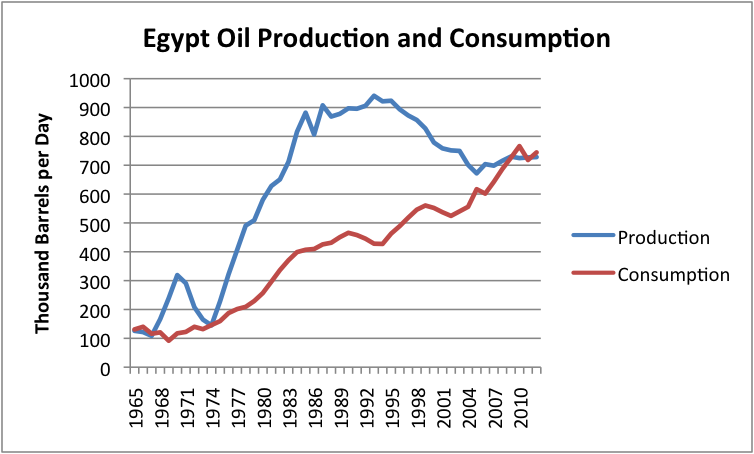
I know monetary velocity has been slowing a lot in recent years. I hadn’t connected that with the slow-down in trade, though.
Good point!
You could have Jesus Christ as your president —- and it would change nothing — unless of course he can magically turn a thousand barrels of oil into a billion…
The only thing between us and a total apocalypse is QE and the various other stimulus programmes that governments and central banks are using.
If not for a massive new injection of QE on Halloween night in Japan — Japan would have collapsed — and taken the global economy down the sink hole.
This is not a problem of policy — the polices will be EXACTLY the same regardless of who the front man is in the US or any other country … the PTB are the ones that are making the decisions — the politicians as usual — take orders from them — nothing more.
And they have made the right decision — fight off the collapse for as long as possible — by whatever means possible — because when collapse comes it will be final — and it will be a nightmare.
My candidate for the next President will be Drew Carey of the show “Price is Right”
Boy, can he dance and give out the cash. Makes me feel warm all over and the PTB will be able to extend BAU for at least 4 more years!
Let’s not rule out Paris Hilton as POTUS with one of the Kardashian whores as VP…
Keep in mind that these are people who have turned lead into gold — they have no talent — yet they are rich and famous … they have the ability to make a circle a square… 1+1 = 5…
Perhaps they can turn water into oil…
Paris for President!
I think it is more appropriate to wait for the BIS to appoint a president of the U.S..
The current money printing leads to a lot of bubbles, especially asset price bubble (prices of stocks and land prices especially). These seem to eventually pop and deflate, because the value, in terms of what a person can grow on the land, or the amount of goods a company can produce, just isn’t there.
In order to really have the effect of buying more goods and services, the money has to get out into the hands of people who buy these goods–for example, checks to individual citizens. Such distributions could, in fact, be inflationary, I expect. Also, a person would expect that the value of the currency (relative to other currencies) would decrease, if a country did such a thing.
There is also the issue of countries permanently not having enough money to pay for imported goods and services–like Greece, Cyprus, and Ukraine. Their governments can’t print more money and make the situation change. At some point, especially if the countries are not bailed out be someone else (such as the EU), other countries stop trading with them. We have some of this happening now with Russia and Ukraine.
You guys (and gals) crack me up. Yes, you are 100% correct on all points … except for one: the people who are telling you 1+1=3 have all the guns! And guess what? They’re pointed at you!
That’s right, you can argue logic until you are blue in the face, but when the jackbooted thugs tell you to eat the shit sandwich, you’re gonna eat it … or else.
There is only one direction possible in a debt-money system: inflation. If there is any threat of deflation, government will act as an agent for the collective, aggregate economic activity of the People. It doesn’t matter what the law says, or what logic dictates – it’s all about power & control.
So please stop with the intelligent rebuttal and critical insights. The guy with the gun is still going to drink your milkshake.
“There is only one direction possible in a debt-money system: inflation”.
Where did you pull that from?
Is your inflation localized or world wide? Can you advise Japan how to inflate their economy as they have no idea.
You think we will get inflation with wages declining? Tell me how wages will be increased, how money will be placed in the hands of the consumer to consume to increase demand. How employers will pay increased wages. For prices to increase there must be a demand, usually it is for houses, cars and expensive consumer goods. How will we make energy cheap again, how will we address declining EROEI?
Exam question 1. Why doesn’t the government mail a million dollar check to every tax payer to stimulate the economy? Answer in ten words or less.
As you point out the government could give everyone a 10M cheque to try to stop deflation — what I think would happen is hyper inflation — collapse — which means of course massive unstoppable deflation as the faith in the system is torn to pieces…
So I agree — dropping money from helicopters will not ultimately stop a deflationary spiral to hell…
A few years ago, I was discussing with a colleague the phenomenon of dealing with people who didn’t know what they didn’t know. In a moment of genius, I described it as “concentric circles”: they cannot see past their personal level of knowledge, but worse, they don’t suspect there might be larger issues at play sitting on the next ring.
Your list of questions identifies you as someone who has come up to speed on the mechanical issues. Excellent – you’re now in the 1% of understanding. But at the same time, you’ve ‘outed’ yourself as a naive individual by assuming that standard econ 101 relationships have any bearing in a political world.
In case you haven’t noticed, we live in a political world. Therefore, inflation is the only possible outcome in a debt-money system because the alternative is collapse. You can observe the policies of inflation operating on a global scale 24/7.
Right now, the PTB are playing relatively nice, but when the shit gets real, then the real fun & games begin.
B9… might I suggest that it is you who is enthralled by the Deep State’s supposed omnipotence and their ability to maintain BAU in some form or other (or Econ 101)…
That you fail to realize that their attempts to generate inflation and fend off a deflationary crash will not work…
Look at what is happening — when deflation rears it’s head they react with more QE… that works for a while — but then we spiral downwards — we get even greater amounts of stimulus… rinse repeat…
So how does this end?
It will end as it always ends when one prints money on this scale — in hyperinflation — total economic collapse — and a deflationary spiral to to hell…
There will be no ‘PTB’ when this plays — there will be chaos.
“In case you haven’t noticed, we live in a political world.”
Which is exactly why they wont allow the inevitable end of inflation that must occur when resource depletion(now) occurs to hurt them.
Even if the government can’t mail a million dollar check, it has been suggested by one peak oil writer (in a web discussion group) that the government could try smaller checks to individuals- say $5,000 or $10,000. Or bailing out shale oil companies that run into cash flow problems. I don’t know where the limit comes. The US dollar is so high now that lowering it somewhat might not hurt. At one point, US citizens did get something like $500 checks.
I agree with you though. It is hard to make the whole scheme work out. Eventually there are going to be a lot of countries that other countries will not accept orders from, unless they are in some sense paid in advance. Countries like Ukraine and Egypt.
You might be right. Governments have a huge amount of debt that they desperately need to inflate away.
But how do you inflate away debt when every new dollar has a new dollar of debt attached to it?
That is why a devaluation is coming – it’s the only possible course of action to take for the PTB to retain control, therefore it will be taken.
And yes, Paul, me, you and everyone else with the slightest clue knows how this ends. But as our resident troll (ahem, cough, InAlaska) keeps asking, what’s the timing? Who the fvck knows?
The problem is, rather than domestic disturbances causing boots to the throat, maybe the psychopaths go for global thermonuclear war.
All I know, is the short-term game couldn’t be more clear. Play accordingly.
Hello B9K9,
Now I am really curious because your insights may help me to understand a huge piece of the puzzle.
Can you explain for us deflationists how the PTB will bring about inflation? This is a serious question.
I look at Europe and I see deflationary tendencies, I see Japan and I see deflationary tendencies. Even in the US I see deflationary tendencies at the consumer level (not at at Wall Street and high finance of course). They simply seem to lack the means to cycle the money downwards and increase velocity. All of this despite QEs and equivalents.
So, please explain with more detail that more of us can understand.
Thanks
I think you are asking a good question. The question is especially important, it we start seeing more and more debt defaults, because of low commodity prices. Debt defaults are deflationary, as are falling commodity prices.
Well B9K9,
I was trying to remain a good and quiet Troll, just reading and thinking, but you invoked my name so I have come out from under my bridge. I really don’t have any quarrel with anything that you or Paul, or Joe or Don or Edpell are saying. Collapse is coming. We are all going to die. The Earth is in a shambles. America is both Fat and Evil. The PTB are running a Deep State ponzi scheme. There is Nothing we can do about it. So, can I have my membership card back now? All I want to know is: when is somebody going to actually be right about the damn date? In 2008, we were going to collapse imminently. Then we got to move it back to 2010. Phew! Then we had the whole 2012 Mayan Calendar amateur hour. Then Gail came out with a bold date and guess what, it was about 2 years ago (sorry, Gail). I just want somebody who knows more than me to be right for once. It only has to be once after all. I’d say we’ve all got a credibility problem, here. Ah, its good to be back.
I think Gail said 2 years ago less than one year ago … it was definitely after I started reading this blog and that is less than a year now…
I am not so much interested in timing as that is absolutely impossible to predict — look at the 2008 crash — there were a number of people who knew things were going to tip over (rather obvious when banks are offering ‘Liar Loans’) — the problem with timing it is that you cannot anticipate what the PTB will do to delay the collapse…
What I am more interested in is what will be the catalyst. Will the PTB be able to pull out the bazooka and blow all black swans to bits?
If that is the case then I suspect that the trigger will be peak total global oil production. Then we get physics involved… and physics trumps money printing.
Or is what we are reaching simply some kind if discontinuity, and none of us will be around to view what happened after the fact? Thus, we will never know if we were “right”.
Gail and Paul,
Actually, I think you are both right. Paul, you are right that I was wrong on Gail’s prediction. She said two years ago, about a year ago, so her prediction still has legs. Gail, I think you are right that there might some type of discontinuity so that we won’t know we were right until much father down the slope. Or if Paul is right and it goes catastrophic all at once, we may never know. I am going to stop harping on the fact that we are always pushing the prediction back by two years because, again, Paul is right that the actual date itself doesn’t really matter. It is the process of getting there that is what is really interesting. The date thing is more a prepper issue, when do I need to rotate my wheat and rice stocks. When do I need to top off my fuel tank. Unknowable. It probably won’t matter because when events take over, they usually happen very fast and you can never time it. What is really obvious, though, is that all of the events that the doomer community has predicted are coming true, remarkably. Oil is not running out, demand is. Economies world wide have stagnated. Politics has gridlocked. Police are militarized. The list goes on. I think we’re getting it right, its just taking longer than anyone ever guessed it would. Even going all the way back the the Club of Rome, Hubbert and the early pioneers of this idea. I sure enjoy participating in this blog chock full of very perceptive people. Enough said.
Glad you could reach this positive view of things.
Yes, I drank all of the Kool-Aid. It was quite delicious.
Yes, I drank all of the Kool-Aid. It was quite delicious!
Woot! InAlaska is back! *more subdued* I am wondering the same thing I regards to nailing the date, but you are all right. No one knows the date at this juncture. Gail is fairly disciplined, and any prediction, without a fairly accurate model, would be wrong.
I was reading one of Gail’s 2011 articles and it had 68 comments. I only recognized mr edpell (sorry Paul!). I had found that article by googling “peak debt”. She touched upon this subject in this article but the idea of peak debt I had not occurred to me. It seems that the fed could quite simply print money forever (barring hyperinflation). But along with marginal GDP increase per debt increase (in yet another article by her), and peak oil, we may have some assemblences of trigger events. For collapse or for more plateau effects, I do not know.
I believe Gail has finger in the wind in regards to which way things are blowing. There is a storm brewing over the horizon, and we all sense it. I have never seen anyone with the patience like Gail for keeping up this type of dialogue…I have been using the Internet since yahoo was @Stanford.edu.
Thank you, Gail. Terrific stuff as always. The question that always springs to mind is of course the great unanswerable – how long do we have before the systemic failure you describe sets in?
I’ve seen Hemingway’s famous quote about bankruptcy referenced on this site before: “How did you go bankrupt? Two ways. Gradually, then suddenly.” Clearly we are already in the gradually phase, so how long until suddenly sets in? One feels it can’t be long now.
Or perhaps it would be more constructive to ask – is there a year beyond which it is mathematically impossible for business as usual to continue? The major oil companies are looking very vulnerable. With capex costs rising at 10% p/a, their break even needs start to look impossible well before 2020. And would investor confidence last that long anyway?
Global debt has topped $100 trillion. What sort of economic growth would be necessary to refinance, let alone pay off that sort of figure? Well, it’s a moot point. The debt can never and will never be paid. The diagnosis is terminal; only the time-frame is uncertain.
Is anyone here brave or foolish enough to predict a year?
Y’ll know what the acronym WAG stands for right? I’ll take one: The next step down the ladder of economic collapse might come in the 2016-2018 time frame.
I read a lot at here and at http://www.economic-undertow.com/ and http://www.golemxiv.co.uk/ and http://peakoilbarrel.com/
Add total Govt debt, unfunded liabilities along with derivatives and you’re actually looking at 1.6 Quadrillion and some say that number might be conservative.
Its equivalent of 30 or 40 years of ecomic growth – or horrendous inflation…..
“Its equivalent of 30 or 40 years of ecomic growth – or horrendous inflation…”
it wont be purchasing finite resouces. It wil be purchasing things like medical technology- lots of engineering and tech, but not much finite resources. That sort of sonsumption is A-ok. Debt instruments mortgages high tech all A-ok. What is inflation if what you are purchasing is infinite just like the money is?
“1.6 Quadrillion and some say that number might be conservative.”
Thats what im saying. a quadrillion here a quadrillion there- it adds up after a while. 🙂
It has amazed me that things have gone on as well as they have, for as long as they have. The central bankers have certainly kept things going for quite a while.
Timing is the weak spot in figuring this out. Everything seems to hang together longer than we think it might be possible. It seems like we are going to see bigger and bigger stumbles in the next year or two. It will probably take big events to ignite a major step down–for example, major banks in Europe and Japan failing, and governments not bailing them out. Or some of the major participants in the Eurozone deciding to leave it. Or a drop in oil prices to $60 barrel. Even if oil prices remain at the current level, this could lead to a domino effect over a period of time.
I haven’t said that everything drops off all at once (although I suppose it is possible). In the chart that looks very steep, I still have something like 25% of the world energy supply in 2035, which is 20 years from 2015.
Hi Gail,
This chart just keeps staring at me. You are so usually reserved, non-hysterical and polite, but then I see this chart and it screams. Well, from my browser. And I know it must be difficult to not predict a date (in text), but this is the only time I have ever seen you put out an estimate.
Is this based on your intuition, your informal model, world3 (limits to growth), or Seneca cliff? I think you’ve mentioned Secular Cycles by Peter Turchin and Sergey A. Nefedov.
I have no idea myself, but sometimes my intuition tells me that things could go on for another 20 years. But I have not seen a prediction (from anyone) that has at least one element of “this is where things will break if they exceed this limit”. It is so difficult to model and I think the World3 is the best one I have seen so far (brilliant too).
Thank you, as always, for your patience and hard-work!
Sorry, “only time” should be “only way”, since this chart has been published many times.
“Making predictions is difficult, particularly when it regards the future”, to quote somebody (sorry can’t get the name again)
Yogi Berra… but I think he stole that from someone else
Niels Bohr?
“major banks in Europe and Japan failing, and governments not bailing them out. Or some of the major participants in the Eurozone deciding to leave it.”
I rule those out.
I cannot see why the central banks would allow a bank to fail — they have demonstrated they will do anything to stop that…
Not so sure about allowing a country to fail — can they stop Japan from collapsing? Japan is eating its own tail now as the only buyer of its debt — but I guess so long as nobody tells the emperor he is naked — there is no upside for anyone who exposes this so it could go on in spite of itself…
We already saw what happened when Berlusconi pulled the Deep State’s tail a few years ago — out on his butt. If the PTB do not want a country to leave the EU — then no country will leave — I am certain that any leader who attempts this would be ruined (remember – the NSA has the goods on EVERYONE)
My expectation is that financially this can continue for some time — but I continue to believe that when overall oil supply peaks then we are toast — growth will shudder to a complete standstill — money printing makes shale possible — unless there is shale 2.0 that can be supported by QE … then I think that is the point of the game being over
Keep in mind if shale did not come online hard and fast after 2008… I would not likely be typing this comment….
Actually, the points are plotted only at five year intervals, so it can’t show anything very fine. The high point is 2015, in terms of the five year intervals. I suppose the top could be more rounded, if there were more points plotted.
One of the major points is that if the problem is lack of affordability (demand), all of the types of fuel drop more or less simultaneously. We ran into that in 2008. Prices dropped for all kinds of fuel at once. I wrote an Oil Drum post in December 2008 about the subject. Impact of the Credit Crisis on the Energy Industry- Where Are We Now?
The Republicans are in, and there will be unbridled oil exploration and production. There will even be subsea fracking. Offshore drilling action will increase dramatically:
“In less than a generation, we progressed from engineering concepts hand-drawn on drafting tables – that’s how I had to do them – to sophisticated computer-designed rigs,” he said, noting that some facilities now sit in 10,000 ft (3,048 m) of water. “We project that from 2010 to 2040, deepwater production worldwide will grow 150%,” Tillerson said
Under a Republican controlled Congress, the Keystone Pipeline will be a go, and it will eventually carry Arab owned oil through the North American continent, out of the Gulf of Mexico and off to China and Latin America.
“Chevron made waves in the business world when it announced its October 6 sale of 30-percent of its holdings in the Alberta-based Duvernay Shale basin to Kuwait Foreign Petroleum Exploration Company (KUFPEC) for $1.5 billion.”
NC Republicans are ready to give the green light to massive oil and gas exploration, and are doing so in secret:
“RALEIGH, N.C. (AP) — Officials from North Carolina, South Carolina and Virginia met privately Thursday with federal regulators and groups funded by oil and gas companies to discuss plans for drilling off the Atlantic coast.
A coalition of environmental groups sought to be allowed inside the Mid-Atlantic Outer Continental Shelf Oil and Gas Five-Year Program meeting, which was held at the North Carolina Museum of Natural Sciences in Raleigh.
Reporters were allowed to attend the end of the session only to hear closing remarks by North Carolina Gov. Pat McCrory, but only after a police officer posted at the door checked their credentials. By then, many of the 60 people on the list of invited attendees had left, leaving behind empty chairs.
McCrory, a Republican, has been outspoken in his support for launching oil and gas exploration off of the East Coast as soon as possible. On Thursday, he said the drilling would create jobs and bring needed revenue to the state.”
Gail, these things seem to run counter to your positions.
I reside in North Carolina and affirm what you write, Rich. Several years ago I went to Raleigh State House to lobby against a fracking measure, to no avail. What i learned afterward that it was a “green light” even before the vote. The vote was decided in a comical fashion, the deciding cast vote was from a member that thought they voted against fracking, but actually voted for it in an overnight session.
You are correct, whatever it takes now to bring “energy product” to market will be approved, no matter what. The new senate leader stated such bu saying he hears the coal miner in West Virginia that needs a job.
It is of course a deal with the devil … but without fracking we would have collapsed already…
I used to be rapidly anti-shale…. but I have turned the Titanic… I don’t like it… but I do not oppose it … because the alternative is far worse…
How will the rapidly growing economies of BRICS (rising income, increasing number of people becoming affluent to own a car and optimistic governments looking forward to further development) align with your estimate of future energy production?
If the your estimate is anything true to happen, it may be good to curb the GHG emissions.
A mega-trend I rarely hear mentioned – Both transportation and electrcity energy planning are insufficiently recognizing the dramatic plateauing of *demand*, as technology changes everything about our lives.
It’s not just telecommuting, telework, teleconference – we now use computers and smartphones for – tele-shopping, tele-renting movies, tele-paying bills, tele-paying your taxes and renewing your licenses, tele-chat with friends, tele-recheck your book at the library, tele-send your husband a picture of the broken board when he’s at Home Depot…….
Vehicle miles traveled per capita have been falling since 2002 in the US.
At first, they thought it might be the post-9/11 recession, but the trend has become de-coupled from both population and GDP.
Land use patterns are shifting to “livable communities”, where people can live/work/shop/play without owning a car – local governments made an intentional shift in this direction, and it’s worked. Car ownership among young people has plummeted – they see car ownership as an expensive, polluting risk. With options like zip-car, they opt out of ownership, meaning they walk or take transit or, make other plans that don’t require cars….
Similar shifts in tele-commerce effect trucking and other freight transport.
And tele-commerce is reducing the need for the developing world to become automobile-dependent, as well.
There are definitely good trends happening. It is not clear how much difference these will make, unfortunately. A down trend in car ownership means a down trend in a number of kinds of jobs: manufacturing cars, manufacturing steel, repairing cars, and automobile insurance, for example. A cutback in trucking has similar effects. Without as many cars and trucks paying road taxes, it becomes a problem to maintain our roads, since roads continue to degrade with freezing and thawing. Government revenue from taxes on wages also tends to decline, creating a problem for school funding and other needed services.
Our big problem already is a lack of good paying jobs, and this is something we have not been working hard enough on fixing. Our focus has been entirely on the other side of the problem–using too much fossil fuels. Unfortunately, fossil fuel use is tightly linked with jobs. This creates a conundrum.
Totally agree — energy efficiency is a total myth — when you save energy using an appliance that is more efficient, you ‘save’ money….
But what do you do with that money? Of course you spend it – on other things that require energy…
Or you bank it — where it is lent out many times over and other people buy more stuff…
The main reason that oil consumption is flattening is because real wages are down nearly 10% in recent years.
I am amazed that oil consumption is actually not negative based on the fact that people have less cash to spend.
The stimulus policies including subprime auto lending, student loans, etc… appear to be making up for that…. barely
http://graphics8.nytimes.com/images/2012/08/23/business/economy/economix-23incomechange/economix-23incomechange-blog480-v2.jpg
Yes a conundrum…… I admire the way you link and create linkages to our Networked system!
As an adaptation to energy supply pain, telework is a great option. The problem implementing such in any meaningful scale is the market impacts to real estate, auto manufacturing, and related supply chains, why the price of oil would tank, property taxes implode. I think healthcare would take a big hit too as people had an extra non commuting hour a day stress free.
Telework works for certain jobs, but not others (waitress, construction, store sales, health care, personal trainer). If we have problems with the Internet or electricity, it ceases to work. Jobs that can be done at home can be easily exported to lower-wage countries. This doesn’t really solve our problem!
Agreed it does not solve the problem but there are many opportunities to reduce energy consumption. I believe there are around 10 million good telework candidates in the USA who average 38 miles round trip to work and back. Taking even 20% of this cohort off the road each day would have a huge impact in energy conservation and likely would crush BAU so it will not happen.
Agreed. We should do all of these types of things, even if some people equate it to singing Koombaya. Doing what is right by the Earth regardless of the outcome for our species does make a difference to that individual (whether they acknowledge it or not), to society, to the species, to the Universe. Just sayin’.
Thanks Gail for all your hard work putting it all together.
I bet Jim Cramer reads your blog!
http://www.cnbc.com/id/102152194#.
Cramer added that there is a perfect storm of issues happening. First, there is the weakening global economy. The world outside of the U.S. is weakening, which means oil is getting cheaper as well. Additionally, the U.S. is still importing oil. In the long term, the Saudis can flood the market to reduce reduce drilling, but they wouldn’t be able to dump as much oil into the U.S. if global economies were stronger and able to use more oil.
To top it off, oil is priced in U.S. dollars. That makes oil more expensive for the world as our currency gains strength. Europe isn’t exactly getting a deal on oil if the Euro is weakening.
The second issue stems from overproduction of oil in the U.S. There has been a 71 percent increase in oil production since 2005, along with increased popularity of fuel-efficient cars and trucks.
“We do not have the storage space nor the pipelines to get this oil to market, and the price discounts that are available in our country are, in the most landlocked places, well below whatever the Saudis are charging,” said Cramer
Thanks! The idea that low prices might hang around is hard for people to understand. Of course, there will still be some upward ticks, as when there are pipeline bombings.