
The standard way to make forecasts of almost anything is to look at recent trends and assume that this trend will continue, at least for the next several years. With world oil production, the trend in oil production looks fairly benign, with the trend slightly upward (Figure 1).

Figure 1. Quarterly crude and condensate oil production, based on EIA data.
If we look at the situation more closely, however, we see that we are dealing with an unstable situation. The top ten crude oil producing countries have a variety of problems (Figure 2). Middle Eastern producers are particularly at risk of instability, thanks to the advances of ISIS and the large number of refugees moving from one country to another.

Figure 2. Top ten crude oil and condensate producers during first quarter of 2014, based on EIA data.
Relatively low oil prices are part of the problem as well. The cost of producing oil is rising much more rapidly than its selling price, as discussed in my post Beginning of the End? Oil Companies Cut Back on Spending. In fact, the selling price of oil hasn’t really risen since 2011 (Figure 3), because citizens can’t afford higher oil prices with their stagnating wages.

Figure 3. Average weekly oil prices, based on EIA data.
The fact that the selling price of oil remains flat tends to lead to political instability in oil exporters because they cannot collect the taxes required to provide programs needed to pacify their people (food and fuel subsidies, water provided by desalination, jobs programs, etc.) without very high oil prices. Low oil prices also make the plight of oil exporters with declining oil production worse, including Russia, Mexico, and Venezuela.
Many people when looking at future oil supply concern themselves with the amount of reserves (or resources) remaining, or perhaps Energy Return on Energy Invested (EROEI). None of these is really the right limit, however. The limiting factor is how long our current networked economic system can hold together. There are lots of oil reserves left, and the EROEI of Middle Eastern oil is generally quite high (that is, favorable). But instability could still bring the system down. So could popping of the US oil supply bubble through higher interest rates or more stringent lending rules.
The Top Two Crude Oil Producers: Russia and Saudi Arabia
When we look at quarterly crude oil production (including condensate, using EIA data), we see that Russia’s crude oil production tends to be a lot smoother than Saudi Arabia’s (Figure 4). We also see that since the third quarter of 2006, Russia’s crude oil production tends to be higher than Saudi Arabia’s.

Figure 4. Comparison of quarterly oil production (crude + condensate) for Russia and Saudi Arabia, based on EIA data.
Both Russia and Saudi Arabia are headed toward problems now. Russia’s Finance Minister has recently announced that its oil production has hit and peak, and is expected to fall, causing financial difficulties. In fact, if we look at monthly EIA data, we see that November 2013 is the highest month of production, and that every month of production since that date has dropped from this level. So far, the drop in oil production has been relatively small, but when an oil exporter is depending on tax revenue from oil to fund government programs, even a small drop in production (without a higher oil price) is a financial problem.
We see in Figure 4 above that Saudi Arabia’s quarterly oil production is quite erratic, compared to oil production of Russia. Part of the reason Saudi Arabia’s oil production is so erratic is that it extends the life of its fields by periodically relaxing (reducing) production from them. It also reacts to oil price changes–if the oil price is too low, as in the latter part of 2008 and in 2009, Saudi oil production drops. The tendency to jerk oil production around gives the illusion that Saudi Arabia has spare production capacity. It is doubtful at this point that it has much true spare capacity. It makes a good story, though, which news media are willing to repeat endlessly.
Saudi Arabia has not been able to raise oil exports for years (Figure 5). It gained a reputation for its oil exports back in the late 1970s and early 1980s, and has been able to rest on its laurels. Its high “proven reserves” (which have never been audited, and are doubted by many) add to the illusion that it can produce any amount it wants.

Figure 5. Comparison of Russian and Saudi Arabian oil exports, based on BP Statistical Review of World Energy 2014 data (oil production minus oil consumption). Pre-1985 Russian amounts estimated based on Former Soviet Union amounts.
In 2013, oil exports from Russia were equal to 88% of Saudi Arabian oil exports. The world is very close to being as dependent on Russian oil exports as it is on Saudi Arabian oil exports. Most people don’t realize this relationship.
The current instability of the Middle East has not hit Saudi Arabia yet, but there is increased fighting all around. Saudi Arabia is not immune to the problems of the other countries. According to BBC, there is already a hidden uprising taking place in eastern Saudi Arabia.
US Oil Production is a Bubble of Very Light Oil
The US is the world’s third largest producer of crude and condensate. Recent US crude oil production shows a “spike” in tight oil productions–that is, production using hydraulic fracturing, generally in shale formations (Figure 6).

Figure 6. US crude oil production split between tight oil (from shale formations), Alaska, and all other, based on EIA data. Shale is from AEO 2014 Early Release Overview.
If we look at recent data on a quarterly basis, the trend in production also looks very favorable.

Figure 7. US Crude and condensate production by quarter, based on EIA data.
The new crude is much lighter than traditional crude. According to the Wall Street Journal, the expected split of US crude is as follows:

Figure 8. Wall Street Journal image illustrating the expected mix of US crude oil.
There are many issues with the new “oil” production:
- The new oil production is so “light” that a portion of it is not what we use to power our cars and trucks. The very light “condensate” portion (similar to natural gas liquids) is especially a problem.
- Oil refineries are not necessarily set up to handle crude with so much volatile materials mixed in. Such crude tends to explode, if not handled properly.
- These very light fuels are not very flexible, the way heavier fuels are. With the use of “cracking” facilities, it is possible to make heavy oil into medium oil (for gasoline and diesel). But using very light oil products to make heavier ones is a very expensive operation, requiring “gas-to-liquid” plants.
- Because of the rising production of very light products, the price of condensate has fallen in the last three years. If more tight oil production takes place, available prices for condensate are likely to drop even further. Because of this, it may make sense to export the “condensate” portion of tight oil to other parts of the world where prices are likely to be higher. Otherwise, it will be hard to keep the combined sales price of tight oil (crude oil + condensate) high enough to encourage more tight oil production.
The other issue with “tight oil” production (that is, production from shale formations) is that its production seems to be a “bubble.” The big increase in oil production (Figure 6) came since 2009 when oil prices were high and interest rates were very low. Cash flow from these operations tends to be negative. If interest rates should rise, or if oil prices should fall, the system is likely to hit a limit. Another potential problem is oil companies hitting borrowing limits, so that they cannot add more wells.
Without US oil production, world crude oil production would have been on a plateau since 2005.

Figure 9. World crude and condensate, excluding US production, based on EIA data.
Canadian Oil Production
The other recent success story with respect to oil production is Canada, the world’s fifth largest producer of crude and condensate. Thanks to the oil sands, Canadian oil production has more than doubled since the beginning of 1994 (Figure 10).

Figure 10. Canadian quarterly crude oil (and condensate) production based on EIA data.
Of course, there are environmental issues with respect to both oil from the oil sands and US tight oil. When we get to the “bottom of the barrel,” we end up with the less environmentally desirable types of oil. This is part of our current problem, and one reason why we are reaching limits.
Oil Production in China, Iraq, and Iran
In the first quarter of 2014, China was the fourth largest producer of crude oil. Iraq was sixth, and Iran was seventh (based on Figure 2 above). Let’s first look at the oil production of China and Iran.

Figure 11. China and Iran crude and condensate production by quarter based on EIA data.
As of 2010, Iran was the fourth largest producer of crude oil in the world. Iran has had so many sanctions against it that it is hard to figure out a base period, prior to sanctions. If we compare Iran’s first quarter 2014 oil production to its most recent high production in the second quarter of 2010, oil production is now down about 870,000 barrels a day. If sanctions are removed and warfare does not become too much of a problem, oil production could theoretically rise by about this amount.
China has relatively more stable oil production than Iran. One concern now is that China’s oil production is no longer rising very much. Oil production for the fourth quarter of 2013 is approximately tied with oil production for the fourth quarter of 2012. The most recent quarter of oil production is down a bit. It is not clear whether China will be able to maintain its current level of production, which is the reason I mention the possibility of a decline in oil production in Figure 2.
The lack of growth in China’s oil supplies may be behind its recent belligerence in dealing with Viet Nam and Japan. It is not only exporters that become disturbed when oil supplies are not to their liking. Oil importers also become disturbed, because oil supplies are vital to the economy of all nations.
Now let’s add Iraq to the oil production chart for Iran and China.

Figure 12. Quarterly crude oil and condensate production for Iran, China, and Iraq, based on EIA data.
Thanks to improvements in oil production in Iraq, and sanctions against Iran, oil production for Iraq slightly exceeds that of Iran in the first quarter of 2014. However, given Iraq’s past instability in oil production, and its current problems with ISIS and with Kurdistan, it is hard to expect that Iraq will be a reliable oil producer in the future. In theory Iraq’s oil production can rise a few million barrels a day over the next 10 or 20 years, but we can hardly count on it.
The Oil Price Problem that Adds to Instability
Figure 13 shows my view of the mismatch between (1) the price oil producers need to extract their oil and (2) the price consumers can afford. The cost of extraction (broadly defined including taxes required by governments) keeps rising while “ability to pay” has remained flat since 2007. The inability of consumers to pay high prices for oil (because wages are not rising very much) explains why oil prices have remained relatively flat in Figure 3 (near the top of this post), even while there is fighting in the Middle East.

Figure 13. Comparison of oil price per barrel needed by producers (Brent) with ability to pay. Amounts based on judgment of author.
When the selling price is lower than the full cost of production (including the cost of investing in new wells and paying dividends to shareholders), the tendency is to reduce production, one way or another. This reduction can be voluntarily, in the form of a publicly traded company buying back stock or selling off acreage.
Alternatively, the cutback can be involuntary, indirectly caused by political instability. This happens because oil production is typically heavily taxed in oil exporting nations. If the oil price remains too low, taxes collected tend to be too low, making it impossible to fund programs such as food and fuel subsidies, desalination plants, and jobs programs. Without adequate programs, there tend to be uprisings and civil disorder.
If a person looks closely at Figure 13, it is clear that in 2014, we are out in “Wile E. Coyote Territory.” The broadly defined cost of oil extraction (including required taxes by exporters) now exceeds the ability of consumers to pay for oil. As a result, oil prices barely spike at all, even when there are major Middle Eastern disruptions (Figure 3, above).
The reason why Wile E. Coyote situation can take place at all is because it takes a while for the mismatch between costs and prices to work its way through the system. Independent oil companies can decide to sell off acreage and buy back shares of stock but it takes a while for these actions to actually take place. Furthermore, the mismatch between needed oil prices and charged oil prices tends to get worse over time for oil exporters. This lays the groundwork for increasing dissent within these countries.
With oil prices remaining relatively flat, importers become complacent because they don’t understand what is happening. It looks like we have no problem when, in fact, there really is a fairly big problem, lurking behind the scenes.
To make matters worse, it is becoming more and more difficult to continue Quantitative Easing, a program that tends to hold down longer-term interest rates. The expectation is that the program will be discontinued by October 2014. The reason why the price of oil has stayed as high as it has in the last several years is because of the effects of quantitative easing and ultra low interest rates. If it weren’t for these, oil prices would fall, because consumers would need to pay much more for goods bought on credit, leaving less for the purchase of oil products. See my recent post, The Connection Between Oil Prices, Debt Levels, and Interest Rates.

Figure 14. Big credit related drop in oil prices that occurred in late 2008 is now being mitigated by Quantitative Easing and very low interest rates.
Because of the expectation that Quantitative Easing will end by October 2014 and the pressure to tighten credit conditions, my expectation is that the affordable price of oil will start dropping in late 2014, as shown in Figure 13. The growing disparity between what consumers can afford and what producers need tends to make the Wile E. Coyote overshoot condition even worse. It is likely to lead to more problems with instability in the Middle East, and a collapse of the US oil production bubble.
Conclusion
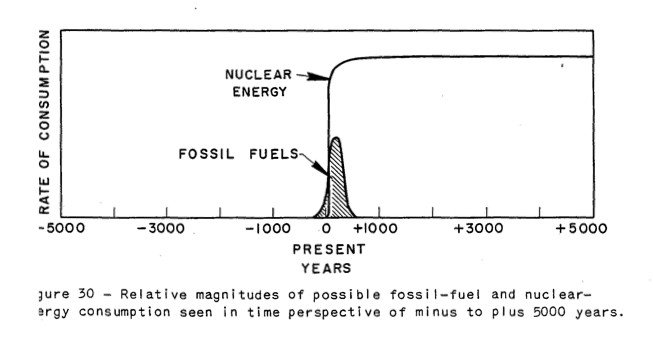
I explained earlier that we live in a networked economy, and this fact changes the way economic models work. Many people have developed models of future oil production assuming that the appropriate model is a “bell curve,” based on oil depletion rates and the inability to geologically extract more oil. Unfortunately, this isn’t the right model.
The situation is far more complex than simple geological decline models assume. There are multiple limits involved–prices needed by oil producers, prices affordable by oil importers, and prices for other products, such as water and food. Interest rates are also important. There are time lags involved between the time the Wile E. Coyote situation begins, and the actions to fix this mismatch takes place. It is this time lag that tends to make drop-offs very steep.
The fact that we are dealing with political instability means that multiple fuels are likely to be affected at once. Clearly natural gas exports from the Middle East will be affected at the same time as oil exports. Many other spillover effects are likely to happen as well. US businesses without oil will need to cut back on operations. This will lead to job layoffs and reduced electricity use. With lower electricity demand, prices for electricity as well as for coal and natural gas will tend to drop. Electricity companies will increasingly face bankruptcy, and fuel suppliers will reduce operations.
Thus, we cannot expect decline to follow a bell curve. The real model of future energy consumption crosses many disciplines at once, making the situation difficult to model. The Reserves / Current Production model gives a vastly too high indication of future production, for a variety of reasons–rising cost of extraction because of diminishing returns, need for high prices and taxes to support the operations of exporters, and failure to consider interest rates.
The Energy Return on Energy Invested model looks at a narrowly defined ratio–usable energy acquired at the “well-head,” compared to energy expended at the “well-head” disregarding many things–including taxes, labor costs, cost of borrowing money, and required dividends to stockholders to keep the system going. All of these other items also represent an allocation of available energy. A multiplier can theoretically adjust for all of these needs, but this multiplier tends to change over time, and it tends to differ from energy source to energy source.
The EROEI ratio is probably adequate for comparing two “like products”–say tight oil produced in North Dakota vs tight oil produced in Texas, or a ten year change in North Dakota energy ratios, but it doesn’t work well when comparing dissimilar types of energy. In particular, the model tends to be very misleading when comparing an energy source that requires subsidies to an energy source that puts off huge tax revenue to support local governments.
When there are multiple limits that are being encountered, it is the financial system that brings all of the limits together. Furthermore, it is governments that are at risk of failing, if enough surplus energy is not produced. It is very difficult to build models that cross academic areas, so we tend to find models that reflect “silo” thinking of one particular academic specialty. These models can offer some insight, but it is easy to assume that they have more predictive value than they do.
Unfortunately, the limits we are reaching seem to be financial and political in nature. If these are the real limits, we seem to be not far away from the simultaneous drop in the production of many energy products. This type of limit gives a much steeper drop off than the frequently quoted symmetric “bell curve of oil production.” The shape of the drop off corresponds to (1) the type of drop off experienced by previous civilizations when they collapsed, (2) the type of drop-off I have forecast for world energy consumption, and (3) Ugo Bardi’s Seneca cliff. The 1972 book Limits to Growth by Donella Meadows et al. says (page 125), “The behavior mode of of the system shown in figure 35 is clearly that of overshoot and collapse,” so it tends to come to the same conclusion as well.


Food Inflation Watch: California Farmers’ Water Costs Surge 700% After Government Cuts Supply
http://www.zerohedge.com/news/2014-07-24/food-inflation-watch-california-farmers-water-costs-surge-700-after-government-cuts-
Or alternatively, farmers in California go broke. Economists like us to think the outcome is determined in one way. Actually, I suppose we could have both food inflation and farmers going broke.
Gail
Or kill themselves. As a segment of the population, (small) farmers in Britain have one of the highest suicide rates.
I have just been reading several well-informed articles emphasising once again how little importance food production has in the eyes of elected politicians here – the big votes are, or course, in the cities.
Any idea of a ‘planned transition’ or ‘soft collapse’ in the UK is a nonsense. Even so basic a concept as food security is not applied now. Farming is simply not valued, and land will be lithely sacrificed on the altar of Fracking…..
Things In The Middle East Are About To Get Much Worse
There are major clashes occurring currently in The West Bank tonight as claims of 10s of thousands and Palestinians clash with Israeli soldiers. Sadly, as the photos below reveal taken moments ago show, things appear set to get very much worse.
http://www.zerohedge.com/news/2014-07-24/things-gaza-are-about-get-much-worse
been banging on for ages–the entire region must be looked at in total, not isolated incidents and wars in various places
Ultimately it’s a resource war
With undertones of zionist expansion — of course that is related to resource control as well
https://www.google.com/?gws_rd=ssl#q=palistine+population&safe=off
Pingback: World Oil Production at 3/31/2014–Where are We Headed? | Energy-Comparison.net
Thanks Gail for a great article! Here are some thoughts:
1. I got crazy when climate scientist start talking about 1000 ppm CO2. Seems like the upper case would be that we burn as much in the future as we managed to burn in the past. I.e. an additional 120ppm -> 520ppm. Say 600ppm to be on the safe side.
2. That said, 450ppm is probably enough to seriously melt some ice and raise sea levels > 1m. Maybe more but it’s at least 50 years out. Lots will have happened in the next 50 years.
3. Climate is a slow moving system. James Hansen says so in every post/speech.
4. Population and Energy are fast moving systems (at least in comparison with climate). I just picked up a copy of Malthus. His writings are amazing! What genius to foresee this 200 years in advance. Of course he couldn’t know that we would find as much fossil fuel as we did so perhaps his predictions got pushed out a bit. But rest asure that they will come true.
5. I no-longer understand monetary policy. It seems that inflation could be kept up indefinitely, and this could lead to an illusion of growth as they continue to not tell us what the real inflation is, but in time this will become more and more ridiculous. In the end printing money does not equal printing food. These days you work 1 hour to earn 1 Big Mac. When will you work 2 hours? I don’t understand how minimum wage earners even survive. Maybe they don’t really. I heard it’s $4 in Detroit. This from a friend of mine who runs a series of restaurants and was seriously upset about the $15 minimum wage proposal in Seattle. Seems like “upward mobility” was the shield everybody was hiding behind. What if there is none? What if there is downward mobility instead? Ugh.
6. There will be warnings. Just looking at the US: Detroit is a warning. I strongly suspect, but I could be wrong, that California will dry out, and this will have consequences. At some point people will start to migrate. Maybe the sensus will try to conceal this? Las Vegas tunneling to get the last drop out of lake Mead! This may cause Hoover dam to stop generating power.
7. These are all “pollutions” in the limits to growth sense. They lead to steeper declines than would otherwise be the case. At some point mitigation becomes seriously expensive. Example: Florida trying to pump the Atlantic back out at high tide…
8. In the end it’s every family fighting for itself. Hanging on to two jobs. The moment you loose a grip on your job you don’t know if you are going to surface again or “slip under”. It’s not like we live in Sweden where they used to set you up with an appartment and a temp job. This is nolonger true though. I think people are more and more scared but they are not saying it. It’s not talked about.
9. Coal Mining is not profitable. Uranium Mining in the tanks. Gas looks weird and Oil is still profitable if you have older fields. Facebook, IPhones, MS Office, Windows all very profitable. How can this be sustained? Are we not going to make steel anymore? Dry bulk shipping! What a joke. Seriously a worthless business. All of this could change, but that may mean operating at a smaller scale. Close the costliest mines. Scrap the old boats.
10. De-growth is here.
Thoughtful reply. Nice breadth.
Thanks for your comments. I agree with most of them.
I wrote an article about my view on climate. http://ourfiniteworld.com/2014/04/11/oil-limits-and-climate-change-how-they-fit-together/ The big issue is that the whole economy is likely to collapse, in not many years. Without an international trade system to keep high tech production up, an operating electric grid, and a lot of other things we are used to (banks to pay workers, for example), the amount of any of the fossil fuels extracted is going to be very low. We can (in theory) make electric cars, but without the ability to repair roads, and without a working electric grid, how much good are they really going to do? There is also the point that “Gaia” has historically adjusted itself, to produce a hospitable temperature. Of course, part of this adjustment might be kicking humans off. That wouldn’t be to our liking, but it would allow the world (Gaia) to rebalance in a different way that is to its liking.
I have written a lot of articles. Take time to read some of them. You might like Why Standard Economic Models Don’t Work–Our Economy is a Network/
Malthus wasn’t a genius. He was an elitist clergyman hack. He merely employed the language of mathematics to illustrate what can be said in plain english.
Granted he made the observation: a geometrically (exponentially) growing population is not sustainable on a merely arithmetically (linearly) growing pool of resource (let alone on a finite one)
But he made the observation…on an island !
When coal began to be employed in was really good timing…because Britain and France were virtually deforested….
There’s nothing “genius” about noticing such things. I’m sure the thought occurred to many others throughout history. Of course, written thoughts are more likely to get diffused and to persist…
———————————————
Otherwise good post….especially point #9
The bottom line is there are way too many human beings on the earth. Our earth can only sustain maybe 10 – 15% of the current human population once oil starts a hard depletion cycle. It’s going to get ugly here after 2035 -2040. No way around it. Can you imagine what’s going to happen in hyper-populated places like India, Japan & China? Ouch.
I don’t know what will happen. Without our current systems in place, we would have a hard time feeding a very big percentage of the world population–I would expect less than 10% of current population. I would’t rule out any outcome–we think we know more than we really do. I have a hard time seeing things hold together to 2035 or 2040–resources are too depleted and the Hubbert symmetric curve is simply fictional. It represents the situation where another fuel takes over first–not a situation we have today.
About all we can do is take one day at a time. Some may want to try to be among the survivors, but many will simply want to wait and see what happens.
leaving out the nuclear fantasy part—that 10000 year timeframe makes me think of alien life.
they pick up signs of life from earth, created by that fossil fuel blip, which might have taken 100 years to reach them, then by the time they’ve sent a signal back. another 100 years– we wont have any means to receive it
or is that just me being weirder than usual
Reblogged this on Foodnstuff and commented:
Another informative post from Gail Tverberg at Our Finite World.
I’m going to keep re-blogging Gail’s posts because it’s important for people to understand what is happening on the oil depletion scene, and Gail does the background work far better than I could. Read the comments too; she often has more to say there.
What follows is speculative but it makes sense if you make some initial assmuptions. Let us assume that the elite powers that be (PTB) know a collapse is coming. The logical thing to do then is prepare a world where they survive and the rest of us die. Of course, it isn’t as simple as this and many things could go wrong, but their basic goal, if possible, would be to manage the collapse transition in such a way that the plebs die and a tiny elite survive.
The above would imply, among other things;
(a) a corporate security state;
(b) martial law declaration;
(b) designated safe zones (secured communities); and
(c) designated collapse zones.
An implication of your scenario is that we should be very careful not to tell THTB about what is ahead. That way, the rest of us will have a chance. Either that, or we need to ourselves become some of the new TPTB.
Without oil, 80+% of the population needs to be involved in the food supply chain – my suspicion is that the elite will starve quite quickly. Armys tend to revolt when not fed. There will be an elite, albeit much smaller, but it wont be the one we have today. My guess is that we’ll revert back to war lords and a feudal structure very quickly judging by what’s happening in other parts of the world.
You may very well be right.
It is becoming apparent to me that the “designated safe/collapse zones” model is already under way. We are already seeing, in my part of the world anyway (northern New England) the gradual contraction of governmental, medical, retail, etc. services into urban centers. Rural residents are facing either increasingly expensive commutes to access the services they need or they must move into the service centers, often into government-subsidized, low-income housing. As this trend continues, it seems apparent that sooner or later the outlying areas and their remaining residents will simply be left to fend for themselves, while residents in the safe zones will either provide a ready labor pool for whoever is in charge.
“sooner or later the outlying areas and their remaining residents will simply be left to fend for themselves”
Which might not be a bad thing!
If the government can’t reach that far to provide services, perhaps it can’t reach that far to levy taxes and confiscate property.
Jan
As is increasingly obvious, we are -in the advanced economies – moving into the phase of high and increasing taxes (often by stealth) but fewer services in return. The reduction of services is quite mild at the moment, but gathering pace…..
I rather suspect that the bureaucracy will reduce most of us to property-less penury before it collapses itself – just like Rome did in the last phase.
Physical gold in your possession — MIGHT — be the only antidote…
“Physical gold in your possession — MIGHT — be the only antidote…”
Yum! So tasty! And nutritious, too! 🙂
You can’t eat it — but you might be able to trade it for a lot of food – or tools — or cows. If there is any store of wealth in the post industrial society it is likely to be gold…
Alternatively anyone with a few dollars lying around might just blow that now on frivolous indulgences — because all those stocks, properties, bonds, and cash — well they are going to be completely pointless (and worthless) in the near future.
“You can’t eat it — but you might be able to trade it for a lot of food – or tools — or cows.”
I always find it interesting when those who see collapse in the future cite the advantages of gold.
Gold as a “store of wealth” is only useful with a functioning commerce system. If there’s an Orlov-Level-3 (or greater) collapse, I submit that gold will be worthless. During the fall of the Soviet Union (an Orlov-3 collapse), commerce didn’t exist even though industry still sorta functioned. You saw factory workers trading boxes of bras for loaves of bread — no gold needed! To the average person, gold was as meaningless as uranium.
The first monetary system was for receipts for grain storage, embossed on clay. Gold as a medium came well after that.
I don’t pretend to know how far back we may go, but if it is to the “stone age,” as some claim, certainly gold will have little intrinsic value. On the other hand, if things collapse just enough so that people can’t afford jewelry and the industrial uses of gold dry up, you could see a glut of it on the market.
I see gold primarily as an inflation hedge in a “business as usual” scenario. But I think we’re far enough into overshoot, that it’s “business as UNusual” any day now.
You are indeed correct – gold is likely to be useless because we will at some point shift to a rather primitive situation… however if someone has additional wealth I still see gold as the best of what are all bad options….
Perhaps some sort of low level BAU will continue to exist under a martial law scenario for some months – or even years — physical gold might prove useful.
Gail wrote:
“In particular, the model tends to be very misleading when comparing an energy source that requires subsidies to an energy source that puts off huge tax revenue to support local governments.”
Although I’m prepared to grant Gail’s point regarding the greater complexity of frameworks needed for comparing different energy sources, her own basis for comparison here strikes me as itself misleading. However brief, this snippet is not, I think, unrepresentative of her views. These foreground what would appear to be sickly solar / wind / geothermal’s (rapidly diminishing) need, in relative terms at least, for subsidies and the muscular tax revenues yielded by hydrocarbon energy sources.
We could begin by asking what net benefit tight or extreme oil yield to the people in whose names these revenues and subsidies are tallied. I think this perspective would actually enrich one of Gail’s more trenchant points–which is to say that neither the new hydrocarbon plays nor renewables will yield anything like the net revenues or net energy of yesteryear. But while the net energy picture or prospects for most or virtually all energy sources (including plant-based energy) may be declining, the prospects for hydrocarbons are trending downwards much more steeply than for other sources.
Gail makes another interesting point in observing that “renewables” themselves depend a globalized industrial base powered by oil. But rather than simply chalking this up in hydrocarbon’s favour, we might rather look to attempts to build wind and solar power with factories that are themselves wind and solar powered, in turn drawing from designs for technologies using less rarified or high-energy materials, such as heat exchange pumps serving as grid-scale batteries heating gravel as their energy storage medium.
More technoromantic cornucopianism? Solutionism? None of that’s on sale here. It will assuredly not be enough, may do little less than make certain paths of descent a little less catastrophic, a little less devoid of vision or affirmation. Might there be better paths forward?–we can only hope, but at least we would be looking for these rather than standing on the sidelines (at least as we express ourselves intellectually here) consoling ourselves with having called it, our collapse.
As for subsidies, we could begin with the obvious direct subsidies to oil and gas operations, the write-downs and accelerated depreciation schedules, the tax deductions that permit them to use money otherwise flowing towards the public purse to suborn our media and politics, the relaxing and deferment of environmental regulations, the immense flows of water, the degradation of public infrastructure (as in the impact of fracking trucks on public roadways and aquifers), the upwardly skewed distributions of net benefits to the 1%, the public subsidies to the warfare state, and the financial and moral costs of the ghastly violence and war crimes perpetrated to maintain the flow of oil from or beneath the homelands of the less powerful, or less human, from impoverished parts of the world to the enriched and engorged.
And then we might move on to the actual “externalities” of a fossil hydrocarbon-based civilization–destruction of soils, waterways, boreal and tropical forests, and then the accelerating and ever more evidently imminent Permian-scale mass extinction, the heat death of the only known home to life in the universe. Putting the planetary subsidy of this particular externality at as close to infinity as our crippled systems of value will ever see.
Collapse, yes, probably. But part of frustrates with Gail’s analyses is that the work points up no paths forward. It’s value is primarily critical. Just as there are many paths up the mountains, there will be many down, arguably steeply down, but it’s as if we were saying that if this civilization cannot be saved, if we cannot “win,” then the difference between failing more or less (perhaps considerably less) catastrophically isn’t worth working out, working towards.
As far as I can see, the way most people envision wind and solar PV is simply an illusion. They won’t keep our electric grid operating any longer than omitting them. They may even may lead to earlier grid collapse, because of the way their costs are financed. They will not keep our government operating any longer. They will not keep our financial system operating any longer. They will not keep international supply lines operating. They will not substitute for oil. They will not keep roads repaired.
I can see that solar PV might be useful for an individual family, particularly running an irrigation pump, or doing some other job that is not time sensitive. Of course, this could also be done (probably for a lot less money) with an old-fashioned wind mill. The issue in this case is keeping the device (pump, for example) in working order. If an inverter is needed for the solar panel, that becomes another problem. If batteries are needed for the solar panel, that adds yet another hurdle.
I don’t think people who are trying to “save civilization” are aware of how far we are away from this goal. At best, we can save a relatively small number of people. In this role, today’s wind turbines don’t make any sense. In some cases, some solar PV may make sense–but not connected to the electric grid. Old fashioned wind mills may also be helpful. Small hydro may make sense some places as well.
I don’t see any possibility of all of building factories with wind and solar power. As I mentioned previously, we can’t keep the grid going with them.
One reason why people think wind and solar PV are better than they are is that they are making a wrong cost comparison. Wind and sold PV’s intermittent electricity mostly replaces fuel, rather than the full cost of the electric grid and the power plants that provide the electricity. We pretty much need the same number of fossil fuel powered plants as we had previously–we just operate them less often. We may actually need more distant grid connections, to accommodate the new wind and solar PV. The net savings to our current system by adding wind or solar PV is very low–far less than the amount credited by “net metering.” People look at the “leveled costs” of wind ($80 for onshore, $204 for offshore) and solar PV ($130), and compare them to the cost of non-intermittent electricity. This is not the right comparison. Most of what is saved is the cost of fuel, which is something like $30 per MWh. They are still very far away in cost, relative to where they need to be.
Gail,
Thanks for taking the time to offer a thoughtful reply. I do, though, think it makes my central points for me. I see a lot of emphatic claims, many without evidence, some flying in the face of evidence, others perhaps that could not be disconfirmed were we to have it. To be fair, you have done perhaps more than any blog commentator I can think of to provide evidentiary support for your claims, and there is only so much you can pack into a reply.
However, just for example, that factories may be powered by wind or solar seems already manifest, as in the case of Tesla’s new gigafactories and supercharging stations. That increments of non-fossil fuel energy do or don’t promise to keep governments going seems difficult to confirm or disconfirm, might be necessary but not sufficient anyway, and is somewhat beside the point.
Most of the readers of your site, myself included, have already stipulated to the finitude of the world, and to the likely imminent undoing of the present order. It seems entirely plausible that the grid as we have known it, as with our financial, economic and political systems, may not survive the next decade.
But my main point is that with so much critical energy devoted to documenting this, your work is curiously incurious, brusque, dismissive of any descent pathways that frame our present pass as something other than all or nothing, as a choice between transcendence and apocalypse, between more of the same or some unspecified end of game.
To read your work–it’s as if nothing but more of this–which most of us here consider impossible–is worth pursuing. Either we swap in some solution to bring new life to the status quo, or what we choose to do next (other than tend our gardens) isn’t worthy of our attention. In contrast, to me it seems there’s rather a lot we collectively could do, even if in a palliative sense, or in attempting to steer towards less catastrophic descents, if we mobilized ourselves to do so.
Saving civilization? Depends what you mean. If that’s doing what we can to avoid barbarization, yes, I suppose so. I find it much more plausible that we are facing an overshoot and steep die-back than that renewables–even with steep conservation initiatives, only a small part of this darkening of our overall prospect–will “save” us. Just as I believe that each of us will die one day. Nonetheless, how this plays out–how we live and die–as individuals, communities and civilizations–matters no less (and arguably a great deal more in the here and now) than that all things one day come an end. How we live, what we strive and work for, how we decide what to accept and embrace, or contest, would or could count for more than this ‘fallacy of misplaced abstraction’ — that is, of an overdetermining preoccupation with the inevitability of our eventual end.
Not gonna happen:
Ten Reasons Intermittent Renewables (Wind and Solar PV) are a Problem
http://ourfiniteworld.com/2014/01/21/ten-reasons-intermittent-renewables-wind-and-solar-pv-are-a-problem/
Solar – After Hundreds of Billions of Dollars of Subsidies and R&D and this is what we get?
http://reneweconomy.com.au/wp-content/uploads/2014/04/bernstein-energy-supply.jpg
The German Solar Disaster: 21 Billion Euros Burned
http://www.thegwpf.org/german-solar-disaster-21-billion-euros-burned/
Spain’s disastrous attempt to replace fossil fuels with Solar Photovoltaics
http://energyskeptic.com/2013/tilting-at-windmills-spains-solar-pv/
I would be willing to bet that the factories that are supposedly powered by wind and solar are in fact getting a big subsidy from the huge grid network that allows these factories to get electricity 24/7. The tendency is to give way too much credit for using wind and solar to reduce the fossil fuel needs of the electrical grid. The electrical system’s other needs go on as before, and may even increase.
It is this bad accounting (plus subsidies on top of this bad accounting) that allows people to think wind and solar PV are far more helpful than they really are.
Crony capitalism, Obama/Reid/Pelosi Democrat socialism, and horrible US trade policy drives low incomes for the masses and will keep oil prices down for at least 8 – 10 more years, even through the coming collapse of the US dollar. If Romney or a true capitalist wins next pesidency that may usher in higher oil prices sooner as middle class will make a comeback. I still target 2035 for when all hell breaks loose and oil starts running out. I keep telling my sons that in their lifetime many people will be back riding horse and buggy and the good ole railroad will be only transcontinental choice for low and middle class. Best thing to do now is buy silver and move to a warm part of the country to avoid heating utility price spikes after 2025. As for home quality, most US homes are very good quality and I completely disagree with Justeunperdant, but he lives in Canada which will be almost unlivable when heating utility prices start shooting up and the next ice age starts creeping in. The only thing staving off the overdue ice age is – you guessed it – man’s carbon emissions. The only thing to look forward to is after 2025 all the illegals will probably start moving back southward.
I agree with you that a warm part of the country/ world is probably the place to be. I am not sure whether fuel will be expensive or unavailable–either way is a problem. (I am sure that some from Alaska will disagree with me.) Simply keeping your feet warm becomes a problem, if you live in a cold country with little heat and little ability to make good shoes.
It is already difficult for people in cold countries to compete with people from warm countries in manufacturing. People in warm countries can live better, on lower salaries. Perhaps some small number of people can live in cold countries, but they will need to be pretty much self-reliant, like the early people who lived in these areas before “civilization” came along.
Best predictor of a city’s growth is its average January temperature
http://brandondonnelly.com/post/79882733858/best-predictor-of-a-citys-growth-is-its-average
side note : New York City is an exception.
I expect that there are some other exceptions besides NYC–cities in Greece, Spain, Portugal, Cyprus, Egypt, Syria. There are other factors involved as well.
If you live in the US, it is generally a fair amount cheaper to live in the South. Houses are not built as substantially so are cheaper; there is less unionization of labor (in part, because living costs are lower to begin with); and the cost of heating is quite a bit lower. Hot weather is not really an issue with air conditioning. Illnesses that used to be a problem in the South (such as typhoid) are no longer a problem, either.
But those increases have come only since the advent of widespread air conditioning. Before A/C the South was far more sparsely populated than the North. If electricity and energy in general become scarce again, A/C would quickly become a rare commodity, and the South would suffer accordingly. Even today heat waves can cause hundreds of heat-related deaths in modern cities — 750 in Chicago in 1995, frex. Add to that the inevitable water shortages in the desert Southwest. No, moving someplace with a high January average temperature might not be the wisest course of action in the long term.
It cost less to air condition a house in Houston, where you have maintain a temperature differential of about 25oF across your walls, than to heat in Minneapolis where you have a differential of about 60oF.
This is very rough but the difference in differentials is large enough to overwhelm any details.
“It cost less to air condition a house in Houston, where you have maintain a temperature differential of about 25oF across your walls, than to heat in Minneapolis where you have a differential of about 60oF.”
Until you consider emergy.
You need high-quality energy in the form of electricity to cool a house in Houston. (In dryer climes, swamp coolers work.)
But to warm yourself, all you need are trees and a way of cutting them down and stacking them near your house.
Heating uses more primitive technology than air conditioning, so it gets my bet as the one most likely to be around for a while.
I agree with you about the technology, but an AC/heat pump gets about 3 watts of heat from one watt of electricity. This roughly cancels out the inefficiency of electric generation, which takes three watts of heat to produce one watt of electricity. In a first approximation, you end up with one watt of heat/cooling for one watt of heat at the power plant.
The strict ERoEI analysis for air conditioning leaves out the emergy factor.
An axe-head and a saw blade for producing wood heat can be done in a large village or small town, using current sunlight (charcoal).
But even though a heat pump may at first glance appear to get 100% efficiency in removing heat, it does so on a huge pyramid of technology, including the electrical grid, modern metallurgy, and the semiconductor industry — not to mention the pyramid those things sit upon, like the modern education, finance, and transportation industries.
If civilization as we know it “goes away,” I’m afraid air conditioning will also go away, whereas wood heat may be able to continue, because of its low emergy needs.
I agree about technology, but I was replying to the contemporary situation where warmer cities have greater growth. In any case, after the crash billions of desperate people will soon deforest everything.
I agree. Wood heat in areas with lots of trees is one of the things that is likely to last. Efficiency tells you very little about how well a technology will last.
Dear Interguru and All
Relative to warm climates and cold climates.
My wife and I were once camped in one of the shelters on the Appalachian Trail in Smokey Mountain National Park. Middle of July, cool and crisp with clouds. We got settled, and were joined by a couple from Dallas and a lone hiker from Arkansas. As we were sitting around talking after dinner, the subject of weather came up. The couple from Dallas declared that they came to the Smokies to get away from the heat in Dallas. But, they added, it was not at all like Houston. When the oil ran out, Houston would again become uninhabitable due to the inability to air condition and the oppressive humidity…I guess they could have added the malarial swamps. (This was the 1970s, peak oil is not new). The guy from the Arkansas mountains said that the mountains of Arkansas were pleasant all year round. The only problem was tourists from Texas coming up on weekends trying to find a tree. I didn’t say anything. We lived in St. Louis at the time, and I had grown up in northern Oklahoma. What I thought was: ‘the Midwest is best because only the tough can survive and the weaklings move on to California or somewhere’.
A few months ago I read a little article about an open source manufacturing operation in Missouri. I think it has failed by now. One of the complaints from the energetic young people, many from California, was that the climate was impossible…hot in the summer, cold in the winter. So the children of the weaklings came back and still didn’t like it.
Don’t know what all that means. But it is a lot easier to stay warm than it is to stay cool. Warmth can be provided by warm clothing, wood heat, manual labor, and snuggling with the opposite sex (Lewis and Clark were offered Indian maidens to keep them warm.) Refrigeration requires fossil fuels. The comparison of Houston to Minneapolis strictly on temperature is, I think, misleading in a Peak Oil scenario.
Don Stewart
all you need is trees
hmmm
“all you need is trees… hmmm”
By 2039, it was said that there was not a single tree standing within 50 miles of New York City.
Good point! When you get to a place like Atlanta, we are talking about high temperatures in the 80s or for a few days in the 90s. It doesn’t take much air conditioning to get the temperature down to more acceptable levels. In fact, it is quite possible to use a fan or natural ventilation instead. Cold weather might have an average outdoor temperature of 40 degrees, so we would be talking about something like a 30 degree increase in temperature.
Very rough. From my experience in the Omaha area, the cost to air condition a home in a Midwest summer was at least as much, if not more, than the cost to heat one in the winter. And a house in Minnesota is insulated to cope with wider temperature differentials than a house in Houston.
People have lived in Russia (Novgorod etc) for a thousand years before the industrial revolution. They have two seasons of winter plus a hyper-winter season every year. Any thoughts?
I haven’t looked at Novgorod, but based on the ancient village I saw in Norway, I would expect that it would be (1) much less populous and (2) much behind comparable cities in areas that are warm year-around.
I have been to Novograd — it is indeed a rather tiny place even today…
“If Romney or a true capitalist wins next pesidency that may usher in higher oil prices sooner as middle class will make a comeback.”
I am having a chuckle over that …. the president is the front man for this — Romney Obama Bush Clinton … they are nothing more than smooth talkers in nice suits… their marching orders come from the Deep State http://www.youtube.com/watch?v=-YhDnQKIGbE
Bush II a smooth talker?
He had a certain appeal to a rather large demographic in America …
Many Americans love the big talkers who strut and posture (dead or alive… with us or against us) — they are even willing to ignore that the font of such spew was a coward who hid under mummy’s skirt during the Vietnam War (snorting coke).
St. George of the Collapse: who has put it better than ‘This baby’s going down!’? It sums it all up.
I wish Drew Carey of t\”The Price is Right” would be elected President. He can do his TV Show in th White House and keep us all happy.
I note that most people here have looked at the likelihood of collapse (steep) from a geopolitical/financial/economic/energy viewpoint, all of which are legitimate.
I have just reread Tariel Morrigan from University of California’s excellent treatise on Peak Energy, climate change and the Collapse of Global Civilisation. In there, Tariel talks about the possible range of human population numbers post-collapse – e.g 500 million to 4.5 billion.
Virtually EVERY case of overshoot population (which is clearly our human situation) lead to a precipitous collapse to BELOW carrying capacity. The long term population of the world pre-industrial revolution hovered around the 500 million mark.
I am having trouble seeing how we are going to “escape” with less than a crash down to 100 million or so; Plague, Pestilence, War and Famine anyone?
SO, what to do about it. My suggestion is to work out your own solutions at a Stone Age level, THEN move forward to an augmented scenario, and always think “How sustainable is this really?”
I am using a “Will this solution keep on working for 1,000 years with effectively no fossil fuels?” approach – and boy, is my progress so slow that it scares me!!
My number 1 concern is to create a community that operates well as a group – and want to head away from the incredible convenience of cities and other fossil-fuelled privileges.
Thoughts on how to speed/expedite this would be most welcome.
Finally, thanks again Gail – SO helpful to be able to drop in here and see lots of good rational thinking.
{I am having trouble seeing how we are going to “escape” with less than a crash down to 100 million or so; Plague, Pestilence, War and Famine anyone?
SO, what to do about it. My suggestion is to work out your own solutions at a Stone Age level, THEN move forward to an augmented scenario, and always think “How sustainable is this really?”…Thoughts on how to speed/expedite this would be most welcome.}
At the risk of boring repetition I will share how I have attempted to accomplish what you suggest. I came to the conclusion that collapse was inevitable in about 1985. In response, at age 55, I left a senior executive position in a Fortune 100 manufacturing corporation in 1989 and moved my family to a fertile rural valley.
The first priority was earning acceptance in the community (developing relationships). We joined the community Church, Grange, volunteer fire dept., 4-H, Lions, and county Republican organization. Today we are leaders in each of those organizations with the exception of 4-H.
The second priority was development of essential skills. We lived in very poor make sift quarters while we built high quality houses, barns, shops, etc. We home schooled the grandchildren (a family task including my 90+ year old mother in law), so they were able to learn carpentry, plumbing, electrification, finishing, etc. We buy old equipment for the farm and refurbish and maintain. For example, the hay baler is a John Deere T-24 that was probably manufactured in the 1960’s. Two weeks ago I used it to bale 2010 bales in a little less than ten hours. As a result, the male grandchildren are all excellent mechanics. My one grand daughter is the animal husbandry person. We have a small (22) herd of beef cattle and rarely require vet services. The grand daughter can mid wife a calf or drain an abscess as well as a vet. Every member of the family is currently employed so that leaves me to tend the farm and a half acre vegetable garden plus the orchard. The garden and orchard produces far more than we can use so I invite neighbors to share. It is not uncommon to have four families in my blueberry patch at one time. This helps to build relation ships.
Third priority is the acquisition of essential tools. Tools that were common in the 1920’s.
We stock pile (hoard) some essential items to assist in the transition, but we are always brain storming and trying to develop skills to meet needs when those few transition supplies are exhausted.
Finally I invest in community education. As an Elder of the Church and an Officer of the Grange, I have a ‘Bully Pulpit’ for education and exhortation. I frequently call the local radio talk show with a short well organized lecture and have developed a county wide following. For about four years, I wrote and distributed a Economic/Peak Oil letter to educate and encourage neighbors and friends outside the local area. I still occasionally write and distribute the letter. We have organized a Community Emergency Action Group that consist of community leaders that meets regularly to plan for educating and preparing the community for emergencies. I use this forum to preach preparation for collapse.
My Mother in Law died at 101 and I buried my 84 year old wife on June 19, 2014. They both died in the local hospital after being there for two days. We cared for them at home until we reached the end stage where pain management was required. These activities leave no time for golf or vacations but we are healthy, happy and optimistic about our ability to cope with the over shoot predicament.
Thanks for writing. According to my calculations, you are about 84 years old yourself. You found a way of getting yourself integrated into a new community, and you did a good job of teaching the younger generation how to do some of the tasks that need to be done, and are showing the community how to prepare for collapse. You are probably doing as well as anyone in your position could hope to do.
At this late stage in the game, others may want to try different approaches. But you at least give a base line of what has worked in the past.
Thank you; a bunch of similar approaches to my own – but you have gone and done it already; very cool.
I guess my fear is that we are going to descend even further back, in which case your scenario becomes a useful transition.
Thanks again.
I am not sure what really would work. Even if you do figure out a successful approach, you still have to deal with the problems of (1) needing to build in your own resilience for hard times, and (2) neighbors and others who would likely steal what you have, if it is clear that you are doing better than they are.
Unfortunately, it is not good enough to do well enough “on average.” You have to do well enough that if you break your leg, or if there is an attack of an insect that destroys your major crop, or if the weather is strange for a year or two, you can live through it. Being in a group can help, but if you can only supply, say, 110% of your own needs on average, you may still not build up enough of a surplus for hard times.
I trained during the early 50’s. We were taught that for diagnosis, history was paramount, physical exam second (inspection, palpation percussion and auscultation) with lab and X-ray (now imaging) being far less important. In spite of the obvious changes, the emphasis should still be centered on the History and PE..
You sound like my father. But I think a lot of doctors today rely a whole lot on tests and imaging.
How tragic that knowing about the Malthusian issue wasn’t enough to counter nature; safe, cheap contraception coming way to late in our history…
I suspect the bitterness I can’t seem to escape comes from a constant thought in the back of my mind suggesting that an alternate unfolding of reality could have been possible. Although true in a technical sense, I realize now (with healthy dose of horror) that it is certainly a failure of vision of our elite, (especially since the WW2 and its aftermath) to have taken their eyes off the ball; it certainly wasn’t justified; but it’s understandable given our nature that hubris would take over.
In my humble opinion, the only worthwhile way to chart a viable path for us to navigate the coming turmoil would be an attempt to educate in honest, thorough depth, the whole world population, on what the *Situation* is. The only way to achieve this is by telling the story of:
1. The history of science
2. The history of philosophical-political and ECONOMIC thought
3. The resulting trap capitalism finds itself in;
-unsustainable utter dependence on mass consumption of goods that are not needs to employ enough people that will in turn enable the richest complexity and diversity of human activities and endeavor.
Educating *Everyone* from the poorest slum dweller, all the way to the last clueless politician of each and every country on what the Situation is –In honest, thorough depth– is the first and most important step of all. In my humble opinion, omitting it would render everything else that should fallow bound to prompt failure and the most unpleasant of collapse.
After that will come the political and technical part…
…Of course I realize this is not a political site, but I would be lying if I said I wasn’t a bit least curious as to whether or not Gail would one day step into this arena…after all, she brightly and sharply reasoned her way into the diagnosis…so why not reason her way into a prescription ?
Come on Gail, what do you say ? 😉
Dear WoldisMorphing
Regarding education, you should read Kelly McGonigal’s dismissal of ‘diet doctors’ who think that education is sufficient…almost all diets fail.
On page 76, she has a section Everyday Distractions and the Collapse of a Civilization. The section describes a game where the challenge is to manage a forest for profit and sustainability. Success in the game requires that the players exhibit patience and an ability to work together. But when the players are first subjected to an exercise which taxes, and thus depletes, their willpower, they fail miserably and chop down the whole forest rather quickly.
Players who are not subjected to the willpower depletion exercise manage the forest intelligently, make money, and still have healthy trees.
One of McGonigal’s points is that modern civilization seems designed to tax our willpower…or else we just wallow in whatever stuff the corporations are peddling. We cannot expect citizens with depleted willpower, or who are addicted to corporate escapism, to behave rationally with a forest or anything else.
As a rule, people behave much worse than the values they profess.
Don Stewart
Dear Mr. Stewart,
1. We have PROMINENT economists in our advanced industrialized economies laughingly alluding to “Neo-Malthusians” as having been debunked by technology and the infinite capacity of human ingenuity…
–THIS situation is worse than having a morbidly obese person as personal trainer, because the possibility exist that that plump person could be a doctor very knowledgeable of human biology, who just happen to have weak willpower himself…or an epicurean philosophical bent. An economist in an advance industrial country who laughingly alludes to “Neo-Malthusian” is on the other hand either: a) intellectually sodomized by a sectarian academic doctrine or b) has manage to wiggle through the system with crass ignorance of fundamental tenants of BASIC science. Perhaps both…who knows !
2. It thus follows that the starting point is having the voice of scientific knowledge and reason to be heard in an official, solemn way — by the broadest possible audience. The starting point is NOT educating in the sense of schooling to produce workers…it is educating in the sense of telling the Human Story.
It’s A STORY.
It is doable to tell several version of it, to adapt to different levels of education among world citizens. Of course, you make available all versions AT ALL TIME, from the most simplified to the most historically and scientifically complete.
3. That willpower exercise you refer to being (I presume) a controlled experiment, I believe wholeheartedly that it models something very noteworthy that we should all keep in mind at all time.
I do not contest that willpower will falter. But the starting point is TRUTH.
Dear WorldisMorphing
My point in suggesting that you or anyone else read Kelly McGonigal’s book is not so much to argue with you, but simply to point out some of the real world obstacles which many people who favor ‘education’ fail to understand. (And I’m not making accusations about you!)
For example, in the chapter License to Sin, Kelly points out the completely irrational behavior humans engage in when we convert behavior to a virtue/ sin axis. We want to be ‘virtuous enough’ to earn us the right to sin (a little like medieval indulgences, I suppose).
Just a couple of examples. First, people who have been exposed to the chance to contribute to charity, upon entering a mall, but fail to contribute, are more likely to treat themselves in the mall. The halo of how they MIGHT have behaved gives them license to spend money they probably don’t have on luxuries they don’t need. Irrational? Of course, but that is the ridiculous way people actually behave.
Second, adding an undeniably healthy choice to the menu in a fast food restaurant INCREASES the sales of the most unhealthy choices. After all I MIGHT have chosen the salad, and I most assuredly will tomorrow….
Professional marketers, of course, understand all of this and take every advantage they can think of. The public understands nothing and is simply taken advantage OF.
The solution is twofold. First, make it morality neutral. It isn’t about virtue and sin, it’s about whether the behavior moves you toward your goal or not. (The goal CAN have a moral component.) Second, focus on the commitment to the goal. When people were asked to remember a time when they turned down a temptation, and then offered a temptation, 70 percent took the temptation. But when people were asked to remember WHY they turned down the temptation, and then offered a temptation, 69 percent refused the temptation. Psychologists understand all this, but many of us amateurs would find it rather mystifying.
In terms of ‘green’ solutions, Kelly reports that ‘organic Oreos’ are falsely believed to contain fewer calories than regular Oreos. People who browse ‘green’ websites selling products that the browser does not buy come away feeling that they have done something virtuous. On page 103:
‘ It can be overwhelming to think about the magnitude of climate change and energy shortages, and what needs to happen to prevent disaster. Anything that lets us feel like we have done our part–so we can stop thinking about the problem–we will jump at.’
Then she gives several examples. Curiously, however, people who agree to pay a surcharge on the electric bill for renewable energy do not succumb to the licensing effect.
Again, my suggestion is not aimed at anyone’s behavior or beliefs or practices. I just think that if you don’t know how this works, and you set out to change the behavior of large groups of people, you can benefit by reading Kelly’s book.
Don Stewart
Dear World is Morphing
Analyze Obama’s actions relative to the statement above that ‘Anything that lets us feel like we have done our part–so we can stop thinking about the problem–we will jump at.’
Don Stewart
Fuggedaboutit!!!! ( non New Yorkers can go here for a translation)
About [“changing the behavior of large groups of people”] to be honest, I didn’t even think that far ahead…
Psychological biases are here to stay, despite them, besides getting us into this mess, we’ve achieved [ostensibly] great things.
But I want to emphasize: deep down, I’m a pure doomer.
We can probably agree, that as far as evidences are concerned, there are absolutely —–none- supporting the idea of a relatively orderly collapse. Naturally, one only has to recognize that to falsify such an oxymoron would require extraordinary measures…
“deep down, I’m a pure doomer.”
Same here as well.
follow not fallow
I am somewhat doubtful that even if everyone understood our current situation, we could really do much about it in time to make a difference. Clearly one of our problems is to get the population down a lot–this would mean one child families indefinitely, but that would be difficult to enforce, because there would be so many old people for young people to support.
Resources are already depleted, and we don’t have good work-arounds. Getting along without fossil fuels, metals, glass, concrete, and many other materials we have become accustomed to would be very difficult. It will be difficult to get enough of the very basics for 7 billion people.
[“I am somewhat doubtful that even if everyone understood our current situation, we could really do much about it in time to make a difference.”]
The only difference I hope for in my suggestion of “Telling the Human Story” is that of a collapse with a higher percentage of the population with a more mature understanding, a [potentially] more honor driven–solemn attitude(though of course, we will not escape chaos&carnage). The reasoning behind this is that it’s better to have a population that’s walking in dark uncharted territory -knowing- they are going to be hit with an imminent calamity –and Why.
One who brings the argument that knowing in advance will only amount to a build up of uncontrolled shock&awe–rage&fear should carefully consider the truly terrifying prospect of having that inevitable reaction after the S Truly HTF.
Of course, the day of the freaky awkward speeches is going to happen. I just think they are way too late for very probably the most misguided of reasons.
Telling the human story in honest, thorough depth is quite easy right now. It’s a low hanging fruit. It’s the only damn fruit we’re gonna get…
I keep telling the story, in some form. But making a big change is not something that is going to happen. The change is something that will happen to us, not that we make happen.
“an attempt to educate in honest, thorough depth, the whole world population,”
….is flying pigs. I haven’t met a single person who is interested in being educated about anything of any importance, as opposed to getting “qualifications” in whatever.
“We have PROMINENT economists in our advanced industrialized economies laughingly alluding to “Neo-Malthusians” “
Correction: “We have prominent economics GRADUATES……”.
In my view the failure that underlies all others is in the “education” systems and selection systems, which favour mindless parrot-learning ability at the price of excluding the competent wisdom that requires the inefficiencly of unlearning and unthinking. The “education” industry promotes a myth that if you work hard enough in your courses you end up being intellectually superior. In reality a fool with a first class degree is still a fool.
1. Look, I obviously wasn’t clear enough, even though re-reading myself I still think I was.
FORGET THE WORD EDUCATION. Just, FOR A WEEK,
**INFORM** [is “inform” all right for you guys, not hysteria inducing or anything ?]
INFORM for a WEEK, in all countries, on all continents through a documentary (TV-Internet) of the situation we’re in. We could do worse than taking Adam Curtis’s work as model…
2. Krugman, Rogoff, aren’t merely graduates, they’re Professors.(Yeah I know, it’s funny)
3. Remember this guy ?
https://www.youtube.com/watch?v=KH0O_JjH06k#t=154
He doesn’t look too effin’ bright now doesn’t he ?
Ultimately, it will be the story of the pursuit of truth leading to technical progress, leading to hubris, followed by intellectual and moral cowardice….interrupted by collapse, war and chaos.
It will be the greatest story ever told, I tell ya !
Gail – regarding your comment of WTI vs. Brent. I think it would help your many excellent studies if you always used a more appropriate global oil price, such as Brent because WTI is a flawed oil price that is influenced by US logistics. Don’t get me wrong – Brent is not perfect either, but it is more indicative of a price that influences global energy realty.
That is probably a good idea. Sometimes, when I am putting a post together, I look through old charts to see what might be “sort of” appropriate. This as a chart I had used previously. (I know–if I had used Brent previously, I wouldn’t have the problem.)
Two thoughts:
On EROEI – there’s an implicit assumption about substitutability of energy supplies that doesn’t hold. Gail has talked about this elsewhere, so I agree with her comment on only using it to compare similar sources of energy.
On the 2008 price collapse – Gail argues that it was credit related, could it not have been demand related? Is the causality correct? There was an economic recession that led to reduced demand in the face of over supply (lag effects in producing oil) and hence the price collapse? It was debt default that led to the recession, not a shortage of credit. Admittedly once banks ceased to be solvent they turned off the credit.
Demand and credit are pretty close to the same thing. Demand is what you can afford to purchase. This very much depends on how much credit is extended to you. If you are totally un-creditworthy, but the government gives you a loan to cover college costs, or a new house, or a new car, it pumps up demand. Also, if any part of a supply chain (for example, a small business that provides services to the oil industry) loses its ability to borrow, it may find itself dropping out of the supply chain, because it can’t afford to buy new saw materials, or because it can’t afford to pay its workers.
There was a huge shortage of credit in 2008, especially the later part of 2008. This is a link to an article I wrote on The Oil Drum about the issue. Impact of Credit Crisis on the Energy Industry – Where Are We Now? These are excerpts:
Thanks!
Dear Gail and All
As explained in this post, a reasonable assumption about the future is that fuels and electricity will become scarce or unreliable.
I would like to recommend a book which may help us think about some of the fundamental skills which will be needed in such a world, and what we need to do to gain those skills. It will also turn out that the skills have survival value in our present world where predatory corporations offer unhealthy temptations.
The book is The Willpower Instinct, by Kelly McGonigal, Ph.D. The book is written for those who succumb to the temptations of modern life, such as junk food, sedentary lifestyle, sleep deprivation, drugs, and chronic stress. But the explanations of the mental and physiological underpinnings help us think coherently about the challenges of the world that Gail predicts.
Kelly contrasts the ‘flight or fight’ response with the ‘pause and plan’ response. These responses are not just ‘thoughts’ in the brain. They are physiological responses. For example, ‘flight or fight’ directs energy toward the muscles, while ‘pause and plan’ directs energy toward the brain, and especially the pre-frontal cortex. ‘Fight or flight’ has ancient evolutionary origins, but ‘pause and plan’ seems to have emerged rather recently, and mostly in humans, as we became social and more or less monogamous. If one is going to live in a social group, and especially if the social group will bring one into contact with other peoples’ spouses, then one simply cannot follow all ones immediate impulses. As the prefrontal cortex grew in our recent evolutionary history, we developed the ability to shift our mental and physiological state to one which considers long range goals such as the survival of the clan and amicable relationships with one’s neighbors. As is typical of evolution, the older psychology and physiology did not disappear, Nature simply tacked on the additional capability.
As a rule, those who are trying to sell us things appeal to the ‘immediate gratification’ impulse. Kelly writes wonderfully about what happens to you psychologically and physiologically when you walk past a bakery with strawberry cheesecake on display. But be of good cheer…those who resist gain strength. Your mother probably emphasized the ‘pause and plan’ capacity.
The good news is that there are specific, mostly quite low-tech, methods one can use to escape the ‘fight or flight/ immediate gratification/ chronic stress’ world and use one’s best talents in a ‘pause and plan’ world. For example, slowing one’s breathing down to four breaths per minute works wonders in shifting the physiology. Just being out in Nature also works wonders. I won’t list all the solutions…you should buy the book.
In the world that Gail describes, ‘flight or fight’ will probably become more necessary for middle-class Americans than it has been since the Civil War, when bands of criminals roamed the countryside. The ability to slip into ‘pause and plan’ is more essential today than ever before, because corporations are more scientifically skilled than ever before in luring us into ‘immediate gratification’. ‘Pause and plan’ will also be essential in the new world, because only by staying focused, getting enough sleep, avoiding unhealthy habits, and maintaining civil relationships can we hope to survive.
Kelly doesn’t tell us how to slip into ‘fight or flight’…but then she probably doesn’t need to explain that. When the Zombies come, you will know what you need to do. She spends almost all of her pages explaining very practical methods for overcoming our ‘immediate gratification’ impulses in pursuit of longer range goals. The ability to shift fluidly between ‘fight or flight’ and ‘pause and plan’, and to control ‘immediate gratification’ in favor of ‘long term goals’ is probably a key indicator of those more likely to survive in a crash. (I think.)
Don Stewart
PS ‘Pause and plan’ should also be employed right now to prepare physically, as best one can, for the future.
I noticed that the new Prevention has some good articles this month, also. It talks about being happier, and one of the things it mentions is more contact with nature. If also talks about taking up jogging, even for those who are over 40.
Dear Gail
McGonagal has one chapter called What The Hell. Suppose someone resolves not to eat sweets between meals, but finds that they have taken a bite of a cookie. The tendency then is to say ‘what the hell’ and go ahead and eat the hole thing, or maybe 2 or maybe 3 cookies. Part of the explanation is that the failure to keep the resolution creates stress, and the person has a habit of turning to food to try to relieve stress. Another example is the cancer warning on cigarette packs. If a smoker lights up a cigarette, and sees the warning, they tend toy say ‘what the hell’ and smoke another cigarette. The warning creates stress, which they try to relieve with another cigarette.
Here is the American Psychological Association’s list of effective and ineffective stress relievers:
Effective: exercising or playing sports, praying or attending a religious service, reading, listening to music, spending time with friends or family, getting a massage, going outside for a walk, meditating or doing yoga, spending time with a creative hobby. (Nothing about blogging :-))
Ineffective: gambling, shopping, smoking, drinking, eating, playing video games, surfing the internet, watching TV or movies for more than 2 hours.
McGonagal says that study after study shows that feeling guilty about one’s shortcomings just promotes more bad behavior. Then she describes a study done at Duke. They recruited weight-watching young women, and then offered them doughnuts and candy in the laboratory. After eating the whole doughnut, the women were asked to drink a full glass of water to make sure they got a little tight around the waist.
Then, half the women got a little pep talk about not being too hard on themselves, to remember that everyone indulges sometimes. The other half of the women got no talk at all. Then came the test to see if forgiveness would break the ‘what the hell’ cycle. They presented the women with 3 large bowls of peanut-butter-and-chocolate Reese’s Poppers, fruit-flavored Skittles, and York Peppermint Patties. The women were asked to sample each candy in order to rate its taste, and eat as much or as little as they liked.
The women who got the forgiveness talk ate 28 grams of the candy. The women who got no talk ate almost 70 grams.
The conclusion I draw from reading McGonagal’s extensive documentation is that folk psychology is mostly just wrong. Beating up on oneself or others for their lapses really isn’t helpful. For example, some drinkers were recruited for a study. They recorded how much they drank each evening, and then recorded how they felt the next morning. No surprise, the more they drank the night before, the worse they felt. But the worse they felt in the morning, the more they tended to drink the next evening. They are victims of dopamine, which drives them to do something in order to feel better, and drinking is what their brain thinks will make them feel better.
People who see reminders of death on the evening news are more likely to go out and buy expensive items like Rolex watches and luxury cars.
Whatever most of us may think we know about the Limits to Growth or post-collapse survival skills, we probably don’t have the knowledge or skills to actually change the behavior of very many people around us. Before anyone attempts it, I think reading McGonagle’s book would be a good idea.
Don Stewart
I can believe the results of McGonagle’s book.
As far as I can see, people are very interested (if it doesn’t cost them much) to do something that is “right,” or makes them feel like what they are doing is right. That is why they so easily latch onto the “wind turbine and solar PV” story. It sounds good, if you don’t examine it too closely. They also like planting a tomato plant in their yard, and maybe another plant or two (cucumber, cabbage, pepper plant), because it makes them feel like they are doing something worthwhile. A few will even buy Priuses.
But you can’t tell them that everything is falling apart, and you can’t tell them that they should have only one child. That is just too difficult a message. It especially becomes too difficult a message, when the number of children is not enough to support all of the old people (either directly, or indirectly by paying Social Security taxes).
They would like to have the illusion that everyone can be saved, by doing some little thing. And governments would like to give them that illusion as well. But telling the general population the real story, without giving them a way to save civilization, becomes a problem.
Thanks for pointing out this book Don. You come across a lot of interesting material, I’ll add this book along with Wetware to my reading list.
How did come across Wetware and the The Willpower Instinct, if you don’t mind?
Dear timl2k11
Daniel Dennett, the philosopher, recommended Wetware. I happened on Willpower when I listened again to a video with Kelly McGonagal that I heard a year or so ago. What she was saying tied more things together for me than it did a year ago (either she got smarter in the video…or I got a little less ignorant in the last 12 months). So I read both books. They both tie a lot together for me.
Don Stewart
McGonagle, MvGonagle…
Well, let’s not forget the great William McGonagall, poet extraordinaire, who wrote the immortal lines:
“ANCIENT Castle of Broughty Ferry
With walls as strong as Londonderry;
…
From your impregnable ramparts high
Like the loud thunder in the sky
Enough to frighten a foreign foe away
That would dare to come up the river Tay,
To lay siege to Bonnie Dundee,
I’m sure your cannon-balls would make them flee–
Home again to their own land”
Apologies, Don, I got carried away…
Gail
I know quite a few people who absolutely hate Nature or any close contact with it: this philosophy won’t work for them! They tend to dislike dogs too, and fuss a lot about their things, and refuse to consider growing any food for themselves. As one said to me ‘If I can’t drive a fast car and have to use one of those silly little electric things, then I’m shooting myself!’! Maladapted to reality: Nature seen through a picture window is about it……
For those who don’t follow him, the Archdruid Greer has an interesting discussion of possible philosophical responses to the realities of life this week, from Epicureanism to Transcendental Philosophy, with some good and thoughtful comments.
I have heard that the way children are growing up now, many children have very little contact with nature. They are taken on “play dates” to other people’s homes, or they stay in day care of in a fenced-in school yard. They go on a bus or other transport to school. No wonder Vitamin D levels are low!
I know my mother always hung up clothes outside (something forbidden in many places now) and we walked or rode bicycles to school. We were expected to be outside much of the day, when we weren’t in school.
Gail
I’ve had many silly mother’s pull their small children away from my dog (on a lead and wagging its tail !) with great agitation as if it were the slavering Hound of the Baskervilles: when they should have been teaching their kids how to see whether a dog is angry or not, and how to behave near one. It’s all rather odd and depressing when the children look terrified and run to hide because they have been taught to react that way. Nature Phobia: the other classic maladjustment of today is not trusting fruit off trees, but only out of a plastic bag!
There is a book out called, “Last Child in the Woods.” It connects a lot of our social maladies and our physical maladies to Nature Deficit Disorder.
For those who are interested here is a really good interview with McGonigal (part 1 of 2) http://youtu.be/LfAlS_FRU00
The comments about flight or fight and pause and plan are absolutely misconceived. Fight or flight is the autonomic response (adrenaline etc) to the situation where a tiger or gun-firing gunman appears round the corner (or can be expected to). Nothing whatsoever to do with immediate gratification. It’s about situations where your only options are flight, fight, or death (or somesuch such as being caught by the police).
And “pause and plan” is not some more recent innovation – it is merely what animals have always done in the absence of the tiger/gunman threat. For instance birds building nests, cats lying low in anticipation of the stray rat or mouse, monkeys working out how to get that banana that’s just out of reach.
You can’t “decide” whether to “slip out of” fight/flight mode or not. You either are or aren’t in that situation. If McGonigal’s book has any resemblance to the ideas presented in the comment here, then it is so incompetent as to be not worth reading. Oh, the author has a “PhD” – I hardly need to say more.
Cheers, Robin – failed ALL exams in psychology course but at least has a clue what he’s talking about.
Robin
Somewhere, McGonagle talks about how psychologists in the 1960s, were so enthralled by Skinner and his message of psychological determinism that they missed the real messages of some of their experiments. A physicist who participated in the quantum revolution remarked that at the University of Chicago people wore T shirts saying ‘It may work in Practice, but does it work in Theory?’ Einstein followed theory, and became irrelevant in later life. Feynman tried to show his theory of ’empty space’ was correct, failed, and accepted the results of the experiments. Feynman is still relevant.
I can only point. Those who are interested will follow up.
Don Stewart
And in which connection I think it’s very telling that the very exceptional Gail T didn’t get to be a professional by “earning a degree” (as countless thousands of clueless others have).
Robin
Of the people I pointed to:
Martenson and Smith are clearly writing outside their professional field when they talk about the nature of work
Ugo Bardi’s mineral depletion work is probably not very closely related to his job at the university.
McGonigal works as a ‘health psychologist’ at Stanford. She probably comes closest to ‘working in her field’. She likes to read PubMed, and her book is richly referenced. But McGonigal is clearly out in left field in terms of Big Medicine. She wrote a foreword for a book on Yoga by a woman who works at the Duke Integrative Medicine center, and whose husband is a Professor of Medicine and Cardiology at Duke.
Don Stewart
“McGonigal works as a ‘health psychologist’ at Stanford. She probably comes closest to ‘working in her field’.”
I’m very impressed with the YouTube presentation by Simon Michaux, a miner who says mining is post-peak.
Jan
Thanks for the link. He talks about the energy cost of getting the ore from the bottom of the pit up to the surface. Yesterday I saw, somewhere, a figure for how much water plus oil the industry lifts from thousands of feet down up to the surface every year. Since water is very heavy, the increasing water cut in the fields becomes increasingly important. It takes more energy to get the barrel of crude to the surface because so much tag along water has to be lifted also.
Not something I had thought much about.
Don Stewart
Good point!
Ugo Bardi is a professor of physical chemistry. I have seen him talk about similar subjects for a long time. I think it is his field.
Gail
I don’t think it makes any difference whether Ugo is working in his field or not, so long as you don’t subscribe to the theory that getting a PhD requires you to undergo a frontal lobotomy. But, as I read the Wikipedia description of Physical Chemistry, it doesn’t strike me that Ugo’s work on mineral depletion is part of the core mission.
http://en.wikipedia.org/wiki/Physical_chemistry
Don Stewart
He may do his depletion work more on the side. There often isn’t funding in such areas.
Gail thanks for your efforts to educate us all on the variety of issues you comment on.
Would be interested in your thoughts about how debt will play out in the future. Specifically when the SHTF, & jobs are eliminated, what would be your best guess on how debt, such as mortgages, will be repaid?
Thanks for your idea.
My guess is that debt mostly won’t be repaid. A lot of other things will disappear as well, including pensions, and much of Social Security. All of these things go together.
Governments may well be very different. In the past, governments have taken over land, and moved people around, when hard times hit. I wouldn’t rule this out. Thus, you many not have a mortgage, but you many not have your house, either.
Even if you own your house outright it still may not be yours. Since the economic collapse of 2008, the Federal Govt has signed executive orders that says they can seize WHATEVER they want during a crisis.
Meant to say “National Crisis”.
I agree. The people in charge can take land, animals, and anything else they want. If there are survivors, they are likely to be government officials. We all need to go run for office!
I suspect that the financial system collapses — nobody will be able to make payments on anything they owe because there will be no jobs. Keep in mind most people will be dead so ‘assets’ will be worthless — good land will be there for the taking – for those who survive.
I have no issue whatsoever buying good remote land (farming community?) in advance on credit and ramping it up for food production pre-collapse.
Another excellent article!
Over the other side of the Atlantic, here in Europe, politicians and media are still obsessed with growth. Growth, growth and only growth. It has been more than 4 years now that I keep reading articles that growth unfortunately failed to materialize as expected but it is near. Next quarter will come definitely. Next year will be better.
I have never read any where in European mainstream sites/newspapers, not even by accident, doubting whether it will ever show up again as before. Never have I read anything suspecting a link between oil depletion and growth. Never anyone doubting or questioning the significance of the word growth.
I think over here in Europe it is a question of secular thinking, dogmatic attitude to how the system shall work, probably coming from a culture of Christian obedience. The same blind obedience that creates tabus and reject possibilities. The biggest tabu I am talking about here is De-growth. Unthinkable to contemplate, nor to mention on mainstream.
It is a tabu to suspect that this economic machine maybe does not work and it has to be adjusted to close the cycles of production to include the concept of sustainability. A sustainable system that closes itself, that perpetuates itself indefinitely with finite resources for the prosperity of the people. There is no debate on questioning the system, adjusting it, improving it. No! It has to be growth, growth and indefinitely growth. Forever!
People assume that they are in charge of the economy, when in fact the economy is self-organizing, and we have little control over it. We cannot “tweak” it in the ways we would like. Degrowth would mean huge debt defaults–something the system cannot handle.
I am not sure it is Christian obedience. It seems more like believe that “government” or “we” can do anything. All it takes is pushing the economy in a little different direction, or more technology. Many things (population, food, jobs) are more connected to oil than people assume is possible. The problem is a lot of “silo” thinking, IMO.
Good observation, especially for Germany. The broad understanding is that we are now in a strong upward trend with online start-ups, greentech, big data etc. Our traditional export industries are strong, the Euro crisis is under control, government revenues are at record highs, now let’s cut some taxes and increase welfare programs. Your only problem might be to have missed out on the latest stock rally, because you weren’t optimistic enough about the “economic recovery”.
To spoil this wonderful new world with talk about limits, is considered really bad form.
Slowrider
Interesting, it looks rather different from Portugal, Spain, Italy and France where it is obvious that all is not well. I find my Austrian friends pessimistic, too!
I think many people in Spain, for instance, where youth unemployment averages over 50%, are clinging to the idea that any uch sunpleasantness is being caused by the ‘Austerity’ policies of Brussels, and that a simple change of government or policy can solve everything.
Get rid of ‘Neo-liberalism’, tax the rich, and all will be well, they say – the opposition politicians assure them of this and the people grasp at it as a solution…..
Merely political diagnoses are made, ignoring the physical constraints we are all facing.
There is a real issue that funding for all projects comes from government sources or from do-good organizations that really want a good outcome. No funding is given for figuring out the true state of affairs. Funding is given for cooked up schemes that produce a happily ever after scenario, no matter how remote. The silo nature of research makes such outcomes easy to produce–no one ever looks at wider implications, say, what higher prices for any energy product (or metal or fresh water) will do to the economy.
Also politicians very much want a good story to tell to their constituents, and advertisers supporting news media want a happy ending so people will be willing to “invest” in the expensive products they sell. Any economist who wants a job has to “follow the party line.”
You’re right, but I wouldn’t blame politicians and the media so much. They tell us what we want to hear: SOLUTIONS, and they better be quick and easy. Nobody wants to hear “sorry folks, the party is over”. Therefore, these topics don’t get into the mainstream, until they become so big we can’t deny them anymore.
That is a good point about the politicians and media telling us what we want to hear. So to some extent, the problem with their views is an overall problem.
We complain that politicians lie, but refuse to elect ones that tell the truth.
I think Jimmy Carter was the last US politician to speak a truth — and look at him — ridiculed…
Nobody wants to be told they can’t live large.
Good point!
the majority are convinced that prosperity can be voted for
Gail, This was a nice post. But aside from one response misses an important point about the shale oil and gas hype–the steep decline rate for existing shale wells. Given the significant proportion of tight crude oil production looking at you Figure 6 and this reality, one can surely expect in the near future a dramatic decline in total US crude oil production. On this score, I would like to bring your and your readers’ attention to my letter in the Financial Times of June 23, 2014, the text of which follows. Regards. John Howard Wilhelm, Economist
Letters Financial Times, June 23, 2014
It would seem premature to declare that Peak Oil is dead
From Dr John Howard Wilhelm.
Sir, Your assertion that Peak oil is dead and that US output
of liquid petroleum has regained its previous peak reached in
1970 should not go unchallenged (“Looking past the death of
Peak Oil”, Editorial, June 17). According to data from the US
Energy Information Administration, US field production of crude
oil in 1970 was 9.6 million barrels a day. For 2013 it was
7.4m b/d. That is, in 2013 US crude oil production stood at
77 per cent of its annual 1970 peak.
If one looks at the facts, the situation is far more fraught than
implied by your analysis later in the piece. Earlier data from
the Bakken oilfield indicated that annual production per well
averaged 85,000 barrels a year initially with a decline rate of
of 40 per cent a year, which implies on a compounded basis
856 barrels a year or 2.35 b/d in 10 years, surely a level at
which a stripper well would be shut down.
Later data I was sent by a prominent geologist indicate an
initial annual rate per well of 133,955 in the Bakken with an
annual decline rate of 63 per cent, which implies that in seven
years the daily production rate of the average well could well
be even lower than the 2.35 b/d.
From everything I know, this situation broadly applies to all
US and world shale oil and gas developments. Given this
and given the reality cited in your piece that “it is a striking
fact that since 2005, all the increase in the world’s crude oil
production has come from the US”, it would seem premature
to relegate the Peakists’ argument to the “dustbin of history”.
John Howard Wilhelm, Ann Arbor, MI, US
The high decline rate certainly does add to the problems of maintaining shale wells and increasing production. I am not certain that the drop in production continues to be at the 40% rate after the first year, though.
I understand that Mason Inman wants to do a study of the real potential of shale gas and oil. He is seeking funding for his project, which is described at this link: http://www.beaconreader.com/projects/the-frack-lab
Gail,
You wrote a excellent article on Debt, Thought to post this link about a book a couple of Economists are promoting, “House Of Debt”,
http://www.npr.org/2014/07/24/334097944/how-high-debt-from-the-housing-collapse-still-stifles-our-economy
“Seven years after the subprime mortgage crisis, U.S. economic growth remains subdued, despite significant ongoing help from the Federal Reserve. Now two economists have come up with new evidence about what’s holding the economy back. In their book House of Debt, Atif Mian and Amir Sufi say consumers remain constrained by debt they took on when times were good.
In the volatile months after the subprime crisis, the Bush and Obama administrations put a lot of energy into stabilizing the financial system. The idea was to keep the banks healthy so they’d lend more. In a sense the policies worked — the banks gradually recovered. But the economy remained sluggish for a long time. To understand why, says Princeton economist Atif Mian, you have to look at debt.
Household debt doubled between 2000 and 2007 to $13 trillion, according to Equifax and the Federal Reserve Bank of New York, and much of it was taken on by working and middle class Americans whose incomes were flat or even falling.
“So you had a situation where even though people were getting poorer in terms of their real wages, they were taking on more and more debt,” Mian says”
Not one mention concerning the run up of Energy prices!
There seem to be a lot of books that get part of the story right, but miss the energy component.
Thank you for your wonderful work here Gail. I enjoy your articles like many others, even if the ending isn’t a happy one.
I work as a family physician and in between patients, I often just gaze around my room and wonder what the future holds when all of the equipment I use and treatments I give are so reliant on cheap energy. Certainly I try to practice as conscientiously as possible, and doctors are guilty of over-prescribing and abusing resources for little sum gain and often much harm. However, there is going to be a huge population and health impact from what you chronicle here. My work, if I survive, will radically change as well, we will no longer be doing any of the high tech stuff or even rudimentary things of modern medicine any more.
Perhaps from the ashes of collapse, a respect for nature will be fostered, we will return to a more agrarian way of life with less calories and hopefully more nutritious ones if we haven’t permanently damaged our ecosystem by then. My thoughts for the future flit between hope and despair at time carrying this knowledge while others are blissful in their ignorance. I suppose it is a reminder to live in the present if anything and spend time in a meaningful way.
My father (who is no longer alive) was at one time a family physician. He was trained back about the time of World War II. At that time, technology was not nearly as advanced as it is today. He learned a lot of simpler techniques for diagnosis and treatment that are not taught today, because now we have “better” techniques–even if they may not be long-lasting techniques. It would be good if these old-fashioned techniques could be resurrected. I know one technique my father used (which is not exactly old-fashioned) is hypnosis in childbirth and in some other situations where standard anesthesia was not available, such as initial care at the site of a traffic accident.
Quality of sanitation is very important in healthcare. If clean water and our standard treatment of sewage is lost, we will have to quickly come up with work-arounds, or we will have a big problem. This is likely to be especially a problem in cities.
What we eat is also very important for health. Current US eating habits are awful–too much meat and too much processed foods. Perhaps our eating habits will get better. The depleted condition of our soil may be a problem, though. If a necessary nutrient is missing, we may not get it. Deficiency diseases may become more of a problem.
I worked for a nutrition training company and the owner said that in the past, medical doctors could diagnose a patient with just a stethoscope and listening to the four chambers of the heart. That too has been lost.
Hopefully not completely lost. As I mentioned elsewhere the patient history and physical exam remain paramount. But even an experienced physician can better evaluate individual chamber size, minimal pericardial effusion, valvular subtleties and other cardiac parameters with ultrasound. Nor can a physician study consecutive heartbeats for 24 hours or more as can be done with an electronic monitor. Modern high-tech medicine astonishes. Of course it can be overused.
The person who told you that doesn’t know what he or she was talking about (he/she knows little about medicine/disease etc.) and I am guessing has embraced the ‘simpler is better’ mantra to an illogical extreme.
I would be interested to know how the entire spectrum of injury and disease conditions can be accurately diagnosed by a physician using only a stethoscope and listening to the four chambers of the heart.
Can this mythical physician diagnose the many various cancers using this technique? Diabetes? Appendicitis? Pancreatic disease? Gall Bladder infections? Poisoning? The myriad of conditions I haven’t listed, some arcane/rare, some with similar presentations? Even present-day medicine is tripped up making accurate diagnoses sometimes.
Listen, I appreciate the sentiment of wanting (by some) and indeed eventually having (by most or all due to Limits to Growth and a subsequent complexity step-down) to return to simpler times, but discourse about these topics on serious forums such as this is ill-served by obvious hyperbole.
Expensive high tech medicine’s contribution to health tends to be overrated. Chile, Costa Rica and Cuba have greater life expectancies greater than that of the US, but spend a hell of a lot less on medical care.
What really counts is public health, nutrition, and living conditions.
http://en.wikipedia.org/wiki/List_of_countries_by_life_expectancy#List_by_the_World_Health_Organization_.282013.29
“Chile, Costa Rica and Cuba have greater life expectancies greater than that of the US, but spend a hell of a lot less on medical care.”
The US spends over twice as much as the runner-up. The US spends about 16% of GDP on health care. Germany, Japan, and Canada all manage on about 7% — publicly funded and available to all.
And yet, the US gets no better results — in fact, worse results — then countries that spend half as much!
It seems to be that the US spends an extraordinary amount on “heroic measures” with old people and the terminally ill. The US is tied for third-worst in years of poor health for women (10.7 years). (It rises to eighth-worse for men, who only have to suffer through eight years of poor health.)
So if your idea of “good health care” is spending nearly eleven years hooked up to tubes, incontinent, with your hair falling out, then I guess the US wins.
I’ll take the stethascope and the heartbeat, thank you.
Brian
If one thinks of what can be lost, one despairs: but if one concentrates on what can be saved or even learnt again there is surely cause for hope. The medical practice of the Arabs and Persians of the ‘Dark Ages’ (in the West, but not the East) indicate that quite a lot could be done to alleviate suffering with -from our point of view – low-tech. I suspect they were actually very good indeed at disinfecting, sewing and assisting the healing wounds, and their understanding of the role of music and the arts in aiding cure and convalescence was sophisticated. They must have used hypnosis, too. Apparently, Ravel’s famous Bolero is a distorted version of music used in Arab medical practice. Of course, many, probably most, things that can be cured or prevented today will kill once more, but I’m sure a dedicated physician will have much to contribute still.
“If one thinks of what can be lost, one despairs: but if one concentrates on what can be saved or even learnt again there is surely cause for hope”
I wrote this phrase on my portable book of survival in the section dedicated to emotional distress.
what are the plausible solutions that we can think of to avoid such networked problems?
Or do we just accept it and let it befall on us?
Why do say that there is nothing we can do about climate change? Do you think that all those high level discussions, billions of $ spent and many researches underway are gone with the wind?
We don’t have a whole lot of power to change the economy. It either operates using a lot of fossil fuels, or it collapses. The idea that we can change it to use less fossil fuels is basically a fiction, except if we collapse civilization–something that already seems to be “baked into the cake.”
At the same time, the climate models have been put together assuming far more fossil fuels than are actually available. So they very much overstate the threat.
I think a lot of research and high-level discussions are basically wastes of time. Someone comes up with a ridiculous idea, and others endorse it based on some flimsy reasoning. Much research is done, in the name of producing the hoped-for result. But in the end, none of it is reasonable.
Hi Gail, nice article, isn’t it fun sitting in the front row at the finish line, waiting to see which calamity wins the race, ha! As far as climate change goes while it’s true that models assume that we can continue burning fossil fuels and ignore a potential (inevitable) economic collapse, it is also true that those same models leave out amplifying feedbacks that are already baked into the cake from prior emissions, which will utterly overwhelm that initial forcing from anthropogenic CO2. The earth is already in an energy imbalance from greenhouse gas accumulation – more energy is coming into the atmosphere and being trapped that is unable to escape. And that situation will continue until and unless the extra CO2 Is somehow sequestered, which we don’t know how to do. So in comparing the competing opposite influences – reduced use of fossil fuels vs. amplifying feedbacks, I’m afraid the feedbacks will overwhelm any slowdown or crash in the economy, because they have already begun and are irreversible…such as melting ice and dying forests. To say nothing of the fact that when people canot obtain or afford electricity and oil they will turn to burning trees, and will continue to burn them until they are all gone. Unless we are first.
My point is that if most of us are dead, it won’t make any difference whether the climate changes. The remaining few people can move to where the climate is more hospitable.
Everything I can see says the climate has been changing to some extent, all along. We have convinced ourselves that we can fix the situation, and in fact, the economic crash that is coming will be about as much “fix” as we can hope to do. I am not convinced that anything else we do will make much difference. Fossil fuel use is so much tied to humans’ ability to support its current 7 billion population that anything we do to fix the situation is likely to crash the world population sooner. I know some folks would like this, but I am not one of them.
Thanks Gail! Another great article 🙂 I always appreciate your subtle humor. Here is another wile coyote link (warning: some bad language). Success is not always your best outcome.
http://youtu.be/zFDmcDW9uwc
hehehe thanks for that
Pingback: World Oil Production at 3/31/2014--Where are We...
Pingback: World Oil Production at 3/31/2014--Where are We...
Excellent report. However like most peakists, you fail to recognize the need for petroleum in the manufacturing of most of our goods, and focus almost exclusively on energy. Energy is certainly important in our society, but the bigger crunch will be caused by the high prices of petroleum based products such as plastics and chemicals. Not to mention the fossil fuel based fertilizers and insecticides used to grow our food.
Hi William, in many of Gail’s previous posts she has written extensively about our dependence on liquid fuel, vs electricity, gas, and the rest.
William,
this post is about the production side, ie primary energy, not the use made of it. Gail and most of her readers are very aware of the consumption issues as well. Just dig a little bit into this blog, as Lizzy suggests you.
Yes, we certainly do use fossil fuels to make almost every kinds of goods. The Chinese use coal to make nitrogen fertilizer, so we don’t necessarily need natural gas, but we still need oil to transport the fertilizer.
I am not sure whether the crunch will be caused by the lack of goods to buy, or the lack of funds to buy goods with (no one has a job, and banks are closed). Either way, the result will be the same. We will end up reusing current goods made with petroleum and natural gas, for as long as possible. After that, we will have to find an alternative. Because of the need for heat from fossil fuels, we will also lose metals, concrete, and glass. That doesn’t leave us with a lot of alternatives.
We will mine the rubbish dumps and hopefully, if carefully done, all the unoccupied houses etc. Stack their materials for recycling. Dig up redundant roads for heavy oils because without them there won’t be much shipping. Like Detroit now, the inner cities will be greened and grow food. A lot of what we can expect we can see already. Bartering is already happening in Greece and will surely spread. People will need to find something to do, but there will be food coupons or similar wartime systems in place so everyone gets a share of the essentials.
Even for recycling, we need a pretty big system. Somehow the material from the redundant roads needs to get to appropriate refineries, and the finished products need to get back from the refineries. The refineries need skilled workers, electricity, spare parts, and a variety of other inputs (water? catalysts?) If any of these are missing, the system won’t work.
Coupons for food also require a large system–the availability of printing presses, and distribution of these coupons. A way of buying up food-stuffs to distribute, or some other way of making the system work. I am not as optimistic of these being available and working as you are.
You may be right, Gail. My theory is a work in progress and getting feedback is important since I am not cognisant of what everyone else is doing bar from blogs like yours. If collapse can avoid pandemonium and be worked through some industry will still keep working. The will not suddenly be no oil and no machinery to extract it for example. We just need to husband enough to keep at least a minimum of resources operating. It matters to keep electricity going even if intermittently and I don’t yet see why not.
There will have to be a central government but also there will be local government, pretty much as was in pre christian times. After all, they worked! we will likely see a return to village life, with village elders in charge but not feudal. The idea for ration coupons is to stop a group cornering a market and we saw it used during WW2 even here in Oz. Non essential stuff can still use currency but I will rely on others on how to sort that side of the economy. Wiping debt and bank assets will not wipe ownership. There will be almost no market and again we don’t want someone with assets cornering any market. Also the banks etc. will cease to exist [apart from a central bank arm of government], meaning they cannot buy or sell anything. The houses etc are better of in the hands of the residents or they will be trashed like we saw in Detroit etc. and people need somewhere to live.
It is a new system, and cannot rely on what we expect from our current system.
Hi John,
I think you could be on to something. Don’t you think there would have to be a major collapse/catastrophe before this took place? I can’t see people — especially governments and powerful bankers etc — moving into this mode until they had no choice.
Equally, I just don’t see people just lying down and giving up. It might take a long, long time, but this could be how things settle. I read a great book, whose name escapes me, about medieval villages and how they were organised.
– Lizzy
Thanks, Lizzy.
It’s just a model in progress and hopefully it may help things during any collapse.
Re your question, collapse will start without notice but there’s always time to take action as long as there is a plan ready.
A “Shock and Awe” episode for sure.
The problem will be that without a plan governments will be flying blind.
Once it starts the whole world will fall into line, because if not then countries slow to act will definitely become chaotic.
We cannot escape a whole of world episode, although the events will vary from place to place.
It certainly will be traumatic and psychologically difficult, so it will be important to have a plan and tell people that there is a plan and what will be done during the fall and what possibly to expect when it bottoms out.
I think Plan B is martial law — zero aid — get through the die off of billions asap.
If you think about it (and the PTB surely have) – 7.2 billion people is the main problem – most have to go — you can’t feed them even if you wanted to — so better a quick sharp pain that kills most within a month — anyone who tries to fight back gets one of those 1.6 billion rounds homeland security has purchased.
Once the population is down to more manageable levels — then we will see some sort of plan no doubt… likely focused on some sort of agrarian society — BAU will not be an option
Certainly drastic! I have seen your posts on related blogs. It would n’t want to be advertised beforehand because who’s going to volunteer for elimination? Starvation will be not universal just those trapped in deserts or megacities. Here in Oz we won’t need those rounds as we have a dispersed population which can go down more gradually. The hope is to avoid chaos which is unavoidable in your plan. It may be a vain hope.
The US seems to be the only major country stocking their police with war gear — I assume that is because the US is the only country where millions of people are heavily armed and capable of carrying out a potentially effective violent revolution
I would be surprised if Russia, China, and various tin pot dictators have not militarized their police, or policeified their army, which is the the same thing.
you can’t run oil wells/refineries on some kind of minimum tickover mode to supply a vestigial society.—they function on industrial complexity
Ownership was what kicked off our problem in the first place.
Once land was owned it had to be enclosed and defended—hence armies, weapons, castles, cities, and the complexity we have now.
The industrial revolution/population explosion was just an inevitable conclusion of that, we are now fighting for space to live.
you can’t have ‘some industry’ on a pick and mix basis, industry is a forward rolling system of complexity—think of it as riding a bike—slow down and it becomes unstable, stop and you fall off.
Ownership saves the land from the “Tragedy of the Commons”
In this future case that would be a catastrophe.
Complexity will be in memory, not undiscovered like the situation you mention seems to say.
Some will remain,and can be used, but possibly not everywhere.
The whole experience will not happen everywhere at the same time.
Not everywhere will be so trashed.
Small simpler economies will be more easily manageable.
Megacities will not be safe.
I am not sure that ownership of land saves land from overuse in ways other than “tragedy of the commons”, though. If a person is desperate to feed his family, he will often use techniques that provide short term gains (irrigation and plowing the land come to mind) that tend to degrade the soil over the long term. The owner may cut down trees, leading to more CO2 emissions and more soil erosion.
In fact, common ownership of land, and rotation of animal grazing and of plots among families, can be less destructive than some other approaches, if well managed. This way, the manure can better get back to the land, without everyone having to have space for a cow or other animal.
All bad outcomes are on the table, but do they have to be?
Is any planning a waste of time?
Do we just sit back and resign ourselves to oblivion?
Unfortunately, our buildings are not as easy to demolish and recycle as earlier forms of construction: the remains of Roman civilization supplied local building materials for centuries, where stone had been used. Even then, much was lost because of the technological incapacity of the successor cultures to reconstruct and to move materials.
There is usually plenty of “minable” materials in a house, copper for example which will remain useful. Timbers can be denailed and stored for new framing. Bricks are hard to recycle if the mortar is cement based, but easy if mortared in lime. We would need machinery to grind up concrete so that might be a problem. Whatever, the idea is not to just set fire to them. Things will be scarce enough already without such avoidable destruction.
One issue, if we do rescue materials, is that it takes heat to change their form, and it takes some sort of transportation to get them from one place to another. Unless we have a fair amount of fossil fuels, I am not sure that the rescued materials will do us much good. We won’t be able to build the full system that goes with these materials–for example, electricity transmission lines, roads, and factories.
Do you think it will be that grim, Gail? I don’t doubt it will be a drastic reset, but you seem to be saying we will lose almost every thing? Surely some manufacturing ability will survive along with access to some oil and electricity? Without oil at all there will be way too little food and no food transport. My model assumes at least some residual capacity, just no low hanging fruit.
Of course the longer we avoid action the worse the correction will be.
I think your model is too optimistic.
As i understand it–in places like Detroit, houses get mined as soon as they are vacated
I suspect in most cases that happens even before — the occupants strip it down then toss the keys in the ditch…
@John Doyle: “Ownership saves the land from the “Tragedy of the Commons”
In this future case that would be a catastrophe.” I think this is just backwards. The tragedy of the commons was actually the enclosure of the commons. When the commons gets enclosed and into private hands and is no longer seen as a communal resource that is when it gets trashed and used up for private profit.
Also, John, who do you think is going to grow all of the food that the government will so kindly distribute? Once oil gets scarce or too expensive there won’t be nearly enough farmers or farmland. If people think they are going to sit back and wait for the government to send them ration cards so they can eat they are going to get very hungry!
The tragedy of the commons is exactly what you would get if no one took “ownership” of the land, Custodianship is a better term.
http://www.econlib.org/library/Enc/TragedyoftheCommons.html
What you decry is a related problem in that absentee ownership can also drive the land to infertility, but
for most farmers infertility is the last thing they want to have. Many though are unaware modern industrial agriculture is a recipe for infertility or they are so indebted they can’t escape it. George Monbiot writes often about the shocking situation in Britain.
All the food we can grow may, probably will not be enough. Population HAS to decline, maybe starvation is the best way.
However my model assumes that catastrophe stops short of all out warfare and chaos. There’s no guarantee. it’s just a possibility, but one that needs preplanning so when the we are suddenly on the cliff we have some ideas about what to do. So lets plan for an orderly arrangement whereby Farmers have rations of fuel to maintain production for at least some time so they can supply the government with food for distribution to all. Farmers will find plenty of manpower from the newly unemployed lawyers and bureaucrats to work the fields in exchange for food.
I’m not saying it’s guaranteed to work, but not having a plan IS guaranteed to make chaos.
For a description of what this might look like, I recommend reading, “Star’s Reach,” by John Michael Greer, aka the Archdruid. He describes what a recycle society might look like along with a guild of “ruinsmen” who tear down the old building for the iron and copper found inside. Very readable and believable.
sorry—but you can’t change (in any meaningful volume) one material form into another without application of heat.
This is what the recyclers refuse to acknowledge
Even our current recycling collection system (I’ve watched them) uses 3 men, and a huge truck to go around collecting fresh air.
But this is ‘recycling’ surely?
No—it’s air. Throw an empty 2 litre milk carton into the bin, you have an ounce of recyclable plastic and 2 litres of nothing. The system is heavily subsidised by the ratepayers to give a feelgood factor
In a future without that subsidy, materials, such as there are, will stay in the form they were made in because the means to alter it will not be available.
Find a tin can that’s been buried for say–2 years. Youll find maybe the top and bottom rings, but little else. Find an old door panel from a dumped car (not difficult), now take it home, You have a hacksaw, a hammer and a chisel , maybe a hand drill, to turn it into something useful. I have no doubt some might do something with it—but the vast majority wouldnt have a clue. Without application of heat it stays a door panel.—- and dont even think about the engine block!!
Digging up roads for oil must be the ultimate in delusion, but it fits in with the overall notion of ”we must have oil” at any price.
Of course one needs heat. Blacksmiths apply heat going back centuries and ancient Romans were smelting ore learnt from the bronze age. No matter how low our future society descends we will need metals etc. and rubbish dumps and old structures will be the easiest source of metal.
Heat is not a big issue. It’s been applied since the bronze age to make metal tools etc.
In any case I cannot imagine any future society that won’t need metals, so the more we conserve the better. There certainly will not be any large scale mining of raw materials as we have already used up all the low hanging fruit;
This link by Simon Michaux discusses the state of mining today;
good link—very interesting
however i deluded myself into thinking that the use of the word ‘heat’ would automatically imply making of it.
how wrong could i be
metal working needs high temperatures
that means charcoal
the arithmetic of charcoal is roughly 1000 tons of tree=100 tons of charcoal=1 ton of iron.
yes blacksmiths have been working iron for 000s of years–it’s the scale that’s the problem
Darby was forced to experiment with coke-iron because he ran out of trees
As long as residual capacity remains we will be able to do something to move forward again.Yes they ran out of trees in the UK and so would we. I dare to hope we are not thrown back into a neolithic age!
So Much thanks for that lecture…I had not seen it before. Also this report:
http://aie.org.au/AIE/Documents/EWG-update2013_long_18_03_2013.pdf
Thanks for that report. It comes through with the headlines as gobbledegook unfortunately, but there seems to be info there I have not seen yet. Does Gail have an opinion?
I would caution you that all Energy Watch Group estimates are “best case” estimates–how much could be produced if we had a cheap perfect replacement for what is being lost. They are patterned after M. King Hubbert’s curve shape, if nuclear or some other kind of energy could come on early, and completely replace the functions being lost by fossil fuels. He even talked about making liquid fuels using cheap electricity.
We know well from past collapses and from modeling that declines do not actually follow this pattern. Declines are much steeper.
Heat destroys forests, unless we have fossil fuels. You can have an agrarian culture without fossil fuels, but if you want metals, glass, concrete, or an electric grid, you definitely need to cut huge amount of forests down, to make the charcoal needed for heat. The world would soon look like Haiti, I am afraid. Even keeping homes warm in cold climates requires cutting down a lot of tree–not a problem if there are only a few rural villages, but a big problem with today’s cities housing millions.
Nothing’s perfect. Probably we’ll cut down all the forests if chaos reigns, for firewood, and any production will have to wait, if it is ever possible. My model assumes a more benign scenario. Hopefully it’s not just a pipe dream.
John
The great problem is when playing with fantasies about the future is that the industrial economy works so well and seemlessly -for those of us who live in it and can keep our hands clean -that the reality of massive energy production and use passes us by.
Mental exercises are needed to reconnect to reality.
For instance: watch a heavy goods vehicle and consider how it was constructed, and how powered and maintained : then consider in your imagination a horse and wooden cart and make the same analysis, and consider what it could actually move in comparison to the goods vehicle. Or, turn a tap and watch the clean water stream out: then imagine the old village well and the women with jars on their heads or hips, trudging slowly……
This might bring home the incredible (but wholly understandable) naivety of many ‘softer collapse’ scenarios. Not to mention the historical record as to how mass societies react under stress, which is never edifying.
We have come so far we cannot imagine how far we have to fall.
Your comment is an interesting one, Xabier. I have indeed been trying to do the mental exercise that may allow me to visualise a collapse scenario, one we hopefully might manage. and I think I might have a key.
Before that, here is a video you aught to look at which goes into detail on what mining would be like without modern machinery;https://www.youtube.com/watch?v=TFyTSiCXWEE
Today I started to read a book by David Graeber, “Debt”. I now think the key to the end of this civilization is not resources, but debt. It is a favourable scenario for salvaging something from the wreckage of collapse if debt turns out to be the trigger. Debt, if it comes first may allow us to rebuild before we exhaust the planet’s resources, because if we wait till then we will leave a very grim environment for our future survival. Debt is now the most likely first trigger and that’s what we should be making happen, since collapse cannot be prevented.
I expect that there will be a lot of resources left in the ground. I don’t expect them ever to be extracted, though, because we really need today’s elaborate infrastructure to extract them. This is good from a CO2 perspective, but doesn’t nothing for future generation use of these resources.
We will never exhaust the planet’s resources — we will however exhaust the easy to access resources and the remaining ones will remain in the ground because the nett work we realize from somehow getting them out of the ground does not exceed the work we generate from using them.
Or more likely – at some point we will simply not be able to extract remaining resources because the only way to do so is by using high tech equipment — men with shovels no longer works to mine coal nor does simply ramming a pipe into the ground to suck out oil.
Even if you could extract minerals how would you refine them? How do we build and maintain the massive plants required — where does the energy come from to fire the furnaces?
When the SHTF none of this will exist – regardless of what we do or don’t do about debt — we are heading back to a fairly primitive existence — we’ll be able to scavenge what’s left from the industrial age but eventually – if anyone survives — we’ll settle into a pre-industrial society…
And it is highly unlikely that we will ever move beyond that because the catalysts that powered the last two hundred years – easy energy — those are all gone.
If we can’t find a way past that now — then I find it ludicrous to think that the primitives that will follow us in the coming years will find the answer.
“We have come so far we cannot imagine how far we have to fall.”
Excellent
lets hope we don’t get to the point of peak stones
yes The stone age didn’t end for lack of stones and our oil age isn’t going to end for lack of oil either.
How to get oil out of the ground without computers, highly trained engineers etc — we are light years away from the way oil came out of the ground in the movie There Will Be Blood.
When this hits — the remaining oil in the ground — will surely remain in the ground.
My point exactly.
yes The stone age didn’t end for lack of stones and our oil age isn’t going to end for lack of oil either.———
After spending an hour trying to work that out my head hurts
I’m now going to lie down in a darkened room
The stone age ended because the easily-found stones were insufficient to provide a proper lifestyle for the growing population. They needed to move on to a different model–for example, growing grain, and grinding it between stones. We now need to move on to yet another model.
Ugo Bardi talks about underground mines for stones 40,000 years ago in his new book “Extracted.” All stones are not created equal. Flint has special properties. Certain types of stones can be flaked to make sharp blades. We ran out of the easily accessible stones of the right kind a very long time ago.
Touche on the stones Gail
I visited several recycling plants in Mumbai, India. It was amazing how much coal was used in the process, and the poor living conditions of the people doing the recycling. The air pollution was just horrible. But I am sure it made a lot of folks having their “stuff” recycled feel virtuous.
End
Have often thought that myself about the recycling collections! Quite apart from the fact that much paper which is collected here actually gets burnt, or shipped great distances…..
And John will lead us all in a spirited round of Kumbaya my Lord! We might only wish it were so. Here’s another vision John: at least 6 out of 7 people in the world, starting with the most poor and destitute and working up the socio economic ladder from there, will die prematurely, with little fanfare or notice., with starvation, disease, exposure, malnutrition, violence, and suicide being among the many reasons. They’ll die so fast in some places (as we’ve already seen numerous times before) that simply disposing of the bodies in a sanitary fashion will be overwhelming. The main difference this time will be that this horror show will be visited for the first time on the formerly wealthy first world as well. Once again, as we’re seeing already.
I thought this site was free of Trolls, but obviously not!
We have people expressing different opinions. You are in the minority here. I tend to agree with James, unfortunately.
I accept that people have different views, Gail, but not that the language be so rude, personally insulting. That is what makes his posts that of a troll. Your answer seems to condone that.
Please clarify.
Please e-mail me at GailTverberg at comcast dot net if you have problems with a particular comment. Some things need to be said very plainly for people to understand. I know that others can take offense at this, but I find this in the acceptable range.
I don’t like people saying or implying that others are stupid. If a person has been reading MSM or techno-optimistic stuff for a while, it is easy to start believing the hype.
John – Chris Martenson has quite a popular blog that is very optimistic about what is coming.
He talks about how fusion is a potential game changer — he will even sell you prepper stuff and for a fee, will give you access to survival tips and other solutions for the second coming of Little House on the Prairie… It might be worth checking out.
On this site we tend to focus on the cold hard realities of what the end of cheap oil means.
After much intense discussion fueled by Gail’s powerful and thought through insights, I think that most agree that billions will die — the industrial revolution will end — civilization as we know it will end — and those that survive will be living in extremely difficult circumstances.
Also most people here have no time for the nonsense that the MSM spews out on a regular basis about the latest greatest energy source that is just around the corner — we dismiss the simplistic solutions to what is the greatest problem (without a solution) that our species has ever faced.
I also think that most of us come specifically to this site because we are weary of hearing the same misinformed opinions on this issue – both from the media and from people we encounter day to day — so you are unlikely to get a very warm welcome if you post content of that nature…
Now if you can put forward an idea that is well -reasoned and that is not just regurgitating something from the MSM that sounds good —- you will have a welcome audience… and you’ll get a challenging debate.
Paul, haven’t you also read my ideas expressed here?
I’m not expecting anything better than a reasoned debate.
It’s time now to make ideas for some sort of solution.
I would like to invite Chris Martenson to be a back up dancer on this track. Tye Die all the way.
“I’m not expecting anything better than a reasoned debate… Troll “James” used offensive personal abuse in his reply…”
Pot calling the kettle black, perhaps?
I find that things people object to most in others are often things they dislike about themselves. I don’t see how “expecting… a reasoned debate” followed with a personal affront serves your cause, John.
Google says this about “trolls:”
Let’s dial back the name-calling and keep it to a “reasoned debate.” Remember, when you point a finger at someone, there’s three fingers pointed back at you!
I think James is putting forth some well-reasoned arguments.
And for the most part Gail’s extremely well-reasoned and researched views…
Since she has done all the hard work for us I suggest you read through the archives on this site — then you too might be able to post arguments instead of opinions.
I think people completely underestimate the nature of what is imminent.
To suggest that we will be salvaging junk and recycling it so as to maintain BAU — or ripping up roads so we can get at heavy oils — is to be quite blunt – absurd.
The last thing on anyone’s mind when this hits is BAU — BAU will be over — I repeat BAU will be over. National governments will be over – industrial activity will be over – medical care will be over – civilization will be over.
The only thing that anyone will be focused on is food. Because there will be next to nothing available to eat
When there is no food available nobody will not be smelting bits of iron or copper to make I am not sure what — using what fuel to create the heat required for this I am not sure (cut down the remaining tress?)
Rather they will be scavenging for whatever food they can find — but there will be no food – the shops will empty and that will be that.
Plant a garden to feed your family? Think about that — if right this moment the shops closed for good — the grid went down forever — and you had to feed you and your family from your back yard.
Would you know how to start?
Do you have seeds? Do you organic inputs? How would you water your crop without a water supply pumped to your house. Even if you have that what will you eat until the first crop is ready? It is August – if you plant now in most areas frost will kill your crop before it is ready.
People like Chris Martenson and others will have you believing this will be like returning to Little House on the Prairie (with a little Koombaya thrown in) — of course they make money peddling false hope — this will be nothing of the sort.
Billions are going to die — perhaps everyone.
IMHO the only people who have even the slightest chance of making it through the other side of this are those who are in a remote place and already farming and who are ready for the psychological impact of returning to a way of life that turns back the clock 1000 years.
I think that most people are so used to the modern conveniences of life that even the thought of having to transition to a rudimentary physically difficult lifestyle would make them clinically depressed and suicidal. And when they are faced with an actual transition to trying to live like this most would probably curl up in a ball in a corner and just wait to die.
Reminds me of the movie Leaving Las Vegas — we were never told why Nicholas Cage had a death wish — why no matter what his mission was to drink himself to death – there was no rescuing him.
Perhaps the screenwriter left something out — that Cage was aware of the end of cheap oil — and he wanted to finish life on his terms rather than ending up like a starving diseased dog on the mean streets of a post collapse world.
Few people understand that plastic has been used as a substitute for copper, steal and other mineral.
The depletion of these minerals combining with the high price of oil have forced manufacturers to find alternative to keep the growth scheme running.
I still think that the collapse of the production chain will cause the collapse. China is currently bailing out manufacturer that are in debt. Printing money is easy.
Finding replacement for depleting cooper is another story.
House will become uninhabitable because they are now made of really cheap material. Water pipe line made of plastic is already a big problem in condo Quebec.
Faulty pipes cause headaches for homeowner
http://www.cbc.ca/news/canada/windsor/faulty-pipes-cause-headaches-for-homeowners-1.1000605
Root caused how Polybutylene Piping (PB) caused plumbing leaks inside condo wall. Cheap gray plastic
I know that builders started using various versions of plastic pipe years ago. We now have a situation where many people need to have their front yards dug up, to replace pipelines when the leak. I hadn’t realized that they were using the poor pipes inside homes as well. The video says the pipes were banned in the 1980s, but these were installed before the ban.
There are claims on the Internet that some of the new pipe types are durable. This is a website listing some types that a person might find in their home. http://www.dummies.com/how-to/content/how-to-recognize-different-types-of-pipes.html
I was an engineer for US Brass in Plano in the 1980’s, the company behind the huge leaking pipe issue. I was hired to troubleshoot and smooth things over with the contractors. I was also working on a fix for the problem. The main problem was not with the pipe, it was the connection between pipes that consisted of a acetyl copolymer barbed male fitting with a compression ring crimped around the barb. Hot and cold cycles worked these apart over time causing huge leaks in the floors and walls. The only thing that worked were the compression fittings that used a threaded nut to fit the pipe. I quit that job after only six months
“acetyl copolymer barbed male fitting with a compression ring crimped around the barb”
Ugh. I despise crimped fittings. They are designed for throw-away systems.
And yet, a stainless crimp costs 20 cents and the same-size hose clamp costs $1.50. If you only need one, it’s easy to go for the more expensive, repairable, replaceable solution. But our greenhouse has about 500 fittings, and the difference quickly adds up.
Gail you make a very strong case.
I personally think collapse will be bad in most ways, but good in some ways. We are not too far away from seeing the smirks wiped off the faces of the powerful and famous. Here I am especially thinking of big American government, corporate, and entertainment people, who have profited from leveraged exploitation of the whole world.
Yes it’s scary but the point is, there are not going to be any winners this time around, at least not in the way that we commonly understand in the modern world. It was different in the past because we were all competing for a share of a growing pie.
With a shrinking global pie, every victory becomes pyrrhic. A billion dollars is useless if there is no general stability, because even high end services may not function. Even long life becomes a curse, because you will simply live to see everything deteriorate further.
Look at the bright side in everything!
I’ve been thinking about what we have to do to at least try for a soft landing. We cannot avoid a correction because mathematically exponential growth has to stop since the planet is a finite system.
I am rather of the opinion we have to change the financial world first. If done early it will set the tone for the collapse of the rest.
So first we wipe all debts and assets, close down all banks and lenders and set all assets at zero currency. So The result will be that your mortgage is gone but you hang on to your property. Any money in the banks
will be lost, but in any case the banks already don’t have it due to fractional reserve lending policies. Existing currencies will be wiped as well. There will be no debt and no asset values until the collapse is over.
There will need to be a government of national unity, a non political entity charged with administering essential services, and which will supercede all corporations. Any existing ones useful to the government will be incorporated within it. The government will issue coupons, free but rationed according to supplies and needs. So many people will be out of work and destitute free services is all there can be. It will be a level playing field for all inhabitants. Bartering will help distribute goods and food, but no actual money will change hands. Gold and silver will be useless because buying high and selling low, which is what will be the case, will just not be done.
There will be no point in money valuing anything that is not utterly essential. There will be no need to value anything simply because in a declining economy there will be no point to it, until it bottoms out.
Already the world functions with fiat money and is entirely supported by confidence [but at the cost of resources]. This way it’s still fiat money, or coupons or whatever, still of nil asset value, not so different from today except it can function without relying on confidence except for a hope the government is not completely incompetent, which is a tall ask! It cannot be democratic, just even handed.
When it all bottoms out say by 2100 then it can all restart, but whatever else we do we must not carry financial debt into the future as it will completely screw up any chance of an orderly descent to our future poorer world.
That’s an interesting thought, John. I’ve been wondering about this. “Money” after all is a human construct, and especially now, it’s just as you say, supported only by confidence.
so bang goes your pension—just sayin
Yes, as we know it. But everyone will be a “pensioner” if you get my drift.
How does the government get anything to distribute to the people? Isn’t the problem that the government is essentially broke as well?
I just answered that.Gail. below.
Yes technically broke, like the whole system. But someone has to manage the decline and a “government” [not political] can create the currency it needs and give it away as coupons etc. for specific needs. It will not have any real worth, just a medium of management of resources to even out the food supply and distribution. We have to entirely rethink the collapsing economy model. It can’t be like anything we have today. Every person will be debt free but guaranteed survival as long as enough food can be produced, and we need a government to do that. Outside the essentials people will do whatever they can to fill in time, make work etc. Government will employ enough to do its management duties. All corporations will be lost except those with survival knowhow and the government will absorb them. Pay will be in coupons too. No stratification permitted.
Pensions started in Germany in 1885 by Bismarck, specifically for old soldiers reaching 65
Bismarck had worked out that the average age of old soldiers on death was 65—surprise surprise!
Pensions in uk started in 1908, for men reaching 70. it was 5 shillings or one quarter of a British pound. It was always intended to be paid for out of current worker contributions
Since then it has always been convenient for successive governments to add benefits in return for worker cooperation.
Now we are at the stage where present governments must borrow to meet commitments, while promising pensions ad infinitum to a workforce where 70 is still relatively youthful and 100+ is considered old age, plus of course all the care facilities needed to keep people alive, who 100 years ago would be dead.
Old age pensions and all the other benefits can only be paid, in fundamental terms, by young workers consuming ever growing amounts of fuel, and we’re running out of it
Right. All pension plans that cover economies as a whole are really “pay as you go.” If the economy isn’t growing, there is nothing to pay the pension with.
pensions can only exist within a viable forward moving profitable economy
No, not in the model I am proposing. You are still thinking in the current parameter, that is the Growth model
We have to rethink from scratch what model to adopt when collapse starts down seriously and the economy as we know it is abandoned. We cannot go forward with Growth or with the debt mountain.
My children’s labour pays my pension.
It doesn’t matter if I’m sitting in a thatched hovel and getting a share of the food they produce,
or if I’m in a luxury retirement home and they are all hedge fund managers.
or something in between
if I’m too old to work, by any system I expect sustenance to be provided for me by the younger generation
Do you want to see what happens without Social Security?
For South Korea’s seniors, a return to poverty as Confucian filial piety weakens
http://www.washingtonpost.com/world/asia_pacific/for-south-koreas-seniors-a-return-to-poverty-as-confucian-filial-piety-weakens/2014/01/20/19769cf2-7b85-11e3-97d3-b9925ce2c57b_story.html
This happens, especially if there are no jobs for the seniors.
Actuaries understand that you have to have children to work, if the older folks stop working. Some others don’t necessarily understand the connection.
Historically, most people have worked as long as they were able. It wasn’t until the US wanted to reduce the size of its workforce in 1935 that the Social Security program was enacted. By that time, the need for workers on farms was way down, thanks to the availability of metals and electricity, and thus many devices that allowed horses or electricity to do heavy work that farmers had done previously. With a smaller number of workers needed, Social Security was seen as a way of removing some potential workers, leaving more jobs for younger folks.
I don’t know the situation in Europe, but I suspect the situation there was similar. Once fewer workers were needed, putting the older ones on pension seemed to be helpful.
I think mine will be gone in any case, when I’m due to get it in 20 years
The problem I see is trying to keep a government functioning in this type of economy. Where does it get its taxes from? Also, how is enough food produced? You do need money (or some common value system) to value goods, even if it is only for a barter system. General stores or markets where people both bring goods and buy goods work pretty well, as long as there is a way of valuing goods relative to some agreed upon base–bushels of wheat, or dollars, or something else.
Thanks, Gail. No, there will be no taxes or charges. The economy is going down so what’s the point, in a declining economy? People will have to see on the day what to swap. Everything will be free, regulated by rationing [as far as the government is concerned]. The ‘government’- just a grand bureaucracy – will control all resources needed for survival, food production, services, public transport, schools hospitals, law and order, power [electricity will last longest]. Farmers will get early access to oil because without it enough food cannot be grown or distributed.
It’s all free because it’s all fiat currency, issued as needed without any backup. We are doing that already so why not continue? We must not keep the current debt in the system.
There will be no need of a reckoning beyond the mechanics of the crash which should reset the clock inside sustainability bounds. We can start a money society after this point.
Hi John
This kind of money-after-the-collapse issue has arisen here before. Your point of view is very near of which I expressed here. I suggest you to read anthropologist David Graeber’s book “Debt: The First 5000 Years” (available online for free) to get a look at non interest bearing economies and for the way money was created (in order to recreate it after having thrown the current one).
Much appreciated Christian, Thanks.
What blog was the one you refer to?
Five review links of Debt, the first 5000 years on my my website, Bookwormhole.net ( along with 52,000 more review links )
http://libcom.org/files/__Debt__The_First_5_000_Years.pdf
Its resources that make things possible, not currency. If we can’t keep the price of oil (or coal or gas) up high enough, we lose production of those resources. I am not sure how the government of one country could change this, even if the government wanted to. Everything now depends on international supply chains, and these depend on resources and prices for resources. Prices prioritize what resources are used for.
You have made up an imaginary world that isn’t really possible, as far as I can tell. We would now need factories to run, and services to be provided, with everyone getting paid with the same ration coupons. Why shouldn’t folks simply stay home, and collect the coupons anyhow? There is no such thing as a promotion, or getting fired. Something is rather badly wrong with this picture.
Anything the government promises, including the backing for the fiat currency, is a form of debt. So you haven’t really gotten away from that. People will live in one spot, until the government demands that they move somewhere else.
Sorry Gail, we have to getaway from current thinking about the workings of our economy. The financing of an economy in descent cannot be resources, it just has to be fiat currency, journal entries with little relationship to assets [mind you we are doing that now] Obviously we will be using resources and less since that’s what gets us into the pickle we will be in soon. But the currency is there to manage distribution networks by means of ration coupons so everyone can get food. If we leave food to market forces we will have riots. The model I am working on here is aiming to avoid such events. The need to work you mention will be partly just to have something to do but there will still be private sector barter and cash to distribute. Rationing is mandatory for essential services and we need a bureaucracy to organize it. The government will have no debt. It’s administrative only .It won’t own anything except the rules of conduct. It will issue fiat currency with nil asset backing to fund essential services. Farmers will still own their farms and their produce but the government will say what they can do with their production to be certain that food gets to everyone and no one else can corner the market.
Of course I can’t know the future or even the subtleties of how to make it work, since it won’t appeal to the wealthy for starters, so there will be opposition. All this has to be read along with the rest of my blog on this model. It’s still a work in progress and the feedback is invaluable. We need to start modelling alternative futures, so if you can think of one Gail I’m sure it would be productive.
Gail, note that the 5- to 10-year rate of US real final sales per capita cannot grow with the price of oil above $40. There has been no growth of real final sales per capita since 2007-08 as the average price of oil has tripled during that time.
Yet, as we know, for costlier, lower-quality crude oil substitutes to be profitable to extract, the price of oil must be $80-$100 or higher.
Therefore, we cannot have profitable extraction of crude substitutes AND grow the economy, which therefore implies that neither can we afford to simultaneously build out to necessary scale “renewables”, maintain the fossil fuel infrastructure, AND grow the economy.
Something has to give, and what is giving is growth of real GDP/final sales per capita and thus the standard of material consumption and financial security of the bottom 90%+.
Excellent points. Even if renewables could replace oil (they ABSOLUTELY cannot) it is not $110 they must compete with — as you note they’d have to price in at $40 oil.
No way jose
I know that real wages per capita stops rising at about $40 barrel. Without real wages per capita rising, it is hard to see that final sales per capita would rise.
The myth that the economy can run on high priced substitutes is just that–a myth.
You may well be right, James. Perhaps every idea that we just might find a way through this future mess is “Childishly simplistic”. Let Chaos reign! Yes, too, the 1% wouldn’t want to see themselves wiped out by eliminating banks! Can’t have that! It would put a spoke in the wheels of their grand plans.
But their grand plans are just as vulnerable as anyone else’s. My ideas were just that, possible options for a more gradual let down which I think could work. Coupons are not money any more than tram tickets are. They are single purpose means to get food to people. It certainly requires a cooperative and good will approach to the problem. We will have to be on a war footing asking everyone to do their bit for the “war effort”. It has worked before! The war is on chaos.
How about you put up ideas?
Just to add to my thesis, I have been perusing “Debt” by David Graeber. At nearly 400 pages it’s a big ask to understand it all, but his conclusion is also mine, mostly.
See page 390.
http://libcom.org/library/debt-first-5000-years-david-graeber
We can be thankful for what we have today. Going forward, it is hard to know what we will have. It is possible that there will be pockets of stability, or that illness will reduce population early on, making the mismatch between resources and population better.
Gail, you are brilliant
Praise/Flattery is very dangerous. I have noted a common problem that when people get a sufficient following of praisers they tend to become arrogant, contemptuous of all criticisms and losing criticalness of their own. At risk of adding to the flattery, I’ll just add that Gail appears to be one of the minority that haven’t yet succumbed.
“I was already at 14 images in this post!
Peak imaging?
I know you know this, Gail, but when you are explaining why the Hubbert Curve isn’t the right model, I think you should always stick in Hubbert’s chart (you know the one) about ‘when oil is being replaced by some better energy source’ – Hubbert thought it would be nuclear, hence it WAS the right model for him in the 1950s. That assumption is what was wrong. It also explains why the Hubbert Curve works nicely for countries, but not for the whole world. It’s a shock when Peakists are first told by a leading Peakist that Hubbert was wrong!
The financial/social system becomes more and more unstable as the oil production growth curve gets flatter and flatter. But that is only with THE CURRENT system, where anyone with enough cash can get as much gasoline as they want. TPTB surely know they are going to have to bring in fuel rationing at some point, so that essential services can get the necessary fuel to keep society running. They won’t just let it collapse.
The current free-market auction system allocates the fuel to those who can best afford it, but that will have to change. Simply giving free “gasoline money” to the providers of essential services might work, but would look bad for the free enterprise system, and cause a lot of anger. So it will likely be a complex (preferably incomprehensible) subsidy that only accountants can understand. It only has to be worth say 1% of actual gasoline in the first year, then 2%, then …
The militarisation of the police, increased surveillance powers, media censorship are already set up to deal with the unrest. The MH17 business shows that social media can be driven into a frenzy of lies, distortions and conspiracy theories until the whole thing becomes useless as a source of information.
Here in America during the 1973 oil embargo I didn’t have any trouble getting around because I had a full 500 gallon tank of gasoline on my farm. Diesel for my tractors was not limited either. Marine fuel was not restricted but after news reports showing pleasure boaters filling the 1000 gal tanks on their off shore fishing craft those sales were limited.
That is a good point about including the Hubbert curve showing the role of nuclear. I was already at 14 images in this post, and thought I had pretty much maxed out. But pointing out that Hubbert was talking about a very different situation can be helpful.
I am not sure how governments would do the rationing. It gets to be a big mess, whatever is done. We likely would need separate rationing systems for gasoline and diesel. Perhaps other products as well, such as asphalt and lubricating oil. I would not trust the system to work very well. It is hard to figure out an equitable system. Also, distributing coupons becomes a problem.
Great post, Gail. A lot of what you write you don’t see elsewhere – yet.
Do you have a blog that discusses the similarities/differences between CSG and Shale gas? They seem in most posts to be lumped together. For instance shale gas wells rapidly deplete but coal seam gas wells are much more stable,etc.
I don’t think I have written about coal seam gas. It is not a topic I know much about.
Thanks for the great post. Always appreciate your well crafted essays and supporting data. I will just state the blindingly obvious: we are a species that cannot deal with unpleasantness as long as there are vanishingly improbable alternatives with pleasant outcomes. There is an impregnable consensus among leaders in government, industry, and academia that either we have no significant problems or that magical solutions will appear to solve any that arise. This consensus is more like a religion than anything based on reason. Where are Martin Luther and a reformation when we need them?
Maybe I am trying to be Martin Luther leading a reformation. The Club of Rome is putting out books that tend to be too soft, regarding what is ahead. Ugo Bardi has a new book, “Extracted” out, sponsored by the Club of Rome. In spite of Ugo Bardi knowing about the Seneca Curve, the book seems to be filled with symmetric Hubbert bell curves. There are a few mentions of the problem in the text, but few images of what it might look like. It is sort of frustrating.
I think part of the problem is book publishers wanting “happy endings.” Also, any project funded by a government agency needs a happy ending. One researcher I talked to said he toned down outcomes, because he did not want to offend “green” peer reviewers. I don’t know how a person gets around this issue. No one can even contemplate what may be ahead.
I agree. To get funding from government agencies or philanthropic foundations you need to sell them on a plausible happy ending. So vast quantities of research money are squandered inventing yet more grandiose delusions. Most academic researchers would be better off addressing excessive energy usage in their own lives and their own communities rather than conjuring fantasies to sustain the unsustainable.
During the housing bubble I talked with a friend of mine who worked for Kiplinger magazine, which is a investing magazine designed for mom and pop. He said that everyone in the office knew housing was a bubble, destined to pop badly, but they were under strict orders from the suits not to say so, as it would cause the magazine to lose readers.
Also the green brigade gets very angry if you challenge their ‘little house on the prairie narrative’
I was having a conversation about this yesterday with one such person who believes that we can transition to sailing ships and maintain a globalized supply chain that would have tech items shipped across the planet from China and Japan.
Essentially he thinks we will be driving prius’ typing on iphones and living in a utopian world of Whole Foods stores and energy efficient homes — he does believe billions will die before we settle into this glorious utopia….
When I asked where the energy would come from to mine and manufacture such items he suggested hydro.
I asked him how hydro plants and the grid it feeds into would be maintained without oil inputs to manufacture spare parts – or to transport workers to the grid sites.
He simply walked away from the conversation in anger
I continued to discuss with another person who was rather intrigued and who reached the conclusion that we will end up somewhere between a stone age society – and a pre-industrial civilization – but without the low hanging energy and other resources that we had before we used fossil fuels to gather all the low hanging fruit.
I think there are a lot of folks who believe we can continue to have an industrial society, with sailing ships, wind turbines, and perhaps a little hydro-electric. They don’t understand how dependent our financial system and our government are on cheap energy, and how difficult it would be to keep up roads, pipelines, electrical transmission lines and other things we take for granted.
Hi Gail,
Great article as always. How did you come to your ‘ability to pay’ judgement in figure 13?
Ability to pay is of course, ability to borrow.
Ability to pay is a combination of (1) wages and (2) ability to borrow. Without wages, it is hard to borrow, so the two are tied together.
I was mostly looking at where the price of oil had been historically. If we are talking WTI, the price has been relatively flat. Brent might be higher initially. I perhaps should have labeled my chart WTI rather than Brent.
I was figuring that ability to pay is pretty flat because oil prices have not been rising very much or very long, even when there is conflict in the Middle East.Going forward, I expect our ability to borrow will be lower, and interest rates may be higher, so the maximum price will tend to drop.
Gail, I think your fig 13 needs some enhancement to show the reality, in two respects. Fisrtly, ability to pay is not the same for everyone. So you need to have parallel lines for the richest 10%, 50/50, poorest 10% etc. Secondly the price needed is likewise not all equal. It would be higher for some wells (or levels of production) than for others. So there a proper fig 13 should have two sets of parallelish lines.
And so your wile e coyote point is also wrong. Rather with that single crossover date there are more and more people unable to stay afloat and more and more wells unable to keep running economically. N’est pas?
Actually, the way the world runs now, there is more or less a world oil price. People can (1) take it or (2) leave it. The poorest are most likely to drop out.
Pipelines either operate or they do not. Refineries either operate or they do not. If too few people can afford oil, price drops, and at least some pipelines and refineries close. Workers without jobs go to other industries to find jobs. They do not stay current with changes in technology. To some extent, the changes are permanent.
Perhaps there are some situations where a particular country (China for example) can subsidize its oil industry to bring the oil price above the market level. So maybe they can have a bit of a later date. The ability to subsidize the rate has to do with the relative amount of coal and other cheap energy supplies a country uses. So in that sense you may be right. But if we are depending on multiple market prices, I don’t think the situation really holds.
Correction of my second paragraph:
And so your wile e coyote point is also wrong. Rather THAN that single crossover date there are more and more people unable to stay afloat and more and more wells unable to keep running economically. N’est pas?
anyone in uk should watch this on bbc 4
http://www.bbc.co.uk/iplayer/live/bbcfour?rewindTo=current
(our planet from the air) catch on iplayer or when its repeated
Hello all. I’m a long time reader – first time commenter. I suspect there are many people in my position that read these posts regularly and the various viewpoints expressed in the comments section, yet never comment.
I’d like to add in some thoughts on our predicament of my own:
My thought on why most people don’t take peak oil/ financial limits seriously: Many people lump it in the “just another conspiracy theory” box. I know when I first heard of peak oil around 2005 I didn’t buy in straight away – it wasn’t until 2008 GFC (financial limits) that I started to question more. Finally in 2010 we had a natural disaster where I live and I saw just how fragile our systems that we rely on are – we really are only one event away at any moment in time from having the lights go out so to speak.
I believe that it’s such a massive complex global problem that most people can’t grasp the enormity of it all. Many people can see that things aren’t quite right in particular sectors but it’s never related back to the end of cheap oil and its implications on growth and the financial sector as the cause. Where I live in New Zealand we are told that we are growing at 3.8%+ but this is the first high growth time that I can recall or know of where growth is “high” yet everyday middle class people feel like they are treading water – there really is an eerie feel about it. Certainly doesn’t feel like the prosperous times that we are told.
I don’t know (nobody can) if this is a gradual decline/decay or a sudden shock but living through a moderately serious disaster I can tell you that most people are good people – you will meet your neighbours, perhaps for the first time people will pull together in a time of strife. I’m not sure why, or if it’s Hollywood’s influence, but America (from afar) appears to have a high level of paranoia and fear about each other – and other countries 😉 it comes through clearly in the comments that there is an expectation of armed starving hordes roving the countryside. I feel this is not always entirely justified. Police and military will be given priority (initially at least whist resources permit) and law breakers will be dealt with swiftly and harshly in crisis times. Of course this is just a thought and nothing more and like I said nobody can know the speed of decent.
Finally over a year ago I made the move to a rural location – a very small community (~ 300 people) and have been implementing a perennial food forest utilising hugelkultur mounds (thanks Don Stewart for introducing these terms to me) and have met (surprisingly and randomly!) 3 other households who are 100% aware of what is coming and are living their lives accordingly – which of course heartened me so much to know that others in my immediate community are on the same page and is good reason for hope for the future.
I feel that we are doing the best we can for our family and along with living each day immensely grateful for the life we have – if the worst happens I know I’ve given it a crack and I couldn’t do any more than that.
Good luck everyone and keep up the good writings Gail, and comments everyone.
Thanks for your comments, Sam. I think more people are aware of our problems than you might suspect–certainly the financial problems, even if they don’t make the connection to the oil problems.
The paranoia about others taking food and other necessary goods arises from thinking that we will not have enough in total, so we will need to fight over what is available.
I am afraid I am not doing as well as you, in making preparations. Good luck on your efforts!
Maybe you didn’t see what happened when shoppers at a certain Walmart found out (due to a system glitch) their EBT cards had no limit. Within minutes a hoard of people packed the store emptying the meat chests (raw shrimp, lobster, and steak can be bought with these cards) and the ice-cream freezers. When the store started limiting each card to no more than $300 hundreds of overloaded shopping carts were abandoned through out the store. Where this population lives there are usually thousands of them. Any run on stores will be so huge law enforcement will just let the mob empty the stores. Replacement stocks will long in arriving. My plan is to have a months supply (or more) of food on hand. If things don’t settle down by then, well, a country boy will survive.
“My plan is to have a months supply (or more) of food on hand.”
I’d encourage people to have a good supply of what we used to call “staple” food — food with long storage lifetime, like beans, grains, etc. It is not difficult nor expensive to have a year’s worth of beans and rice in sealed 20-litre paint buckets, and they’ll be good for years. We have a half-dozen buckets of wheat berries, as well — and a hand-cranked flour grinder.
Once you have your staple food, you can grow a lot of the other food you need. Growing all your food is daunting, but if you have 80% of your calories covered in long-term, non-refrigerated, dry storage, supplying veggies and such is not all that difficult.
If you possibly can, get animals involved. A few chickens and ducks and a couple dwarf goats can be kept almost anywhere with even a bit of land. (If you’re in a tower-block apartment, start making plans to get outa there now!)
While you’re storing things, don’t forget the alcohol. It’s an invaluable solvent for making medicinal or flavourful tinctures, but it could become a new currency if paper money becomes worthless!
Sam, as an American who moved to NZ in large part because of these issues, let me assure you that your perception of American paranoia is not nearly high enough!
Not too many Kiwis are preemptively preparing and some of the policies are a bit dodgy, but in general there is still a feeling of community and caring about general well being. I can’t say that about the US, which is why Americans are so anxious and paranoid — to the point where I have a hard time even talking to friends back there now.
I’m grateful for each day too, but my biggest fear is actually that things hold on so long that NZ becomes like the US. Several policies and temperaments are moving that way.
NZ is just about the most attractive land mass on the planet—sparsely populated—full of sheep, civilised people, lots of spare land, benign climate, 1000 miles from anywhere
Let’s hope nobody else has noticed it
We NZers are quietly confident of our superiority…
Also, there’s plenty of water.
Lizzy,
You seem to be a very sensible lass, I am interested in what imports to NZ could you all do without? I wonder how well off you kiwis would be without essential imports? Could you go back to a, say, 1860 level of technology?
My interest in this is that my landlord has a farm there but lives in UK and he knows this economic train wreck will not end good. I might hitch a ride with him on the way there. I live in the Tampa Bay area, by the way.
Good question, Hebertmw. I’ve been thinking about this as well. I think we could possibly go back to a 1860 level. For example, there are iron sands lying around on some beaches in the North Island, coal seams and water everywhere. The soil is not as fertile as the UK’s; you don’t have to dig deep to come to clay. The seas are reasonably full of fish. There is plenty of wood for building, and flax for rope making.
I come from the South Island, an area called North Otago. It’s now irrigated and full of dairy farms, but it used to be prone to drought. I want to return there to Dad’s farm, in due course! with my brothers who are quite keen on the idea.
End of More — too late. Chinese businesses and rich folk are currently buying land and companies. Indeed, in North Otago there is a long-established, quite large Chinese community — outstandingly good market gardeners.
My friend’s father who is 85 used to drive a team of horses to work the fields up the Waitaki Valley in the 40’s. It’s not that long ago. There are little secluded valleys all over this sometimes parched landscape (with great names: Hakataramea, Mototaparu, and so on). They are good for sheep, not for growing much grain. I think people will get by. The stone-age Maori population was about 100K, now there are 4.5 million people, and growing fast with immigration. They mainly lived in the warmer North Island. But of course, now there is wool.
Lizzy – I saw somewhere that foreign buyers are now limited to max 5 hectares on rural purchases… any truth to that
Don’t know, Paul
lets hope the Chinese have never heard of NZ
Pingback: World Oil Production – Our Finite World | The Last Tech Age
“When we get to the “bottom of the barrel,” we end up with the less environmentally desirable types of oil. This is part of our current problem, and one reason why we are reaching limits.”
Gail, I was thinking that last sentence should conclude, “…and indicative of reaching limits.” In other words, it’s more of an indicator of reaching limits rather than why.
That is a little more formal way of putting it. Perhaps my statement is too colloquial.
None the less a great post, Gail. By the way, I had some stuff happening that influenced my posts in the previous thread regarding ‘resiliency’. Henceforth I realized resilient fiscal follies by TPTB will only go so far and am back on board.
I concur on oil price; that one of the major problems associated with this situation is price not keeping pace with increased cost of extraction/production, but also the reduction in non-conventional sources that will occur if price drops from its current level due to reduced capability of the economy to handle. This is the scenario I expect, whereas many expect economic dislocation due to higher priced oil.
Our economics folks have convinced people that prices will spike in a shortage. If they do spike, I expect it will be for only a short time. Then it is back to debt defaults and low prices.
Great post, Gail. I appreciate how you pull all the various elements together and build a single, consolidated and ultimately understandable picture of the way things are. And you are right — there are so many ways that the global economy could break that it is impossible to know which one it will be. Here in my area we just went through the hottest week and half on record, now suddenly it is raining and cold just like fall or early spring weather. Crops growing are going to be very confused. It will only get worse, for a while. My own point of view is hey, let’s just get this show on the road.
‘The increase in U.S. oil production also helps accommodate a surge of growth in U.S. oil consumption. In 2013, US oil consumption rose by over 390,000 barrels per day from its levels in 2012, up to over 18 million bbd. For the first time since 1999, the use of oil in the U.S. rose more rapidly than in the rest of the world. These trends in both oil production and consumption stand in direct opposition to the warning calls from the scientific community about the consequences of increased burning of fossil fuels. This, from the most recent National Climate Assessment Report:
“The amount of (global) warming projected beyond the next few decades is directly linked to the cumulative global emissions of heat-trapping gases and particles. By the end of this century, a roughly 3°F to 5°F rise is projected under a lower emissions scenario, which would require substantial reductions in emissions , and a 5°F to 10°F rise for a higher emissions scenario assuming continued increases in emissions predominantly from fossil fuel combustion.”
“The amount of future climate change…will still largely be determined by choices society makes about emissions.”:
Well, TPTB are doing their utmost to keep the hamster running
Whatever oil gets pumped, gets used. So if we didn’t use it, I expect that the Chinese would have used it, at a slightly lower price. This occurs because the production of oil is constrained–the same thing is not true for natural gas and coal.
I am not very much convinced that there is anything we can do about climate change, other than crash the whole system–something that we are doing right now.
I liked the post. At first sight your points seem to be simple and clear. But there are few places where they really tell you about what QE means for oil production and price, both from the consumer and producer side.
When the big deccline hits, it will be just huge, and it will be for good. Of course they will try to prop up the economy with more QE, maybe several times. But it will all become more and more messy, and the pretending less and less convincing.
…I mean – there are few OTHER places where they tell you that, except here (sorry I’m not a native speaker)
I agree that it looks like the next decline will be for good. I am not sure exactly how it will play out though. I am sure TPTB will do whatever they can.
I doubt anyone can predict the details of the decline, anymore than anyone can predict when and how a rickety building will collapse.
“When the big decline hits, it will be just huge, and it will be for good.”
What do you mean “for good?”
If you mean, “never to return to past days of glory,” I agree, but otherwise, I expect a spotty and regional decline, with some areas able to support a higher energy civilization for much longer than other areas..
I expect a stair-step path down, with much unevenness, due to stranded assets supporting regional populations. For example, environmental pressure may keep the Athabasca Tar Sands from ever being exploited much more than now, due to insufficient access to global markets. Natural gas is in a similar situation in most places.
You might ask, “Where will the diesel and electricity come from that is needed to recover these stranded assets?” I think like attracts like, and the fungible assets will go where the stranded assets are. If Alberta can export just 1% of its riches, the rest of the world will see that it gets the resources needed to do so!
Now that the yearly totals are out, can we now responsibly deduct the double-counting of shale, tar sands, and dubious deep water oils? An overlay chart showing net corrected btu’s (as a correlation of falling EROEI) would emphasize the.alt-fuel dependencies that are often overlooked.
Thank you for all the wonderful work you do!
I am not sure I have the information to do this. Also, there are “boundary” issues. Energy is ultimately used whether the energy is spent on production, salaries, taxes, or interest expense. We really need the “multiplier” included in the calculation as well.
This link says where we’re headed
http://www.bloomberg.com/news/2012-09-04/saudi-arabia-may-become-oil-importer-by-2030-citigroup-says-1-.html
it might be a year or two adrift–but not more than 5 at most, and at first reading might seem unconnected
but in any event Saudi will start to feel the pinch long before then, and 30 million hitherto cossetted Saudis will realise they face deprivation and potential starvation as their oil/food formula begins to fail.
the first signs of that will be their desert towers becoming unviable (water and lifts), and the USA losing the incentive to keep their fleet there.
When oil output approaches a negative value, the fleet will just sail away. The US fleet isn’t in the business of protecting camel traders and goat herders.
When they’ve gone, What’s left of Saudi oil will be wide open to whatever muslim warlord (s) has the upper hand in the area.
Like everyone else, he will be convinced that oil=prosperity, and will kill off as many people necessary to prove it. (this scenario could just as easily play out in USA.)
This will be a full on oilwar, not the skirmishes we are having now.
When the 10mbd ceases to flow from Saudi, the Russian kleptocracy finally steals its own trousers and the USA shale myth finally evaporates like the mirage it always was, the world economy will be 30Mbd short of its (present day) 80mbd requirement.
And there will be no ‘they’ to fix things.
Why not?
Because the scenario I’ve just set out is maybe 15 years ahead max, probably less.
That means we have to come up with ‘technology’ (as yet undiscovered btw) in that time period, by which our wheeled lifestyle can proceed unimpeded. And if we don’t? then just like the cossetted Saudis, our civilised societies will implode under the stress of denial. Lots of theoretical science out there—but no sign of anything positive at the scale we need.
First will come a succession of politicians–who will know nothing can be done.
Then the praying will start—no shortage of weirdos there folks. But Jesus is annoyed at y’all wrecking his planet, so won’t refill the oilwells
Then as civil order breaks down and various factions blame each other, it will be necessary to assume ’emergency powers’ to control the population.
Welcome to your Theocracy 2030. Prove me wrong—PLEASE
I expect that Saudi Arabia will be out of exports long before 2030. I have no idea where imports would come from. We are not in good shape.
another Saudi scare story, from Chatham House
http://www.dailystar.com.lb/Opinion/Commentary/2013/Jun-10/219845-the-risks-of-saudi-oil-consumption.ashx#axzz38KBlt3Wb
Lots of folks who need jobs outside the oil industry. Hard to keep everyone happy without lots of money/oil consumption.
I’d put that more in the impossible bracket
Wow !
And just think that Russia has a supply of confirmed LNG up for about 30 years and the world according to BP has a 53.3 extractable oil supply. I’ll be long gone by then and that may be a good thing.
I’m fascinated by the 0.3 part—the crazy part of my mind (the bigger piece) can’t help visualising the period between christmas and easter
End
The UK government, as you know, is already overturning planning and property laws to enable fracking, pleading national strategic importance; and we all know how liberties regarded as fundamental only a short while ago have been undermined in all the countries which once defined themselves as ‘the Free World’ compared to the Soviet Bloc – so we have entered the era of ’emergency powers.’
We just await our ‘Caesar’ or Great Leader – however, he or she will be atheist, not religious, at least in the declining West – rest easy on that score.
Theocracies have nothing to do with religion, they inflict their ideology in the name of a god, but invariably in diametric opposition to his teaching.
Theocracy will invoke the name of religion to justify excesses, just like catholics attack protestants, sunniis attack shias and so on—there has to be justification for atrocity.
End
Much more likely to die of thirst, malnutrition, typhus, cholera or TB than hit on the head by a Mad Mullah or Bonkers Bishop! Collapse is not as glamorous as some might like to think, like war…..
oh i agree—the theocracy would fill in the intermediate stage of collapse
Maybe the mad ones (and/or TPTB, which is not contradictory) have biological weapons, also.
End-of-More,
The Saudi’s are already having uprisings in their eastern section.
THE TRUTH BEHIND SAUDI ARABIA’S SPARE CAPACITY
http://www.forbes.com/sites/greatspeculations/2011/03/04/the-truth-behind-saudi-arabias-spare-capacity/
Thanks for mentioning that article. It is a good one to point to. I saw another recent reference to the point as well–but I would have to do some looking to find it.
Thanks, Gail, for another insightful post.
This could be a real game changer, if the global Ponzi credit scheme can survive long enough. I’ve been skeptical, but it looks like this is gonna happen, unless the TPTB can squash it. Read it and weep for the planet and mankind.
http://www.american-reporter.com/5,021/1.html
Jim
I am not convinced that inventions at this point in time will do much good. There is simply too long a time-lag before the invention can be widely used. There is often a hurdle changing from one energy type to another–for example, the high cost of electric cars. Basically, we need direct substitutes for both electricity and oil. I don’t think this will happen though.
My thinking on that is rather like imagining millions of people banging on Henry Ford’s door screaming at him to get a move on with this automobile business—we need wheels man!!! we need roads, bridges, drive in movies, suburbs, raceways, leaded petrol, pollution, global warming!!!
Silly—yes.
But that’s where we are right now.
7 billion people banging on the doors of the fusion power designers, Elon Musk, perpetual motion machine makers.asteroid miners, biofuel growers, the ubiquitous THEY,—anybody—please invent something to keep our wheels turning
Yeah, just this morning Bigfoot was riding his Unicorn down the road and we were arguing about Hydrinos. I was saying that at 1/3 the size of a regular Hydrogen atom that they are less filling, whereas Bigfoot was going on and on about how they taste great. This debate could have raged on and on forever before we were interrupted by the plasma drive starting up by the Pleiadians next door who were taking their kids to school in the Gamma quadrant.
Good one OTK. With a name like Hydrino you know a lot of dimwitted small investors will say, “Hydrino – that sounds right. I’m going to make a fortune investing in this!” Later of course the scammer will be off to Costa Rica to spend that investment money on a palace and luxuriate during the coming bottleneck.
Amazingly this junk science has been around since 1991: https://en.m.wikipedia.org/wiki/BlackLight_Power
The premise of it all rests on it being possible for a hydrogen atom to exist in a state lower than the “ground state” which is by definition the lowest state possible! I wonder if, as our energy situation becomes more desperate, such crackpot theories will gain a wider audience. My guess is “most likely”.
I agree, Tim,
because wishful thinking will strengthen during hard times.
We should also see more of Superman-type and gurus, who will “offer” themselves to save the world or our souls.
Stefeun
Like the image Hitler presented of a simple man ‘sacrificing’ himself for his people….. Or Uncle Joe Stalin, turning up in a blizzard and fixing the broken-down car engine according to popular stories. The 20th century alone shows just what people will swallow.
Religion will be back with a vengeance, you can be sure of it!
too right
Priests like nothing better than a spot of vengeance to justify their existence
(nobody expects the Spanish inquisition)
Not exactly new.
Scam
http://scientopia.org/blogs/goodmath/2011/12/29/hydrinos-impressive-free-energy-crackpottery/
http://en.wikipedia.org/wiki/BlackLight_Power
Pingback: World Oil Production at 3/31/2014–Where are We Headed? | Our Finite World | Olduvaiblog
Lots of great points as always, Gail. Throw into this mess the politics around environmental concerns (California has just banned seven fracking companies from using wastewater injection, see this: http://www.zerohedge.com/news/2014-07-19/california-halts-fracking-waste-injections-fears-danger-life-health-natural-resource) and the Ponzi nature of our global economic system, and the future does look more and more like the collapse scenario painted by the late Michael Ruppert.
Thanks! There are all kinds of limits. It is hard to know which one will hit first.
I’m often reminded of the game, Spill the Beans, that my brother and I played as children at my grandparents (besides a deck of cards and their crokinole board, it was the only game they had for us when we visited in the ’60s). You never knew which would be the bean that would tip the pot over and spill them all…
olduvai,
Michael Ruppert and I have a problem, he always sabotaged his message by throwing in false data and personal vindictiveness to his narrative. I would not use him as a source of rational thinking regarding the outcome of our current global economic system.
This ties in nicely with Gail’s article: “Here’s How Dependent Russia’s Economy Is On Oil And Gas”
Oil is the lifeblood of the Russian economy.
http://www.businessinsider.com/russia-oil-and-gas-dependence-chart-2014-7
Thanks!
That article implies that somehow oil is not the life blood of the US and other advanced economies, which it is, probably even more so.
Thanks again for a solid post! Could you elaborate on why you see a sharp decrease in all forms of energy (e.g., coal and nuclear) when the oil extraction cost-wage squeeze occurs on oil production? I would expect production of coal to jump as it’s relative EROI improves relative to oil.
You need the economic system to continue to operate, in order for coal consumption to rise. You need people to have jobs, so that they can afford to buy products made with coal, including electricity.
The issue is Liebig’s Law of the Minimum. If any necessary item is in short supply (oil or electricity or natural gas), the system tends to shrink in size, down to the size that can be supported. During the 2007 – 2009 recession, consumption of all fuels tended to shrink simultaneously. When the government of the Former Soviet Union collapsed, the consumption of all fuels (including electricity from nuclear plants) tended to fall.
I describe the issue in an old post, How is an Oil Shortage Like a Missing Cup of Flour? If we don’t have enough flour to make a full batch of cookies, we have to make a smaller batch. The same principle works with the economy. The number of available jobs drops, the amount people can buy drops, governments tend to have financial problems. It is hard to predict how bad the shrinkage will be, but without, say, grid electricity, not much of the economy will function.
The scarcest resource is probably common sense! [Liebig’s law]
http://cluborlov.blogspot.com.au/2010/11/limits-of-incompetence.html
We should have a “War on Common Sense”. If it has the same effect as the war on terrorism, the war on poverty, and the war on drugs — problem solved!!
People seem to follow “where the money is” or “what other folks tell us” instead.
IN the BRICS they have all these things.
In the end the West is committing suicide for no purpose. India Russia and China deserve to run the world.
They are in the end as deeply corrupt as the West has become, but they are smarter with it.
The BRICS will sink into the morass along with the rest of us. They are no smarter — and it is not that the west is stupid.
Mankind is like any other animal — we will strip our environment bare in order to procreate — the only difference is that we have the ‘intelligence’ that has allowed us to manipulate our environment beyond the natural limits.
And we will all pay for this (BRICS will not be immune) — quite possibly with extinction.
It seems to me that when a “Crisis” is declared, the political class seems to already have a “Canned Response” as shown by the roll out “Patriot Act” following 9/11/2001.
Given that the political class is well aware of the economic constraints coming, would’t it be rational to think that measures will be put in place to maintain energy continuity following the collapse of energy production and distribution entities? Remember the cynical comments by Rham Emmanuel when he said “Never let a crisis go to waste”?
I suspect the when the next crisis hits, measures will be rolled out that will not be in our best interests, but rather is the interests of those who benefitted form the Patriot Act and the the NDAA. I expect that cascading collapses will eventually cause the failure of the ruling elite to be dispossessed of their positions of power and influence, but that I will not be any better off in the end.
The current economic model has to completely fail in order for the next system to emerge from the rubble, be it the New Feudalism, or Communes, or tribalism or whatever.
Best,
O3K
I really don’t know. I expect the crisis will be low oil prices (and natural gas and coal prices) rather than high. It will be lots of people without jobs. I am not sure that TPTB have thought through the problem. They will likely issue more debt to try to bail out banks and insurance companies, as they did previously. But with QE having more or less run its course, it is hard to think of a new act to follow it.
Following 9/11 we pursued a strategy that used precious energy resources with no appreciable economic gain. Running Jets, C-141’s, Chinook’s, Blackhawks, MRAP’s and HMMV’s all over Iraq and Afganistan gave us no GDP output domestically with which to add to the local and regional economies. Worse yet, we have damaged individuals returning to be absorbed into the population adding to the already over extended social services provided by VA and local entities.
I completely agree that beyond a Civilian Conservation Corps to fix potholes and shovel ready projects in National Parks building nature trails, TPTB will most likely make the worst possible decisions as they try to maintain BAU until “Things Get Better”. Of course without cheap energy driving economic production, things will not get better, and “Civil Society” will become significantly less “Civil”. See Dmitry Orlov for the details as to how that plays out.
You very astutely point out that we are well out in space in our Wile E. Coyote overshoot condition having spent copious amounts of capital that can and will never be repaid. All we can do is wait for the markets to figure this out.
Capitalism will be a difficult system to maintain sans capital.
Best,
O3K
Good points.
One thing I might mention is the fact that military spending does have some positive GDP benefit, no matter how stupid the idea really is. Military activity generates a lot of jobs, both for soldiers and for those making jets and armaments (even those sold to the other “side”). With all of the fighting, it is easier to keep the US $ as reserve currency, allowing the US to overspend what it really makes. As you correctly point out, we end up with a lot of injured soldiers. I expect that GDP reacts favorably to even this, since more medical spending is “good’ (from some warped perspective).
Military spending turns assets into junk, and wastes energy.
And diverts money from taxpayers into arms manufacturers pockets.
Renewable energy turns capital into junk, and wastes energy.
And diverts money from taxpayers into windmill manufactures pockets.
Go figure.
The name of the game is squeeze all the capital out of the little man’s private hands, then replace his job with immigrant labour, then send the immigrants back when the job is no longer required.
The end game is a few elite owning the planet, with a nice infrastructure to support them, and outside the razor wire fences, its hunger games.
Controlling energy is far more important to this plan that actually generating it. Its an artificially constructed shortage designed to wrest power and profit from the masses.
Which is why they dont want you to have nuclear power, either.
If we did not do what we did after 9/11 Sadaam would have take over the middle east…He would have bought Russian and Chinese weapons and exchanged oil for political favors….there would have been no stopping him the U.S would have been squeezed out….I am not justifying this; I am just saying you are naive to think TPTB have no idea what is going on…and just you with your little computer have figured it all out….As countries start to get boxed in a corner expect to see all kinds of weird things…As far as quantitative easing…it is not happening…just words.
” Sadaam would have take over the middle east” What are smoking dude?
I would guess QE is with us until the very end of USA’s viability as a nation.
One thing that may be happening now is that China (or someone else) may be manipulating interest rates, both through a Belgium account, and also by buying longer maturities of US debt. This seems to be what is keeping interest rates down. (Someone had a link on the Belgium purchases earlier). In theory, the reduction in QE should have already raised interest rates.
I have no idea how this plays out. China may be smarter than the US with regard to keeping interest rates low. If it can manufacture the ability to buy treasury bonds and notes out of thin air (not entirely sure this is the case), there seems to be a possibility that it can hold interest rates down, even if the US stops QE. At some point, the charade has to stop, though.
I think it is far more likely that the Belgian Account is a Fed manipulation than a Chinese one.
Far as China being any smarter than the FSoA, that is patently absurd. They are running a mercantilist model that cannot survive, they have worse population overshoot, and worse environmental degradation.
The Chinese ability to organically create credit is quite limited. If the western banking system collapses, they get exposed as being basically naked.
RE
http://doomsteaddiner.net
You may be correct on this–with the Belgian account, the US can say one thing, and do another.
One thing I discovered in talking to some of the higher-ranking Chinese when I was over there in 2011 is that they tended to read exactly the same things that US executives read. So the misinformation that this prevalent here gets spread around the world.
One should keep in mind that the largest US, Canadian, UK, and European banks (too big to exist or TBTE) are effectively one int’l banking syndicate/cartel, and the Fed, BOE, and ECB exist for all practical purposes to provide reserve/liquidity to the TBTE banks. Because of the nature of the structure, half of bank reserves created by the Fed since 2008 has gone to foreign banks’ subsidiaries in the US via custodial accounts at the Fed.
Therefore, a Belgian account is likely to be a pass-through entity or entities owned by one or more US, UK, or European banks as exists in the so-called Caribbean banking centers, the sources and owners of which the Treasury nor Fed publishes.
Good points. Ultimately the central banks are controlled and owned by the mega global banks — doesn’t matter which pocket the printed money comes out of to buy US debt — this is nothing but optics for PR purposes — if the Fed is seen to be tapering then all will soon be well… recovery is very close… the CONfidence game must go on
Thanks for your view on the matter!
World Oil Production-Where are we Headed by Gail Tverberg now UP on the Diner Blog!
For an even more revealing look at where we are headed, listen to the latest ANTI-DOLLARS!!! Rant on the Diner. #1 With a BULLET on the Doom Hit Parade, over 500 Listen in the 1st 24 hours!
RE
So to sum things up, we need “infinite growth” or the whole thing falls apart. 😉
I am afraid you are right. It also helps if pollution doesn’t do us in.
we need “infinite growth” or the whole thing falls apart.
Well yes, and no.
All our institutions are geared for this because that’s what we have had for the last 200+ years since we started burning coal.
However we managed for 1000 years before that with almost no growth at all.
A steady state post industrial society is possible.
And will eventually happen.
What worries me is that people are now largely superfluous in the modern world. Machines + energy do a better job by and large.
Without jobs to do, who really wants to feed them?
Steady state is possible – provided over 7 billion people die — and those that remain live in a manner similar to primitive man.
Given that choice I suspect most of the 7B would hope for a fast painless death when the SHTF
“Now let’s add Iran to the oil production chart for Iran and China”.
I think you mean: Now let’s add Iraq to the oil production chart for Iran and China before figure 12.
Don P
I will fix it. It went through “spell check.”